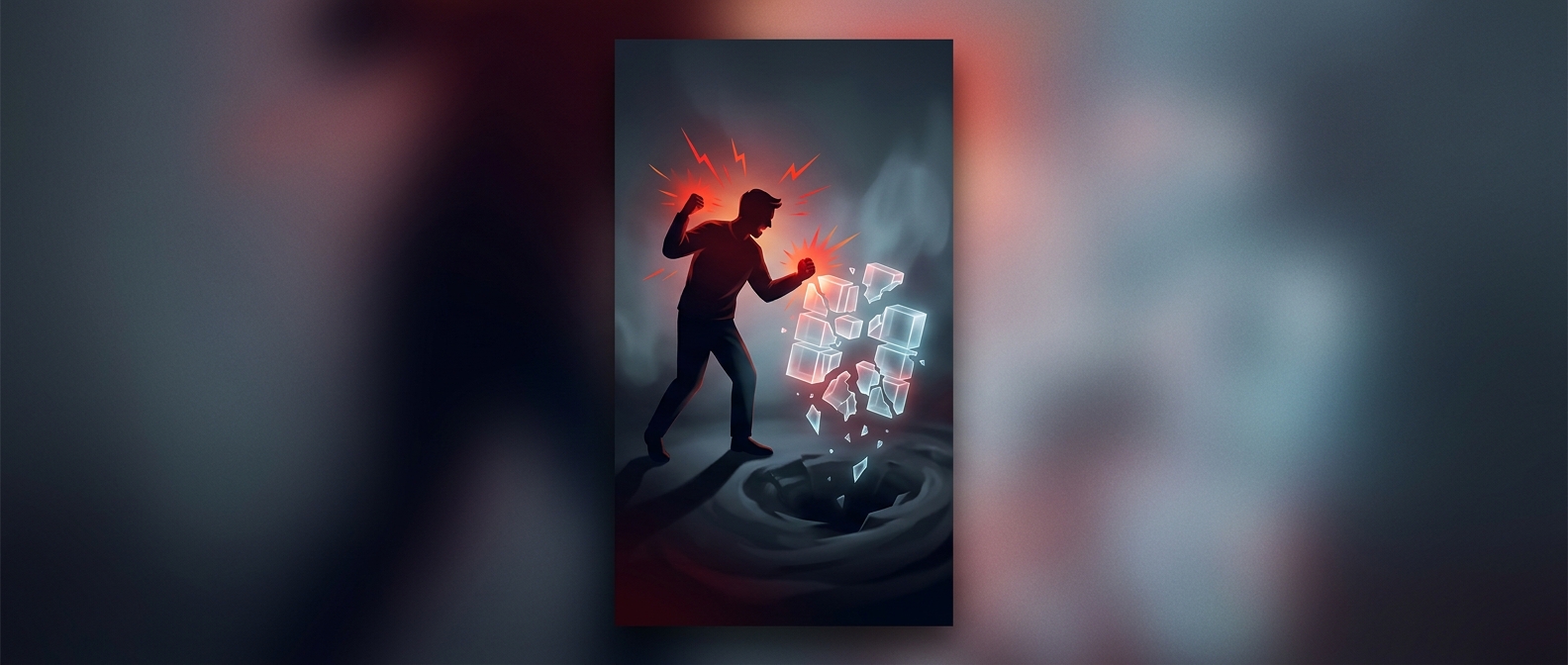
Anger can narrow what reaches memory
During a surge of anger, attention tends to lock onto what feels most urgent: the insult, the perceived threat, or the next thing to say. Details outside that focus—where people were standing, what happened in between, or the exact order of events—may receive less attention. The mind cannot preserve every part of a fast-moving scene equally well.
Remembering starts with taking details in
A memory of an event is built in stages. First, the brain has to notice and encode information: turn what is happening into a record that can later be retrieved. Attention helps determine what gets encoded. When anger consumes attention, the central trigger may be vivid while surrounding details are only weakly recorded—or not recorded clearly enough to recall later.
Stress can also interfere with working memory, the short-term mental workspace used to hold and organize information. In an argument, that workspace may be busy tracking the other person’s words, preparing a response, and judging what the situation means. New details have less room to be processed into a coherent sequence.
A vivid memory can still be incomplete
This does not mean anger reliably wipes out an entire episode. People may remember some parts sharply and be uncertain about others, and strong emotion can make the central moment feel especially prominent. But vividness is not the same as completeness: a powerful recollection of the provocation does not guarantee an accurate record of everything that followed.
That is why, after a heated exchange, two people can be certain about the moment that set them off yet disagree about the intervening details. Those details may never have been fully taken in while attention was fixed on the conflict.