The kernel that carried its own cooking trick
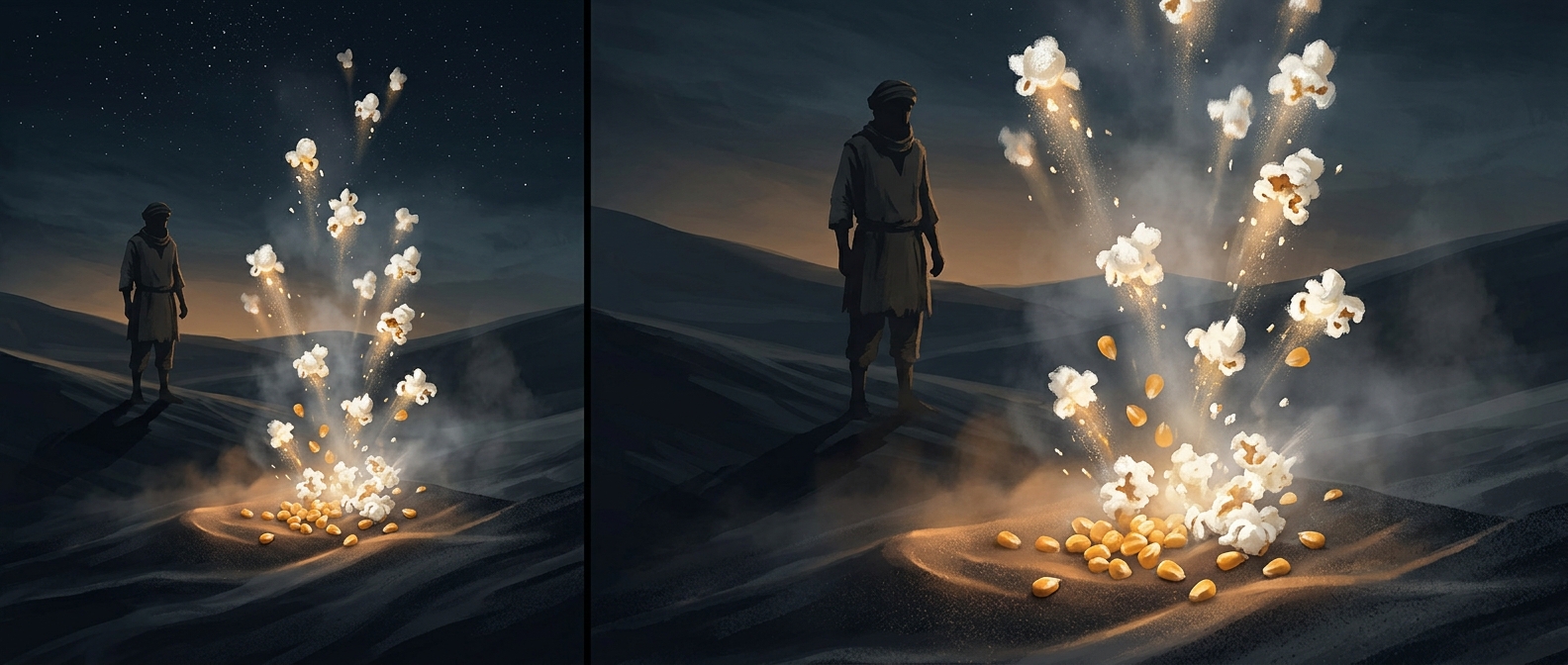
Popcorn is not simply ordinary corn heated until it happens to burst. Its kernels have a tough outer shell and a small amount of water sealed inside. Over a fire, that water turns to steam; pressure builds until the shell gives way, and the starchy interior expands and sets into the familiar puff.
Over generations, Indigenous peoples in the Americas selected corn with kernels suited to popping. That made a durable grain into a ready-to-eat food without grinding it into meal or carrying a pot of cooked food. The fire did the processing at the destination.
Why a puff of corn traveled well
A popped kernel contains much less moisture than cooked corn, so it is less prone to spoiling quickly. Its expanded shape also makes a small amount of grain feel like a substantial handful. It could be eaten on the move or packed for later—useful qualities wherever food had to be carried rather than served at a table.
That convenience had limits: popped corn could lose its crispness when exposed to damp air. But the basic advantage remained. A supply of dry kernels was compact and storable; when a fire was available, it could be turned into a light snack on the spot. The theater later gave popcorn a new setting, not its original reason to travel.