A Lesson in Self-Control, Taught Through Humiliation
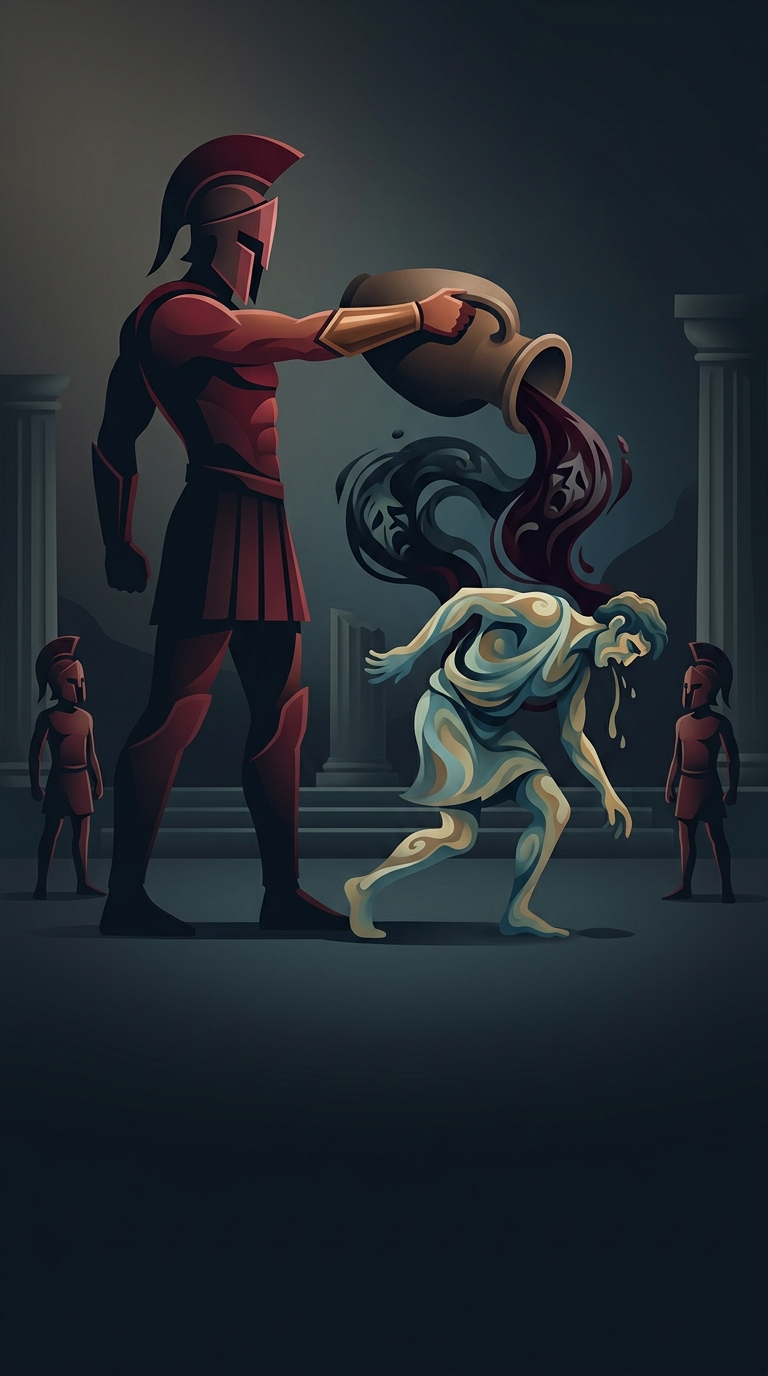
In an account of Spartan upbringing, young boys were shown helots—an unfree population compelled to work for Sparta—after they had been made drunk. The spectacle was meant to make intoxication look degrading and to teach the boys to avoid it. The lesson was not simply “do not drink too much”: it presented the helots’ loss of control as a warning about what a Spartan should never become.
That teaching depended on a stark imbalance of power. The helots were not willing participants in a demonstration; their humiliation was arranged for the benefit of the people who controlled them. The boys learned restraint by watching enslaved people denied the choice to refuse.
Discipline for One Group, Coercion for Another
Spartan education emphasized obedience and self-command, qualities expected of citizens trained for military life. The public display turned those ideals into a vivid contrast: the Spartan boy was supposed to master his appetites, while the helot was made into an example of what happened when those appetites ruled. The demonstration taught a social hierarchy as much as a rule about drinking.
The story survives in a later account of Spartan customs, so it is best treated as a reported practice rather than a directly documented scene. Even as an anecdote, its logic is revealing: Spartan discipline could be taught not only through the treatment of Spartan youths, but also through the spectacle of coercion imposed on the people beneath them.