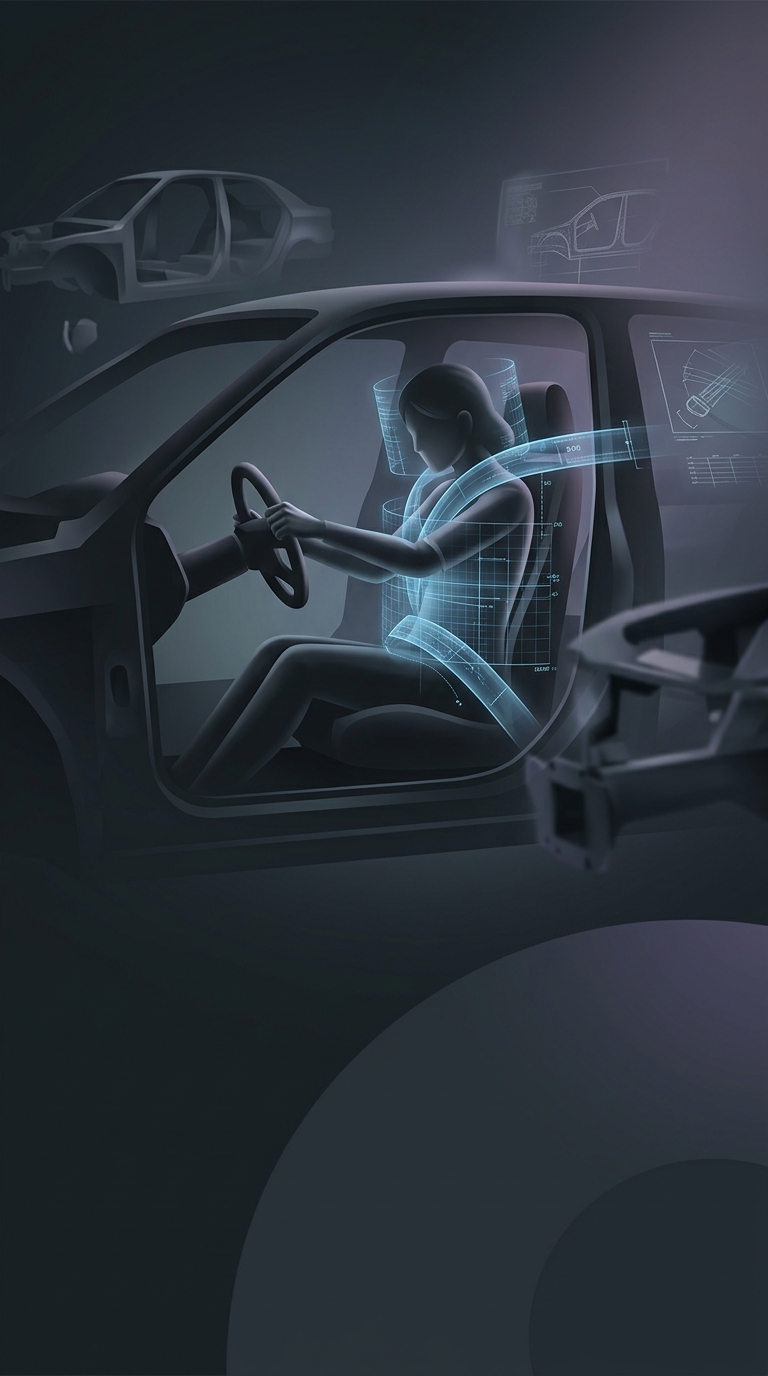
The safety system was built around a different body
A car’s restraint system works as a coordinated chain: the seat positions the body, the belt slows the torso, and the airbag cushions the head and chest. If that chain fits poorly, the body can move too far or meet the airbag at the wrong moment. That can raise the risk of serious injury in a frontal crash.
For decades, many crash tests relied heavily on a dummy representing an average-sized man. That left less information about how women’s bodies—and smaller occupants more generally—would fare. Women are, on average, shorter and lighter, and their body proportions differ. A test setup that fits a typical male dummy may not reproduce how a smaller driver sits or how forces travel through her body.
A different seating position changes the crash
A shorter driver may move the seat forward to reach the pedals. That can bring the chest and head closer to the steering wheel and airbag. If the airbag deploys while the driver is very close, it may strike with more force than intended. Meanwhile, a seat belt that crosses the neck or abdomen instead of lying across the shoulder and hips may restrain the body less effectively. These are not risks unique to women, but women are more likely to be affected by the size mismatch on average.
Body structure also matters: the same crash force can produce different injury patterns depending on anatomy, including differences in the pelvis, chest, and neck. Crash circumstances and vehicle type matter too, so sex alone does not determine what happens in any one collision.
Better testing changes what gets designed
Researchers and regulators have increasingly called for crash tests and injury measures that represent a wider range of bodies. Smaller dummies and improved models can reveal problems that a single standard-sized test occupant may miss. Manufacturers can then adjust belts, airbags, seats, and steering-wheel geometry to protect more people across a range of sizes.
The practical lesson is that “safe” does not mean equally protective for every body by default. A restraint system can perform well in a test and still leave gaps if the test occupant does not reflect the people who use the car.