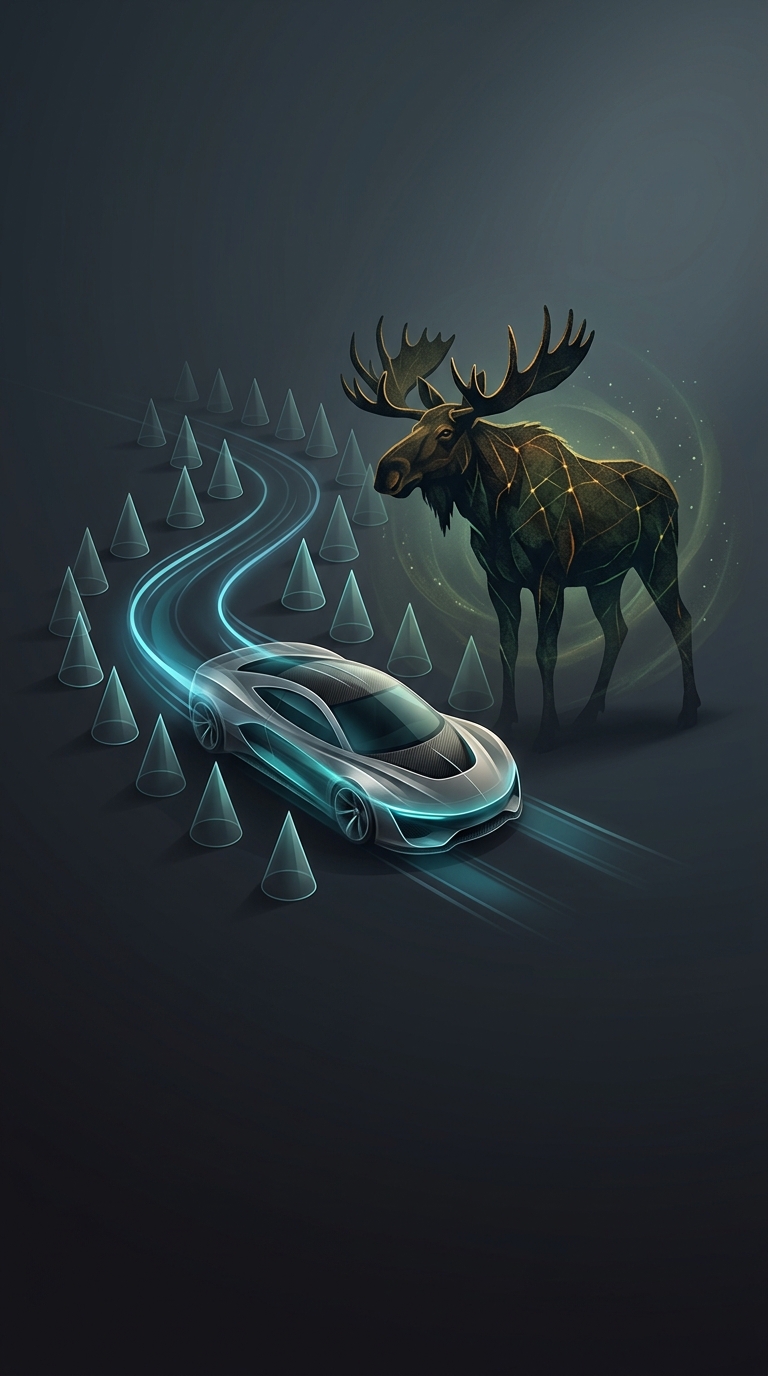
Why a car is tested against a sudden swerve
A moose test is less about hitting a moose than about what happens when a driver tries not to. A large animal can appear in the road with little warning, leaving too little distance to brake safely. The driver may steer sharply into another lane, then steer back to avoid oncoming traffic or the road’s edge. The test recreates that fast left-right maneuver on a controlled course.
The car’s weight keeps moving
When a car turns, its mass does not instantly follow the steering. The body rolls toward the outside of the turn, while the tires must keep enough grip to guide the vehicle. A quick reversal makes that load shift again. If the tires lose grip, the car may slide; if the suspension and tires cannot control the body’s movement, wheels can lift and, in an extreme case, the vehicle can tip.
That is why engineers watch more than whether the car completes the course. They observe its path, body motion, tire grip, and whether electronic stability control intervenes. Stability control can brake individual wheels to help the car stay on its intended course, but it cannot create grip that the tires and road do not have.
A demanding maneuver, not a guarantee
The result depends on the vehicle’s design and setup, including its suspension, tires, and stability systems, as well as the speed and conditions of the test. Passing demonstrates that the car can handle a demanding evasive maneuver under those conditions; it does not mean every real-world swerve will be safe. A useful takeaway is that avoiding a collision is only half the challenge: the vehicle must remain controllable through the swerve and the return.