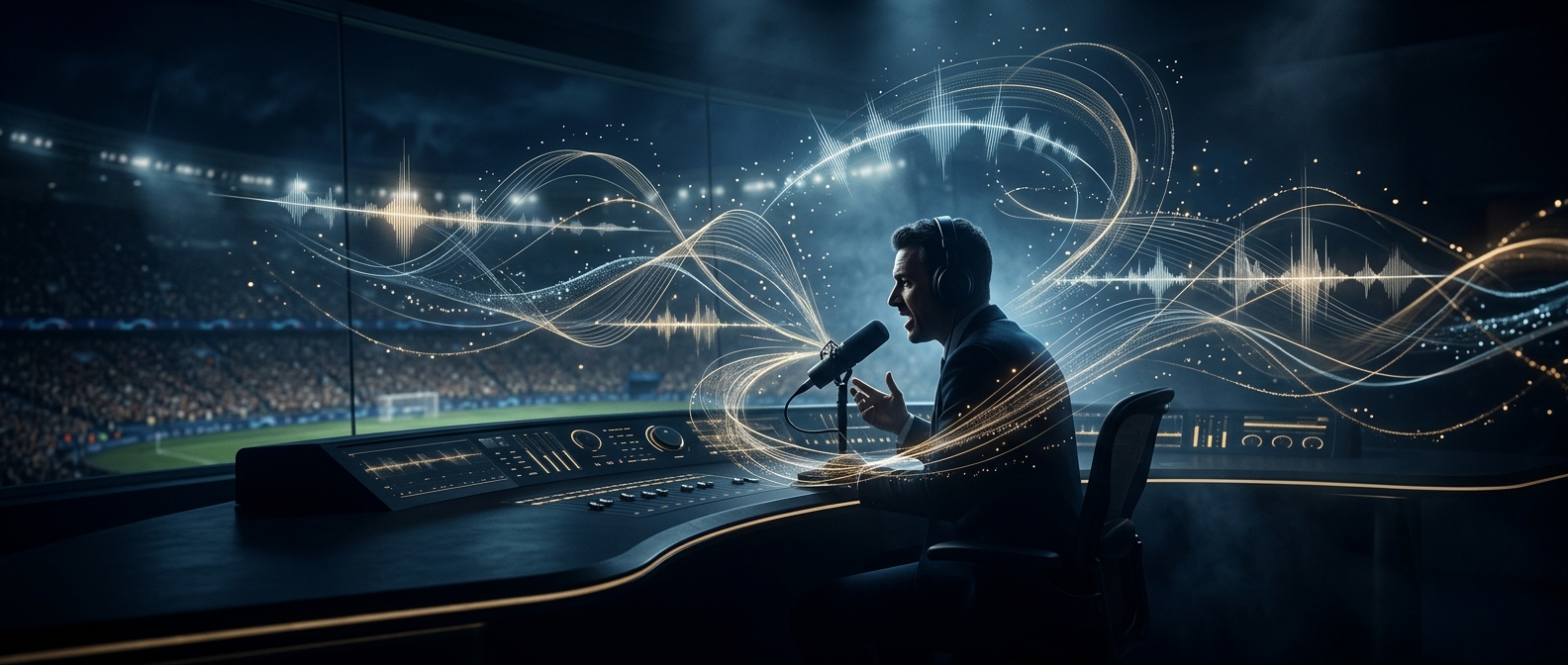
How a Missed Chance Gets a Voice
When a player misses an open goal, the game does not need to invent a joke on the spot. FIFA’s commentary system draws from a large library of lines recorded in advance, then selects audio that fits what has just happened. The result can sound like an immediate reaction even though the words were spoken long before the match on screen.
That distinction matters: the system is choosing and combining prepared material, not asking a commentator to improvise or generating speech from scratch. The library gives it many possible responses to the same kind of moment, helping commentary feel less like a fixed recording that repeats after every mistake.
The Challenge Is Making It Feel Timely
A line about a missed chance only works if it arrives at the right moment and suits the play. The game has to connect an in-game event to relevant commentary and play it without disrupting the flow of the match. With thousands of recorded lines available, there is room for more variation than a small set of repeated reactions could provide.
The joke also lands because the mistake is visible to the player: an easy opportunity has gone begging, and the commentary turns that frustration into part of the spectacle. The apparent spontaneity comes from careful selection, not spontaneous speech. A missed open goal can therefore feel like a uniquely embarrassing moment, even when the jab was recorded ahead of time.