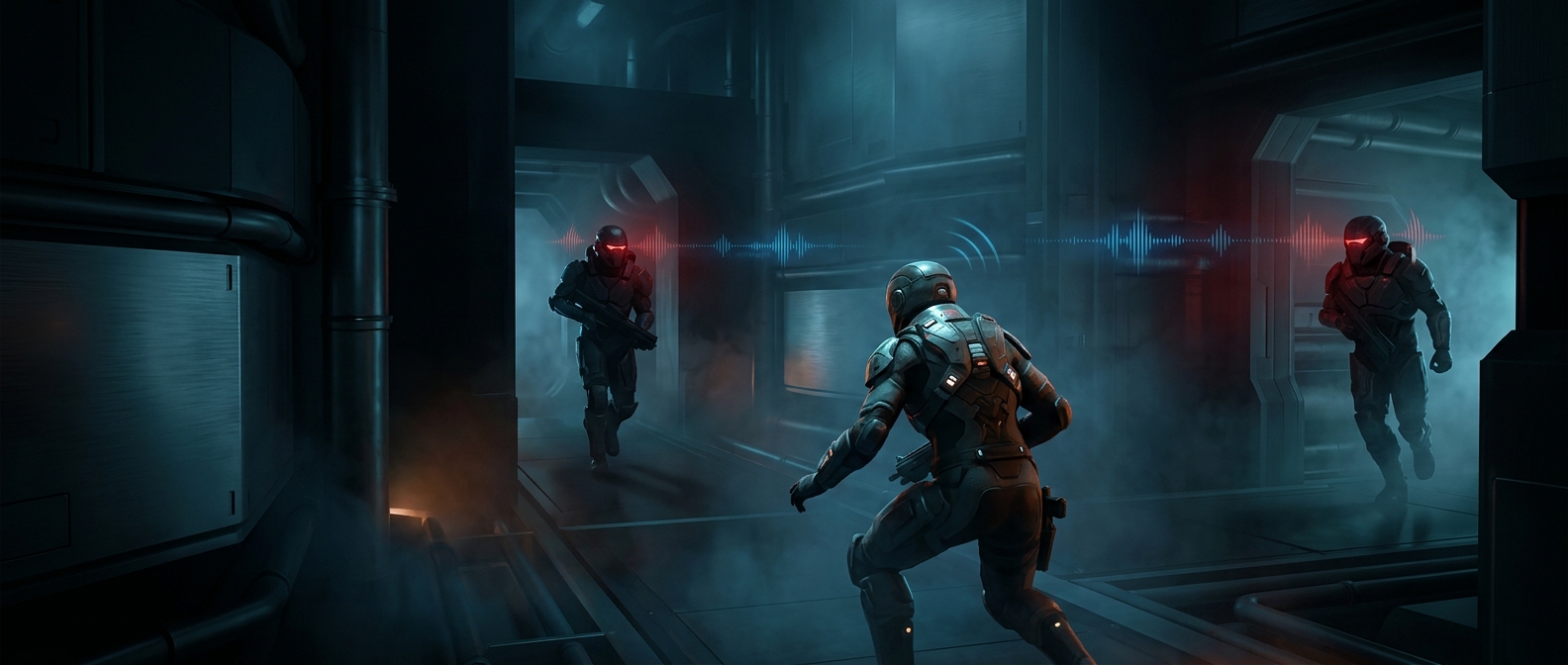
FEAR Makes Enemy Tactics Audible
In F.E.A.R., enemy soldiers do more than react to the player: they announce parts of their squad’s response. A shout that someone is reloading, or that the player has been spotted, gives an audible clue to why the soldiers are moving. Their voices make the encounter feel less like a row of targets waiting to be shot and more like a team adapting under pressure.
Turning Combat Logic Into Dialogue
The key design move is to connect what the squad says with what it does. If an enemy calls for a flank, another soldier may move off the player’s direct line of fire and try to reach a different angle. A bookshelf or other piece of cover can briefly hide that movement, making the voice line a useful warning as well as a sign of coordination.
That creates a readable chain: the player’s action changes the situation, the squad recognizes the opening, and its members respond. Instead of explaining enemy behavior through a tutorial, the game lets players hear the logic unfolding during the fight.
Why the Callouts Change the Fight
The dialogue also gives the player information to act on. Hearing that a soldier is moving around the side can prompt a quick turn or a retreat from cover; hearing that enemies noticed a reload signals that the pause has been observed. The same callouts that make the opponents seem more coordinated therefore help the player understand the danger.
The effect depends on sound matching movement. When a voice announces a plan and an enemy actually appears from an unexpected angle, a familiar firefight becomes a contest of attention: listen for the squad’s next move, not just the next shot.