What “incorruptible” means in a shrine
In Catholic tradition, an “incorruptible” saint is someone whose body was believed to resist the usual decay after death. The appearance of a body on display can become part of that story: visitors see a face and hands that look lifelike, and may take that appearance as evidence that the remains have stayed untouched.
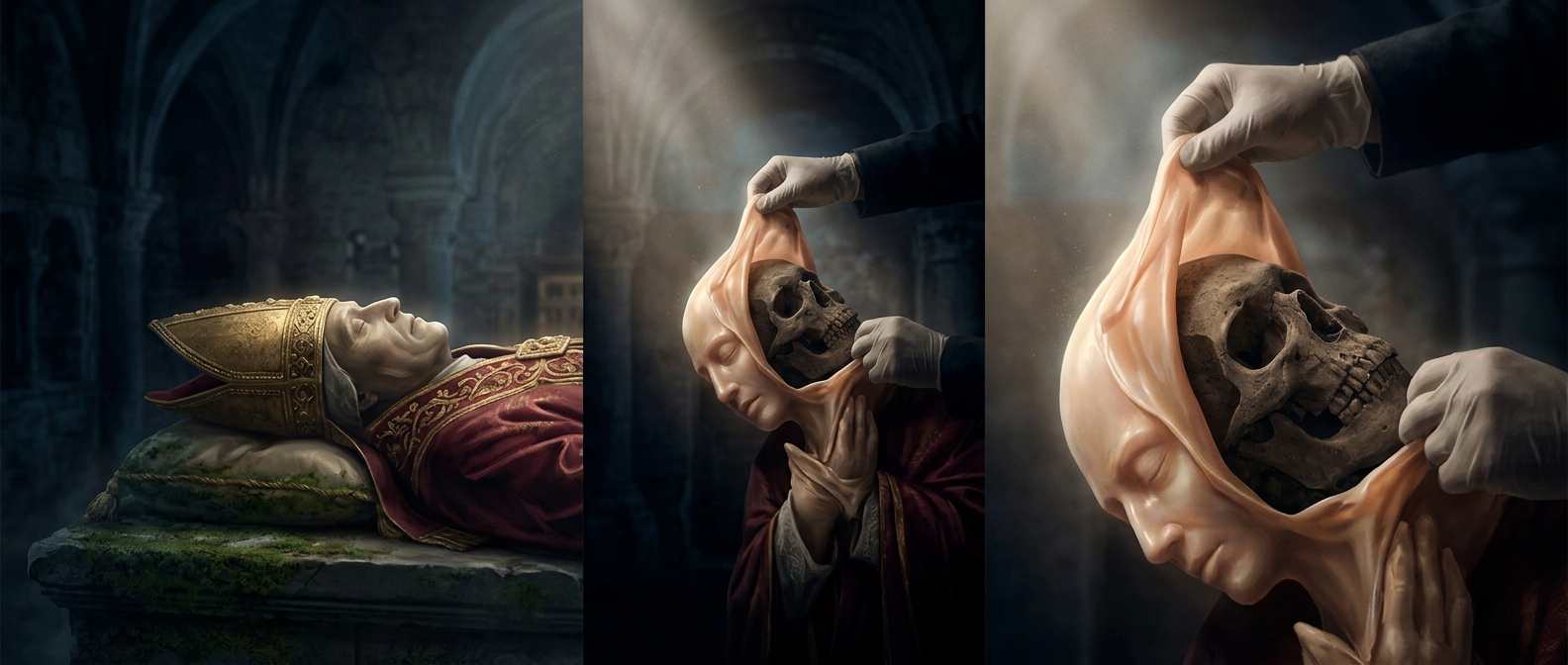
But a displayed figure is not always an unaltered body. In some cases, wax masks or thick wax coverings have been used to shape or cover visible features. Preservatives and other forms of preparation can also affect how remains look. The result may preserve a recognizable appearance without showing what happened to the body beneath it.
Why wax changes what visitors see
Wax can smooth damaged or discolored surfaces and give a face a uniform, lifelike finish. It may be applied over remains or used to make a mask, so the visible figure can combine preserved material with crafted details. That does not establish that every shrine display is made the same way; practices differ, and the appearance alone cannot reveal the full history of a particular body.
The distinction matters because “looks preserved” and “never decomposed” are not the same claim. A carefully prepared display can communicate reverence and keep a saint’s image present for visitors, while concealing the extent of decay or restoration. What appears to be a body unchanged by time may, in part, be the work of wax and preservation.