A Symbolic Collage, Not a Single Tradition
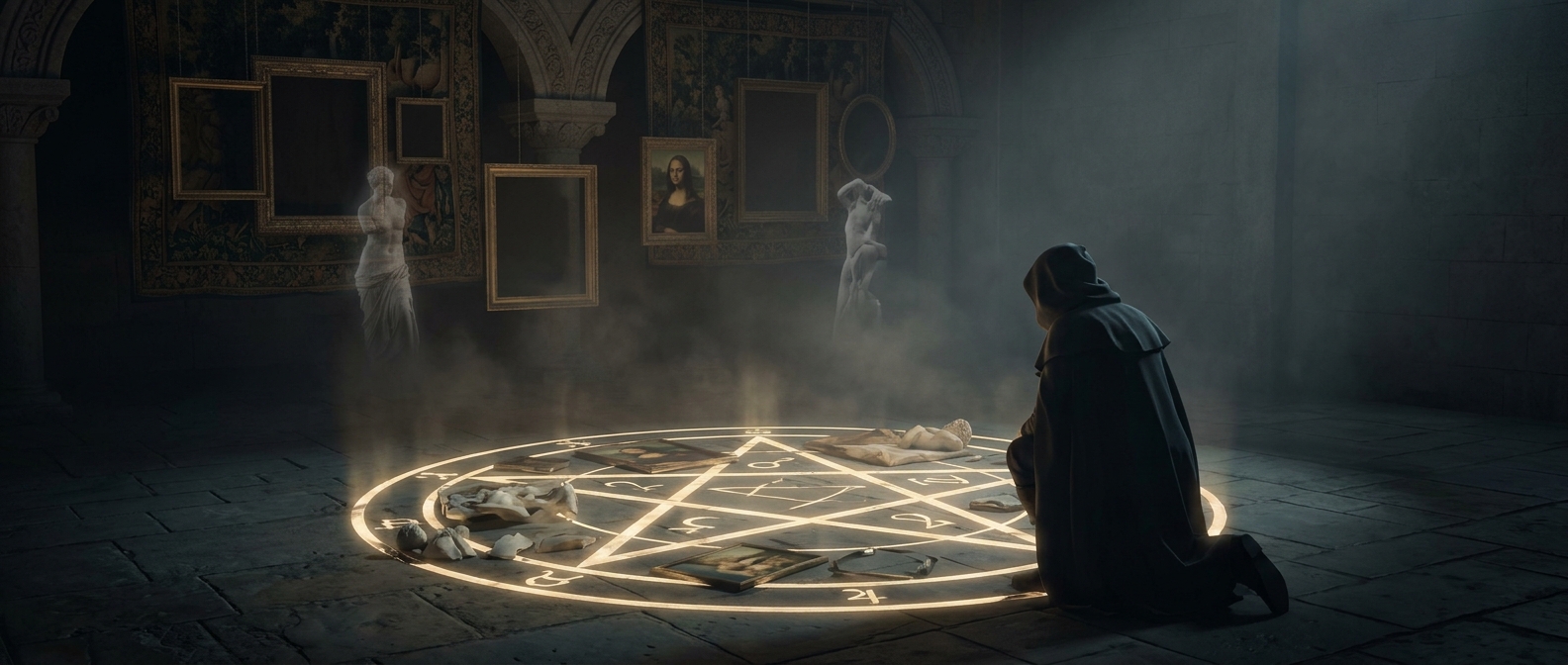
Papus—a French occultist and writer—built his initiatory pantacle from signs associated with different esoteric traditions. The design combines Kabbalistic letters with hexagrams linked to Freemasonry. Calling the result “stolen art” is a pointed way to describe this borrowing: the symbols were not created as one unified system, but brought together in a new arrangement.
A pantacle is a designed emblem used in Western ceremonial magic, where shapes and inscriptions are meant to carry symbolic meaning. It is not simply decoration. A letter, geometric figure, or placement within the design can direct the viewer toward a particular set of ideas. Combining such elements makes the emblem function like a compact map of several traditions at once.
Why Make the Symbols Work Together?
An initiatory design is meant to be encountered as part of learning or advancement, rather than read as a plain label. Its layered signs invite interpretation: the viewer must recognize that the parts come from different symbolic vocabularies and consider how the arrangement connects them. The design’s meaning therefore rests not only in its individual marks, but in the act of bringing them together.
That synthesis also has a consequence: it can make distinct traditions appear to belong to one coherent occult system. Papus’s pantacle is worth noticing as a deliberate act of symbolic assembly—a new object made from signs that already carried histories of their own.