A mystical school with a social life
Papus—the pen name of French physician and occultist Gérard Encausse—helped revive the Martinist Order in late-19th-century Paris. Martinism drew on Christian esoteric teachings associated with the 18th-century thinker Louis-Claude de Saint-Martin. Its aim was spiritual: members sought inner transformation through study, symbolic ritual, and initiation, rather than simply attending a club for social pleasure.
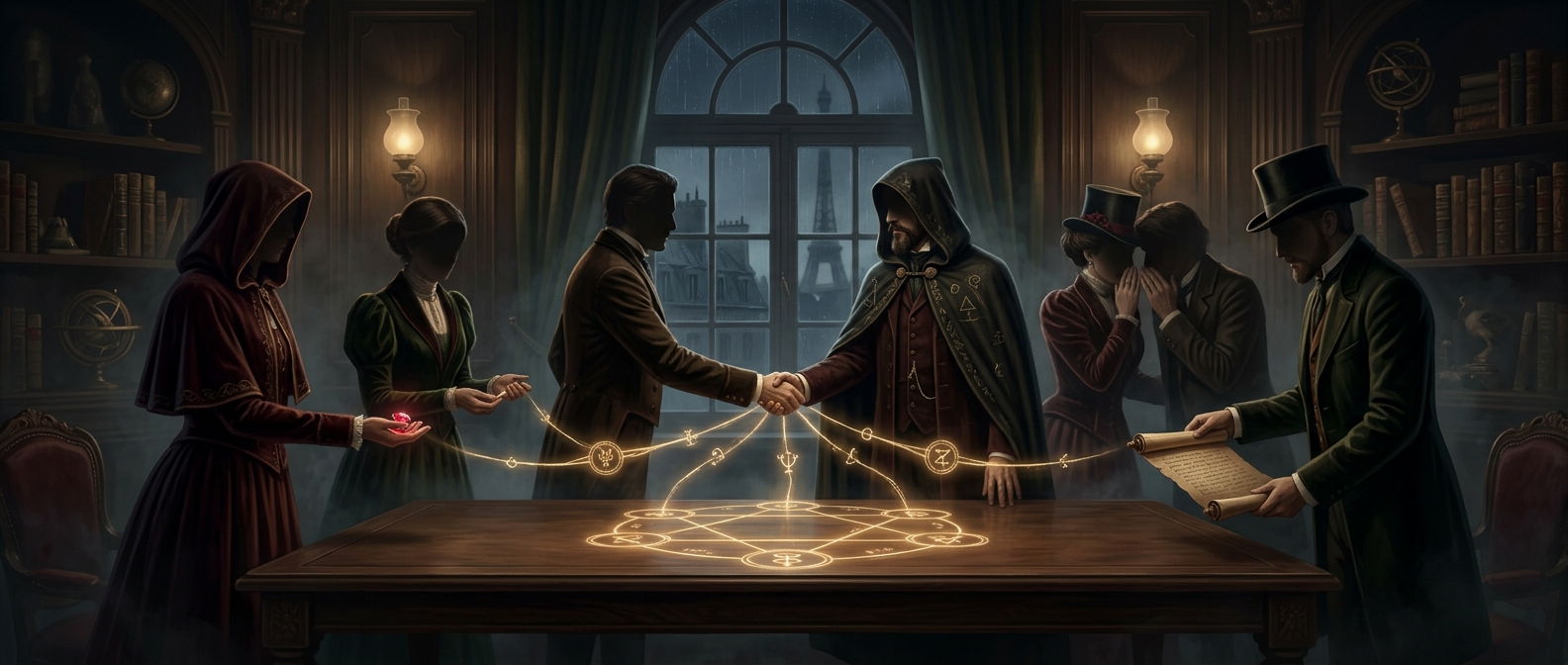
But an initiatory order also creates a community. Members met in structured settings, learned shared symbols and practices, and advanced through stages of instruction. Robes and ceremonies made membership visible and gave meetings a formal character. For people drawn to occult ideas, the order offered not just private reading but teachers, fellow students, and a recognized place within a tradition.
Why the network mattered
Paris’s occult circles brought together people from different walks of life, including aristocrats, writers, and artists. The Martinist Order gave such encounters a framework: a shared vocabulary and ritual could turn a gathering of curious individuals into a continuing association. Members could exchange ideas and contacts while pursuing spiritual study.
That combination helps explain the society’s appeal. Its ceremonies expressed a serious religious and philosophical purpose, while its organized membership also made it a hub for social connection. The same robe could signal both a commitment to mystical teaching and an invitation into a wider circle of like-minded Parisians.