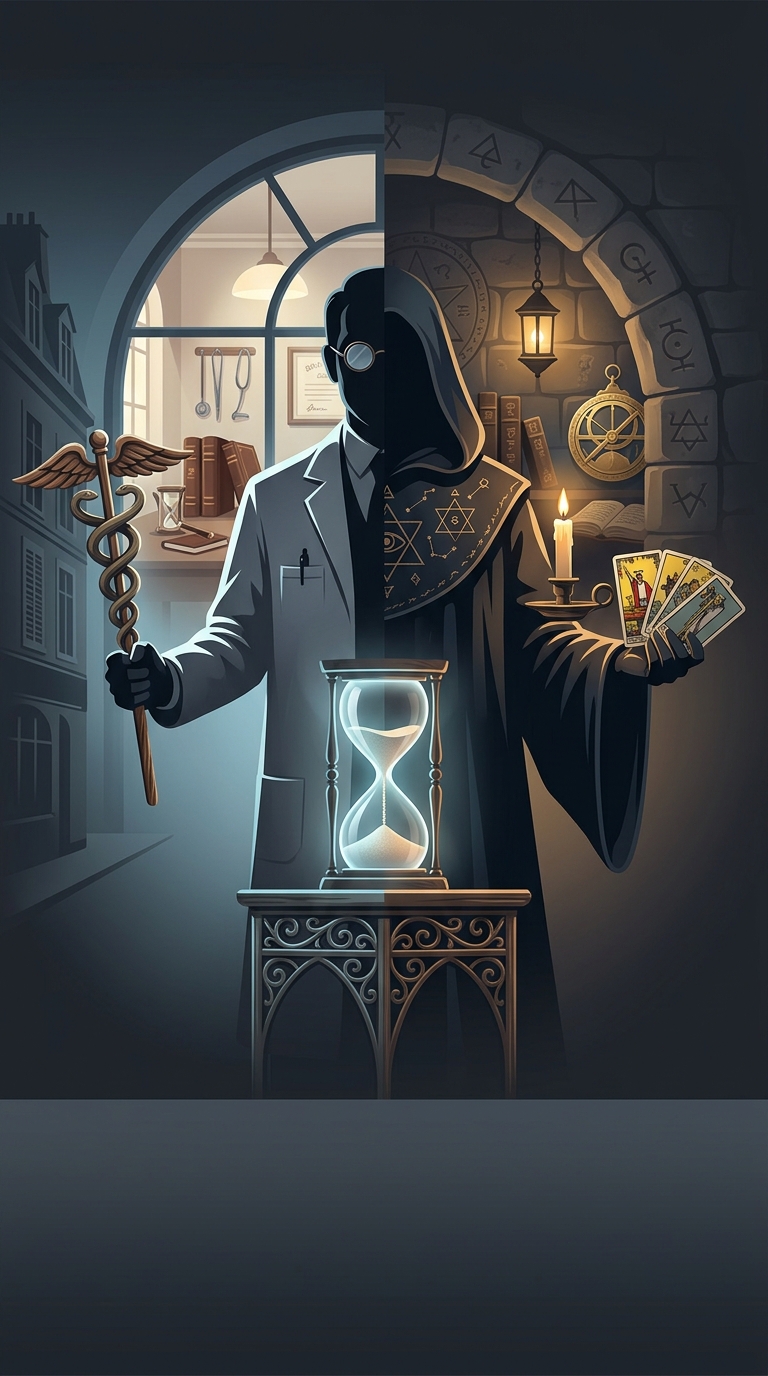
Two careers under two names
Gérard Encausse’s public life joined two worlds that many people would keep separate. As a physician in Paris, he treated patients under his own name; as Papus, he wrote and organized as an occultist. The pen name gave his esoteric work a distinct identity, while his medical career placed him within the respected profession of the day.
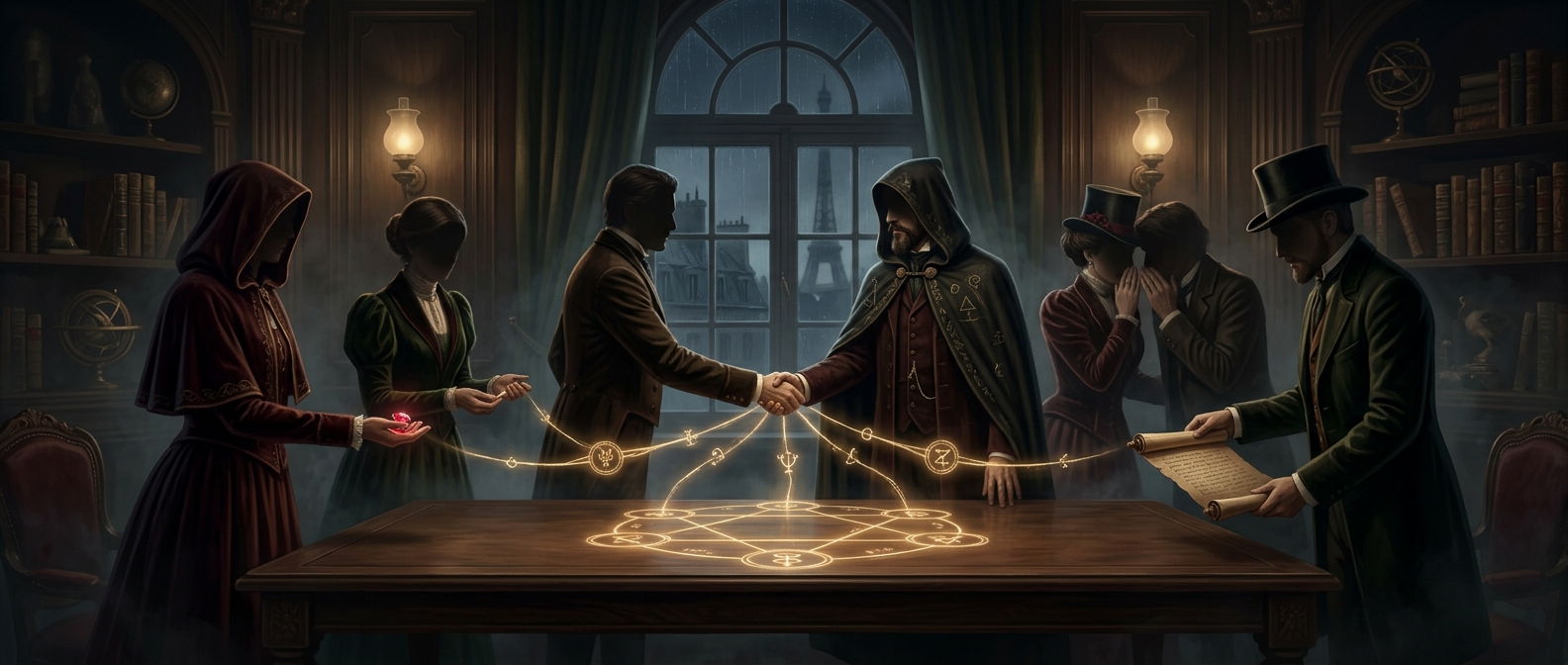
In late-nineteenth-century Europe, “occultism” often meant an effort to gather spiritual and esoteric teachings into an organized system—not simply belief in mysterious powers. Papus became influential partly by making that world more structured: writing about it and bringing people together in groups devoted to its study. His standing as a doctor and his work as a public occultist therefore developed side by side.
From Paris practice to the front
The First World War changed the setting of Encausse’s medical work. He served as a physician near the front, where doctors faced the strain and illness of wartime conditions. He contracted tuberculosis and died in 1916.
His story is striking because neither identity erased the other. The physician was not merely a cover for Papus, nor was occultism a private hobby detached from his public life. Encausse built a successful practice while becoming a major organizer of esoteric thought—and ended his life treating the wounded in a war that carried him far from the Paris circles where his second name had become known.