Why a Palm Can Be a Real Overhead Hazard
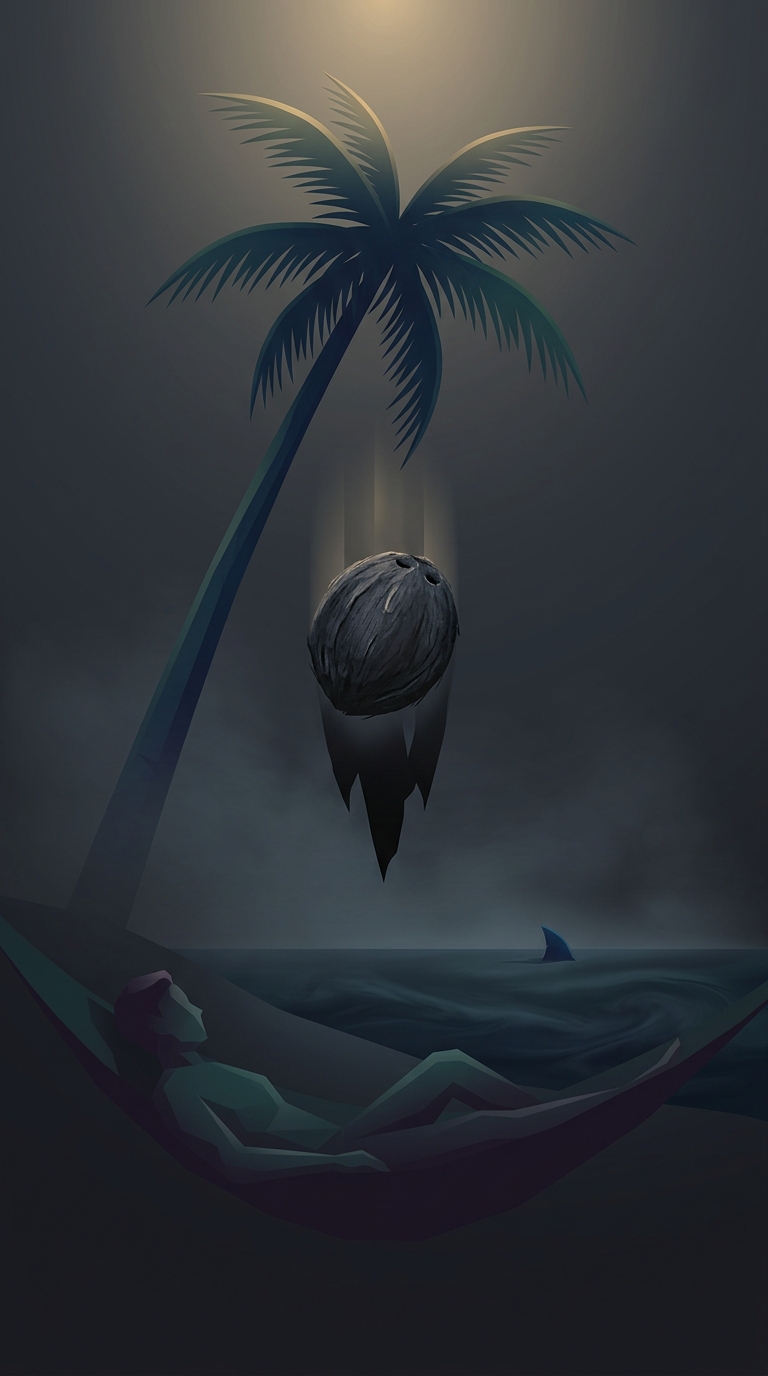
A falling coconut is dangerous not simply because it is heavy, but because gravity gives it speed before it reaches the ground. The impact can cause severe head injuries, especially when someone is standing directly beneath a palm. Ripe fruit may detach as part of the tree’s normal cycle; wind and the condition of the stalk can also affect when it comes loose.
The Risk Is Concentrated in One Place
Unlike a shark encounter, which requires entering the animal’s environment, the coconut hazard is easy to overlook in an ordinary vacation setting: a beach chair, walkway, or outdoor dining area beneath fruit-bearing palms. That does not make every palm dangerous, or a fatal strike likely for any one visitor. It means the exposure is local and avoidable: the danger is directly under the tree, not spread across the whole beach.
Resorts and public spaces can reduce exposure by clearing fruit or keeping seating and paths away from palms. For travelers, the practical lesson is simple: when choosing a shady spot, look up first. The most inviting patch of shade may also be the one place where a heavy object can fall from far above.