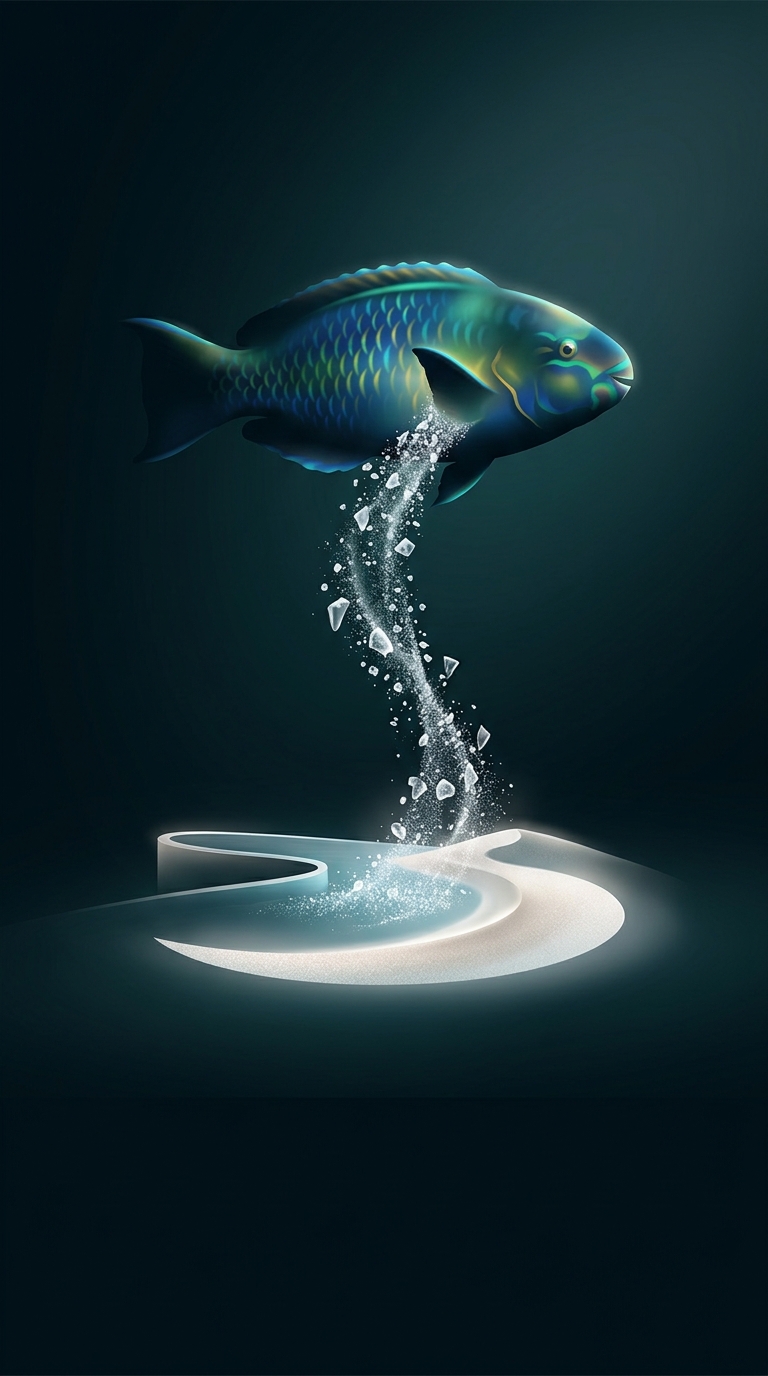
How a reef becomes beach sand
A parrotfish’s meal begins on the reef, where algae grow over rock and coral skeletons. Using a hard, beaklike mouth, the fish scrapes and bites at that surface. It swallows algae along with fragments of the reef itself; sturdy teeth in its throat grind the mineral material into much finer grains as the fish digests the meal.
The nutrients are absorbed, but much of the finely ground calcium carbonate—the mineral that makes up coral skeletons—passes through the fish and is released as sediment. In other words, the sand is not simply undigested food: it is reef material crushed during feeding and digestion.
From fish droppings to a shoreline
Once the grains settle on the seafloor, currents and waves can move them into shallows and onto nearby shores. Repeated feeding by many parrotfish helps turn reef material into the pale sediment associated with some tropical beaches. The fish are part of a larger process: shells and other reef organisms also contribute, and beaches differ in where their sand comes from.
That makes a white shoreline more than a scenic backdrop. It can be the visible end of a slow chain linking living reef, feeding fish, and moving water. Protecting the reef helps preserve the habitat where this sediment is produced—and the natural supply that can help maintain nearby beaches.