A national park could also sell a railroad journey
Yellowstone’s remote geysers and dramatic scenery were difficult for most travelers to reach in the 1870s. For railroad promoters, that obstacle was also an opportunity: a celebrated destination could give people a reason to buy a ticket west. The Northern Pacific Railroad, which was pushing its line across the region, supported the effort to establish Yellowstone as a national park.
The park was created in 1872, before the railroad reached its vicinity. That timing mattered. The government set aside a vast area from settlement and private ownership, preserving the landscape as a public attraction; the railroad could then help bring paying visitors toward it. Protection and commercial ambition were not opposites in this arrangement. A famous, preserved place promised to draw travelers.
The journey became part of the attraction
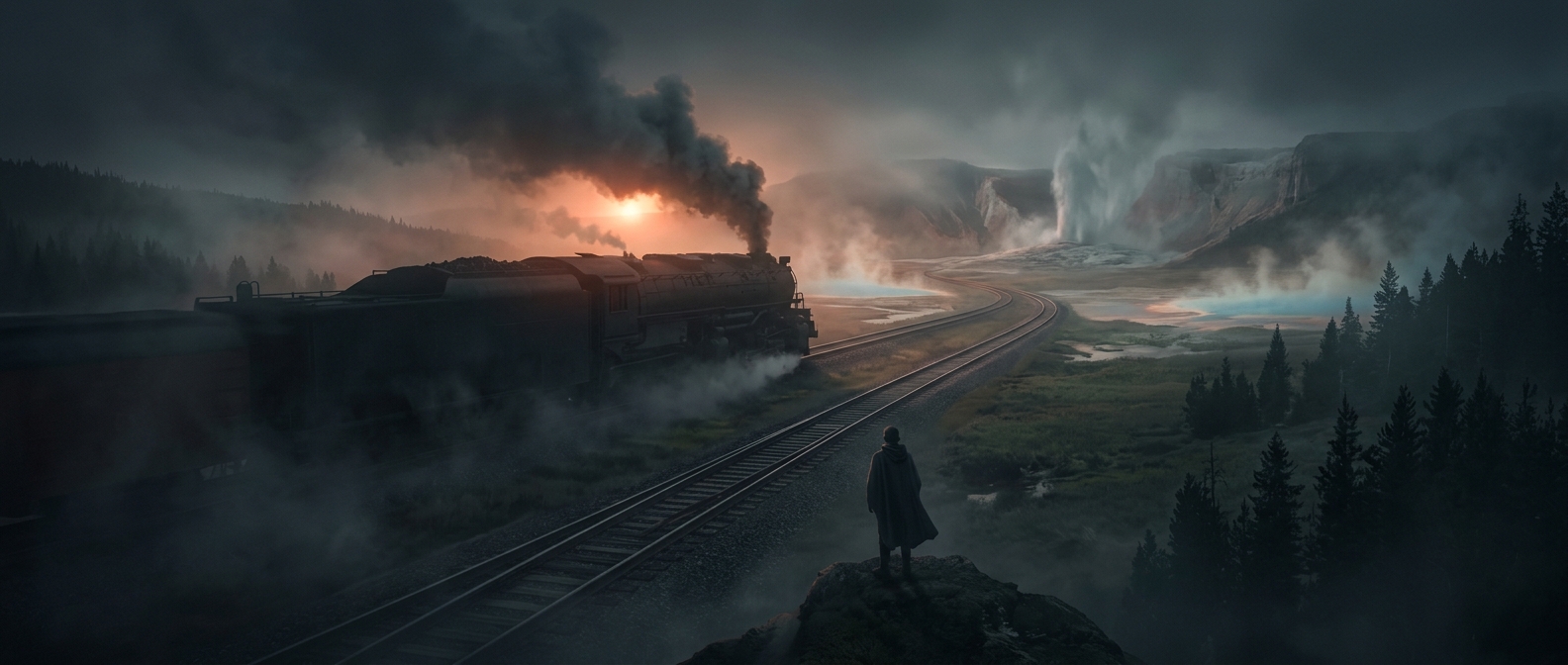
Rail travel did not carry tourists through Yellowstone’s wilderness. Passengers traveled by train to a railhead near the park, then continued overland by stagecoach. That handoff made the railroad a gateway rather than a complete tour: the line brought visitors close, while roads, lodging, and guided travel carried them through the park.
As access improved, the park’s natural features became easier to imagine as a vacation itinerary rather than an arduous expedition. The railroad gained prospective customers, and Yellowstone gained a growing stream of visitors and the attention that came with them. The park’s early story joined two purposes: keeping a remarkable landscape from being privately claimed and making it reachable enough to become a destination.