A geothermal kitchen at Yellowstone Lake
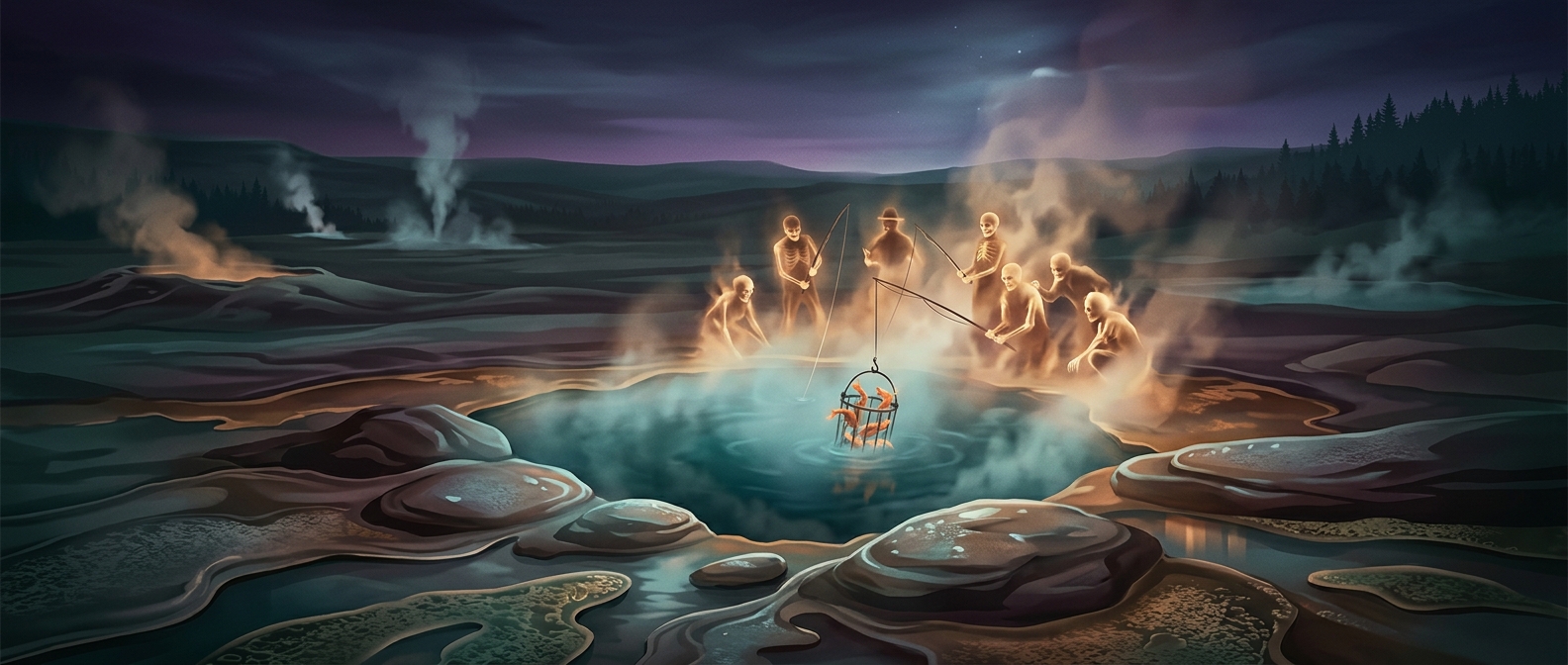
At West Thumb, hot springs and geyser features rise close to Yellowstone Lake’s shore. One became known as Fishing Cone: anglers could catch a fish in the lake and then lower it into the hot water to cook. The unusual convenience came from geology, not a special cooking device—heat from underground warmed water in a natural opening beside the lake.
The setting made the stunt seem simple, but it put people close to scalding water and fragile geothermal features. A hot spring is not a stable pot: its temperature and water level can vary, and its mineral-rich water can be hazardous to touch. Crowds repeating the practice could also disturb the natural feature they had come to see.
From novelty to a restricted practice
For early visitors, the cone turned fishing into a spectacle as well as a meal: the lake supplied the fish, and the spring supplied the heat. That memorable pairing helped give the place its name. But what looked like a handy shortcut depended on treating a natural feature as equipment—and on approaching it closely enough to risk burns.
Authorities eventually stopped the practice. The change reflects a basic tension in visiting Yellowstone: the same geothermal activity that makes the landscape remarkable can be dangerous and easily disturbed. Today, Fishing Cone is best understood as a record of an older style of tourism, when getting close to a hot spring could be part of the entertainment.