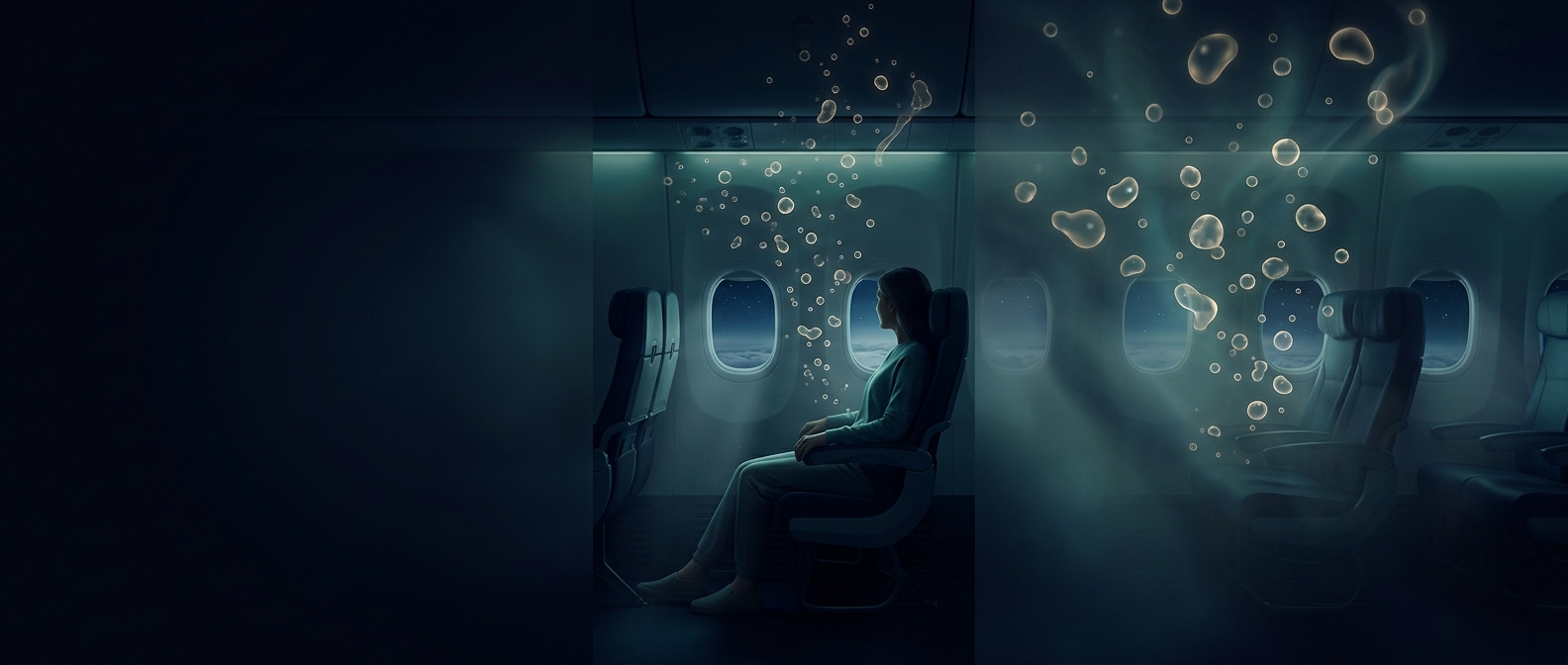
Why cabin pressure changes what your gut feels
An airplane cabin is pressurized, but not usually to the same pressure as the air at sea level. As the aircraft climbs, the pressure around your body drops. Gas already inside the digestive tract responds to that change: with less pressure pushing on it, it takes up more space. The effect is a straightforward pressure-volume relationship, not a reaction to the plane’s motion or to altitude directly.
Where the gas comes from—and why it can hurt
Digestive gas comes from ordinary sources: air swallowed while eating or drinking, and gas produced as gut bacteria break down food. On the ground, the surrounding pressure helps keep that gas compressed. In the cabin, expanding gas can stretch the stomach or intestines, creating a tight, full feeling or cramps. The discomfort is more noticeable when gas has nowhere to move easily; it may eventually pass through the digestive tract or leave the body as a burp or flatulence.
The pressure change is gradual, so the gas expands gradually too. During descent, rising cabin pressure reverses the effect and compresses the gas again. For most travelers, this is temporary discomfort—a small reminder that a pressurized cabin is still a different environment from the ground.