Your body clock keeps running at the wrong time
On a long flight, the biggest biological drain is often not the effort of sitting still. It is sleep disrupted by travel—and, when time zones are crossed, sleepiness arriving at the wrong time for the destination.
Your circadian rhythm is the roughly 24-hour timing system that helps regulate sleep, alertness, and other daily functions. It is guided partly by light and follows the schedule of the place you left. If it is nighttime at your destination but daytime according to your body clock, falling asleep may be difficult. If your body expects night while you are trying to stay awake, alertness can slump. The clock adjusts gradually, not as soon as the plane lands.
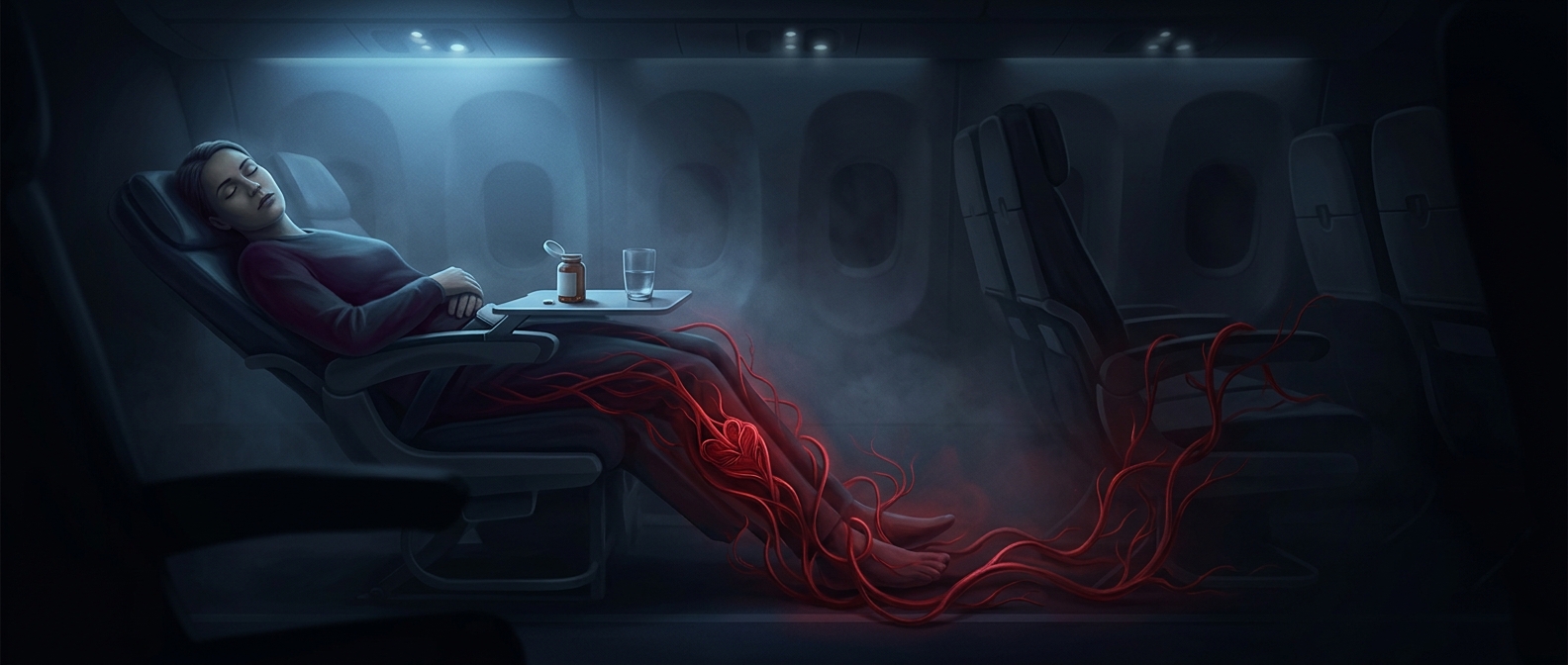
Even without a time-zone change, an airplane is a poor place for restorative sleep. Noise, light, interruptions, an unfamiliar seat, and the need to remain buckled in can make sleep shorter or more fragmented. A person can spend hours in a seat and still arrive with a sleep deficit.
Sitting still is not the same as resting
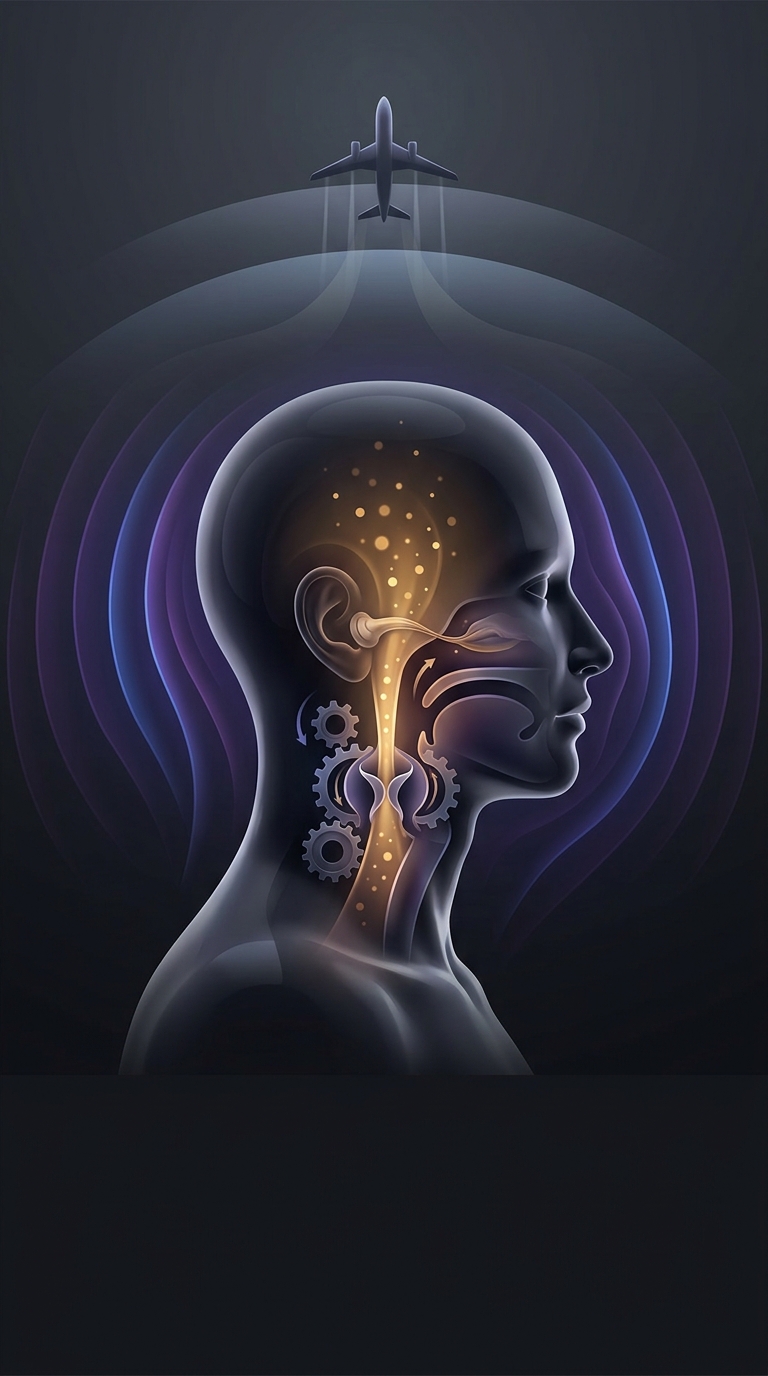
Resting muscles use less energy than walking, but quiet wakefulness does not replace sleep. Nor does a cabin provide the usual conditions for deep, uninterrupted rest. Dry air can make the nose and throat feel uncomfortable, while prolonged immobility can leave the body stiff; these may add to the sense of weariness, but they do not explain the central fatigue as well as disrupted sleep and a clock out of sync.
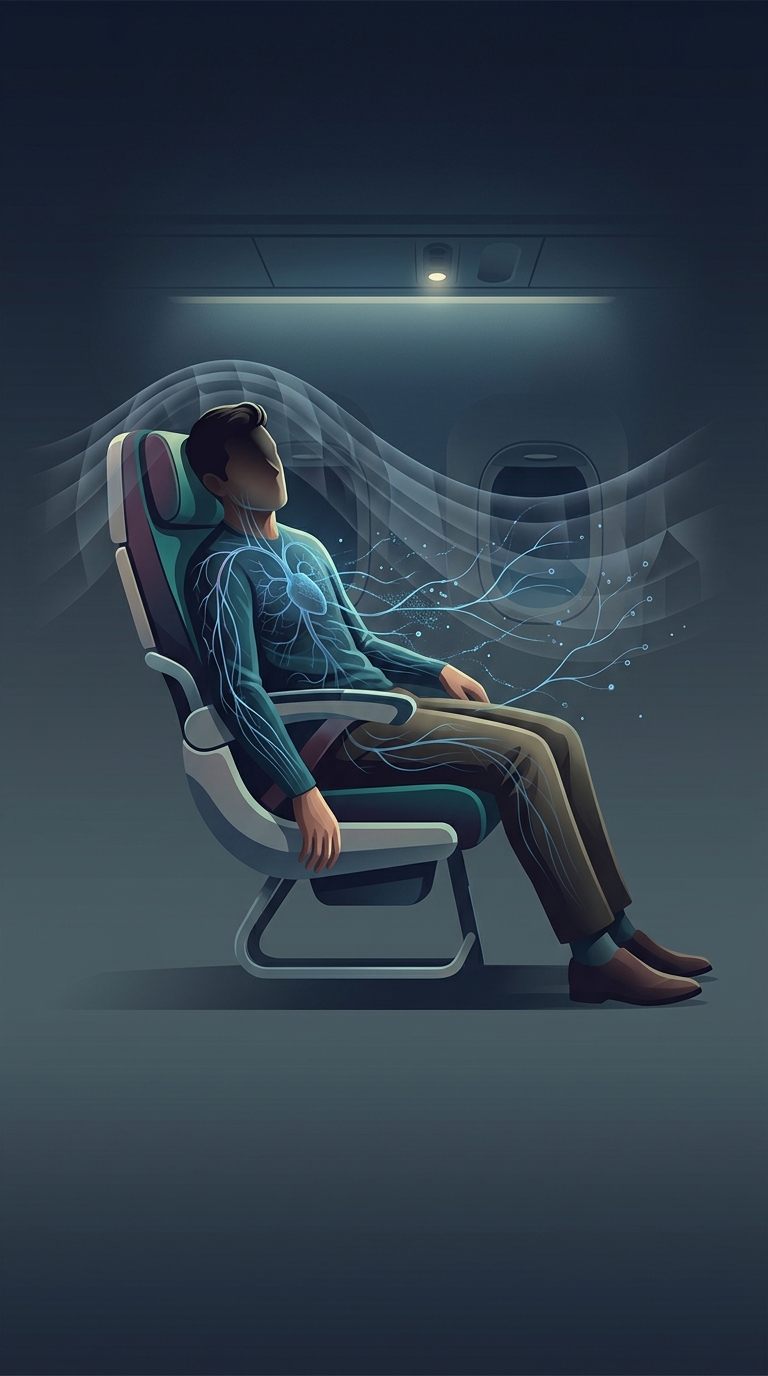
That is why a traveler may feel exhausted after a flight with little physical exertion: the body has been awake, or trying to sleep, on a schedule and in a setting that interfere with recovery. The seat may have kept the trip physically quiet; it could not make it biologically restful.