Why Your Ears Need Help During a Flight
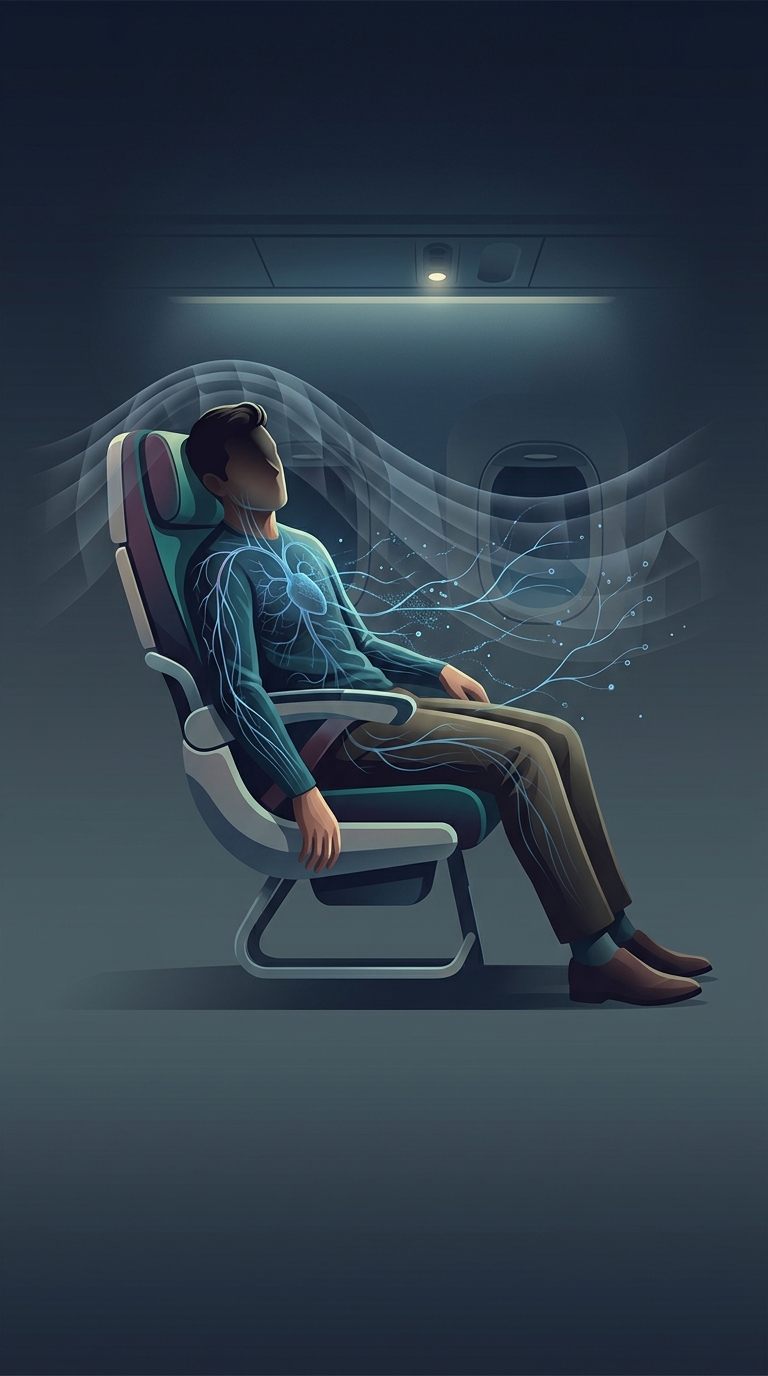
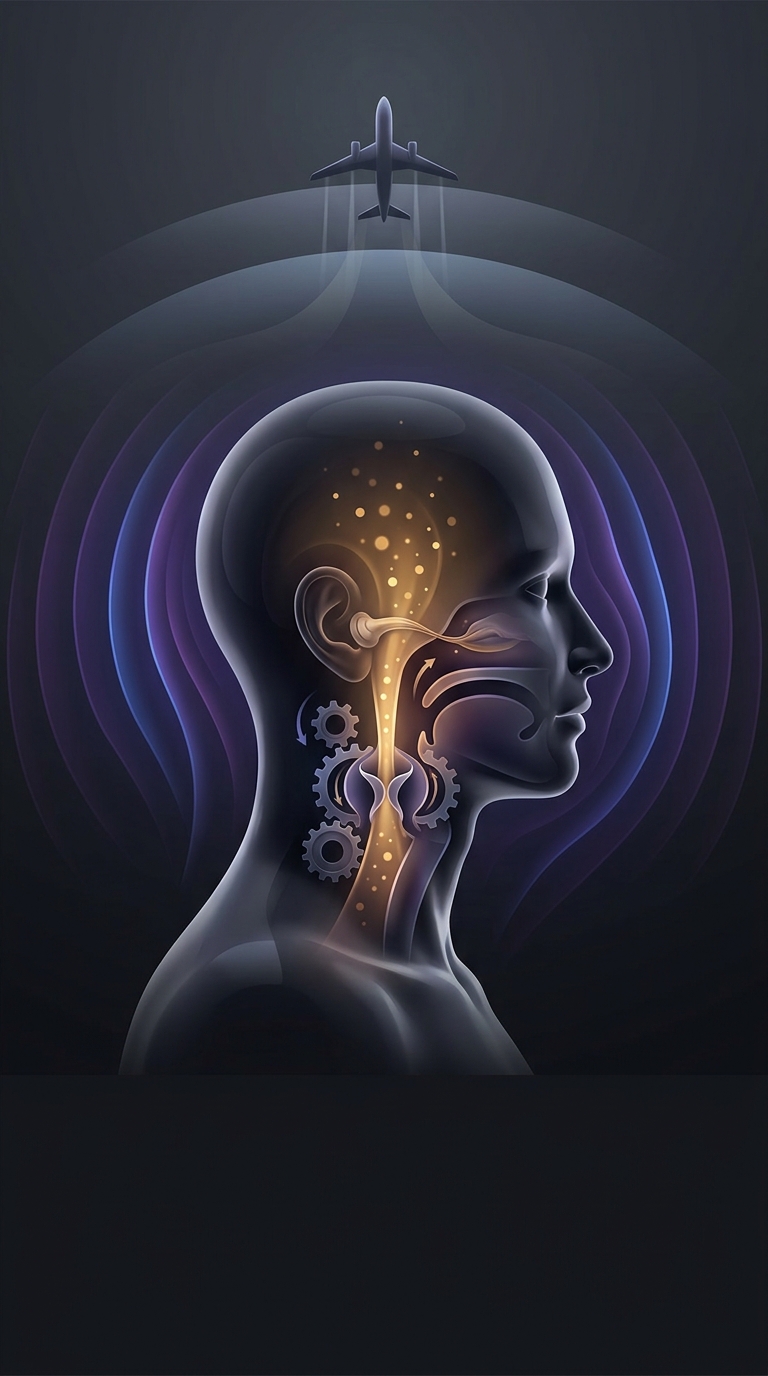
The pressure sensation in an airplane comes from a small air pocket in each middle ear, not from pressure building throughout your head. Each pocket connects to the back of the nose and throat through a narrow passage called the Eustachian tube. Most of the time, that tube stays closed; swallowing or yawning briefly opens it, letting air move between the middle ear and the throat.
What Changes as the Plane Descends
An airplane’s cabin pressure changes as it climbs and descends. During descent, the pressure around you rises. If the middle-ear air pressure does not rise to match, the eardrum is pushed inward, creating the feeling of fullness or pain. Opening the Eustachian tube lets air into the middle ear and eases the mismatch. The reverse adjustment can be needed during ascent, too.
That is why repeated swallowing can help: each swallow gives the tube another chance to open. Chewing gum encourages swallowing, while yawning can open the tube through the muscles involved in the movement. Pinching the nose and gently blowing can also push air toward the tube, but blowing hard is unnecessary.
Small Movements, Timed to the Pressure Change
The useful moment is when your ears begin to feel blocked—not after discomfort has become severe. Swallowing, sipping water, chewing, or yawning during descent can provide repeated opportunities for equalization. These are different ways to prompt the same basic event: opening the Eustachian tube so middle-ear pressure can adjust.
The next time an aircraft starts down, a few deliberate swallows are not just a distraction. They help move air through a narrow passage that normally remains shut, one brief opening at a time.