Making Yellowstone visible to Congress
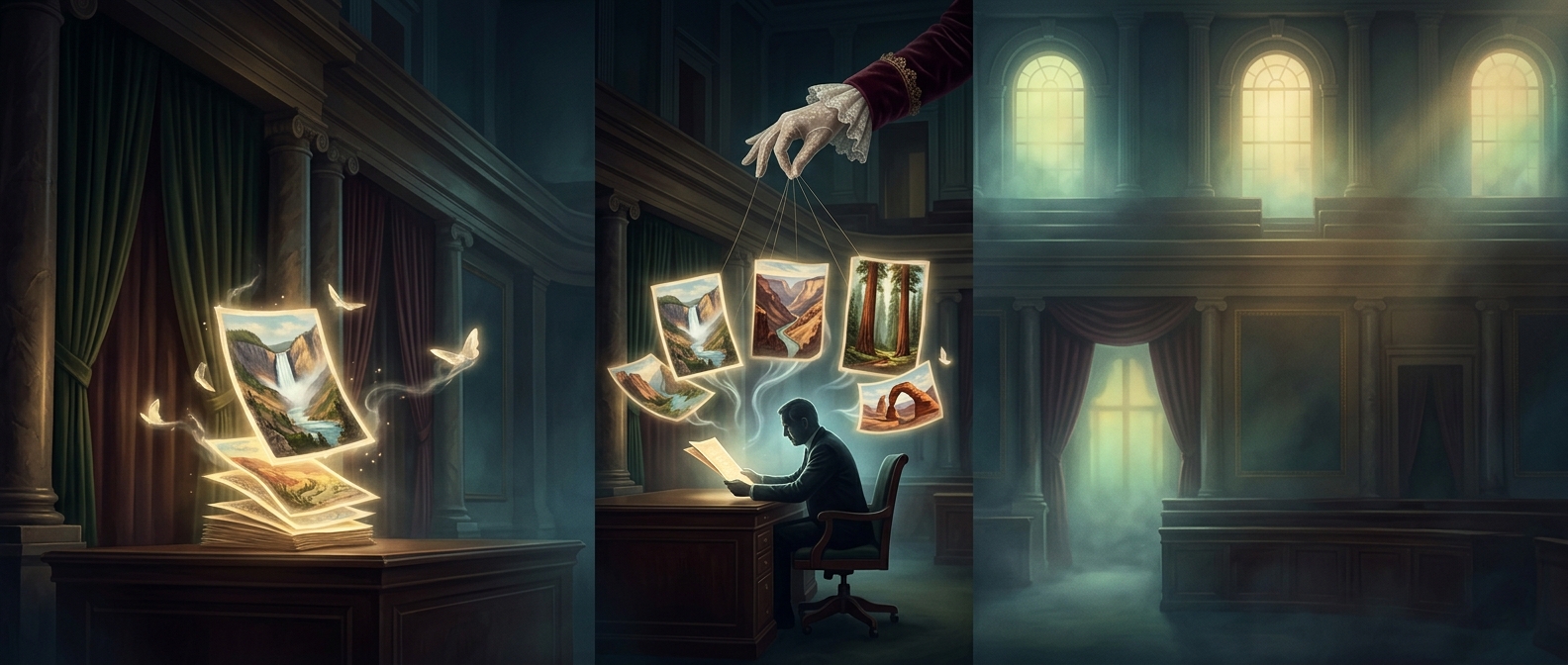
When Congress considered protecting Yellowstone, the region was remote and difficult for most Americans to visit. Reports could describe its geysers, waterfalls, and immense canyon, but words alone struggled to convey what those features looked like—or why they merited protection. Images made the landscape easier to imagine from far away.
On the federal survey led by geologist Ferdinand V. Hayden in 1871, photographer William Henry Jackson recorded Yellowstone’s scenery, while painter Thomas Moran made dramatic views of it. Their pictures gave lawmakers and the public something concrete to examine: not just claims about extraordinary natural wonders, but visible scenes of them.
Two kinds of evidence, one powerful impression
Jackson’s photographs had the force of visual documentation. Moran’s paintings could heighten color, scale, and atmosphere, helping viewers grasp the grandeur of places that a photograph might render more plainly. Together, the images made Yellowstone feel both real and remarkable.
They did not create the park by themselves. The survey’s findings and the case for protecting the area also mattered. But the images helped carry that case beyond the people who had traveled there, at a moment when few could see the landscape firsthand. Congress established Yellowstone National Park in 1872.
The lasting consequence was practical as well as persuasive: pictures helped turn a distant, little-known region into a place the nation could recognize as worth preserving.