How Philip II Made Stillness Part of His Authority
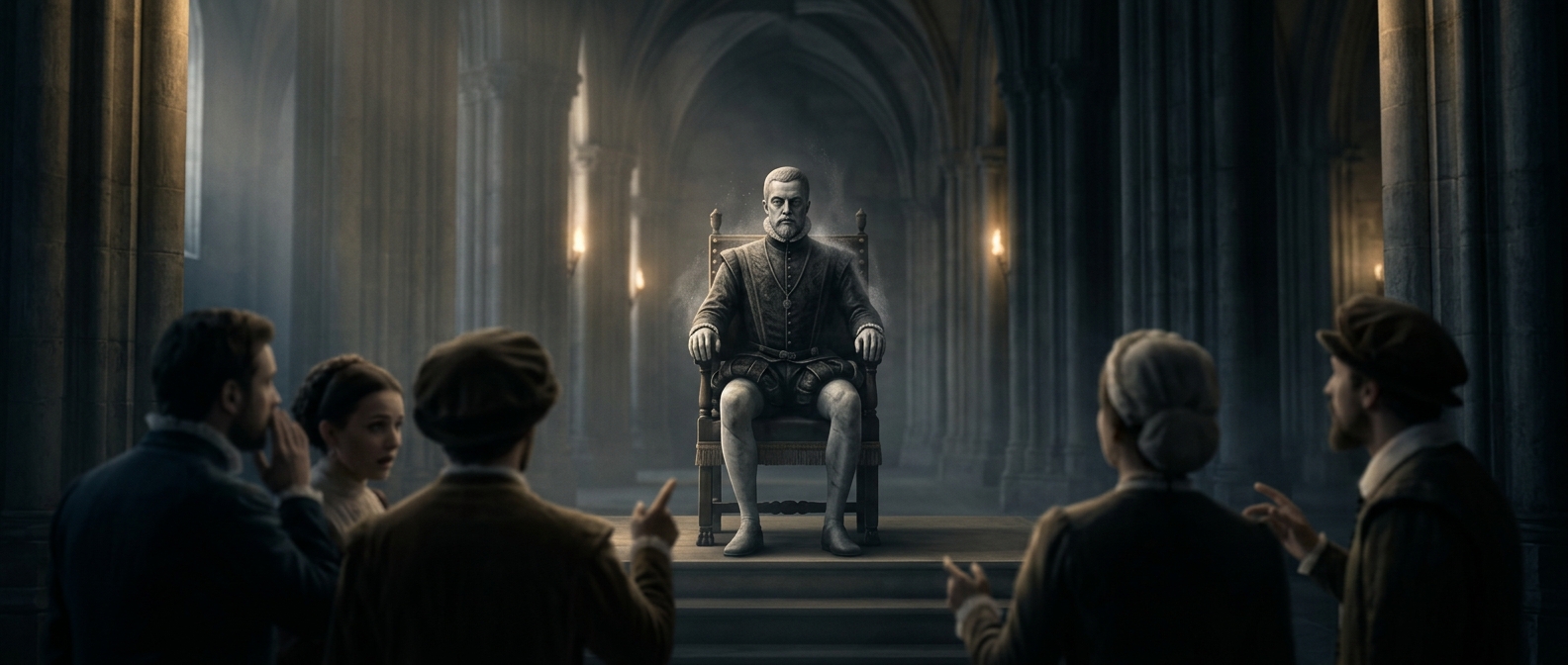
At a royal audience, a monarch’s behavior could carry meaning before he said a word. Philip II’s practiced stillness made his body part of the ceremony: visitors faced a ruler who offered few visible clues about what he felt or thought. In a court where access to the king was itself formal and consequential, that lack of response could make the encounter feel unusually distant.
The Power—and Unease—of a Controlled Face
A motionless posture did not tell visitors what Philip intended; it left them to interpret the silence. That uncertainty could reinforce the impression of self-command, but it could also unsettle people accustomed to reading reactions in a conversation. The effect came from a simple contrast: visitors entered expecting an exchange, while the king gave them little movement to answer.
His stillness therefore did more than shape his personal manner. It turned an audience into a display of royal restraint—and made the people waiting for a response acutely aware of its absence.