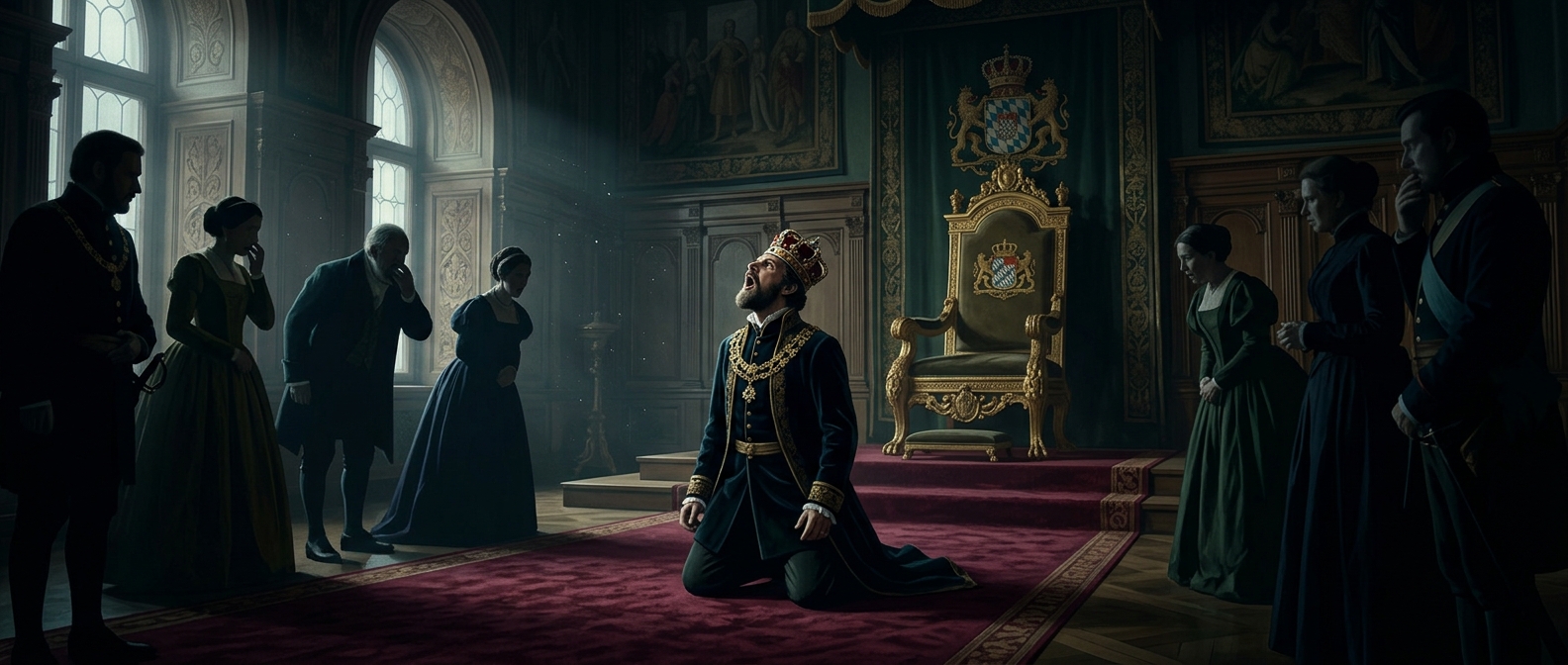
A court where rank became part of the joke
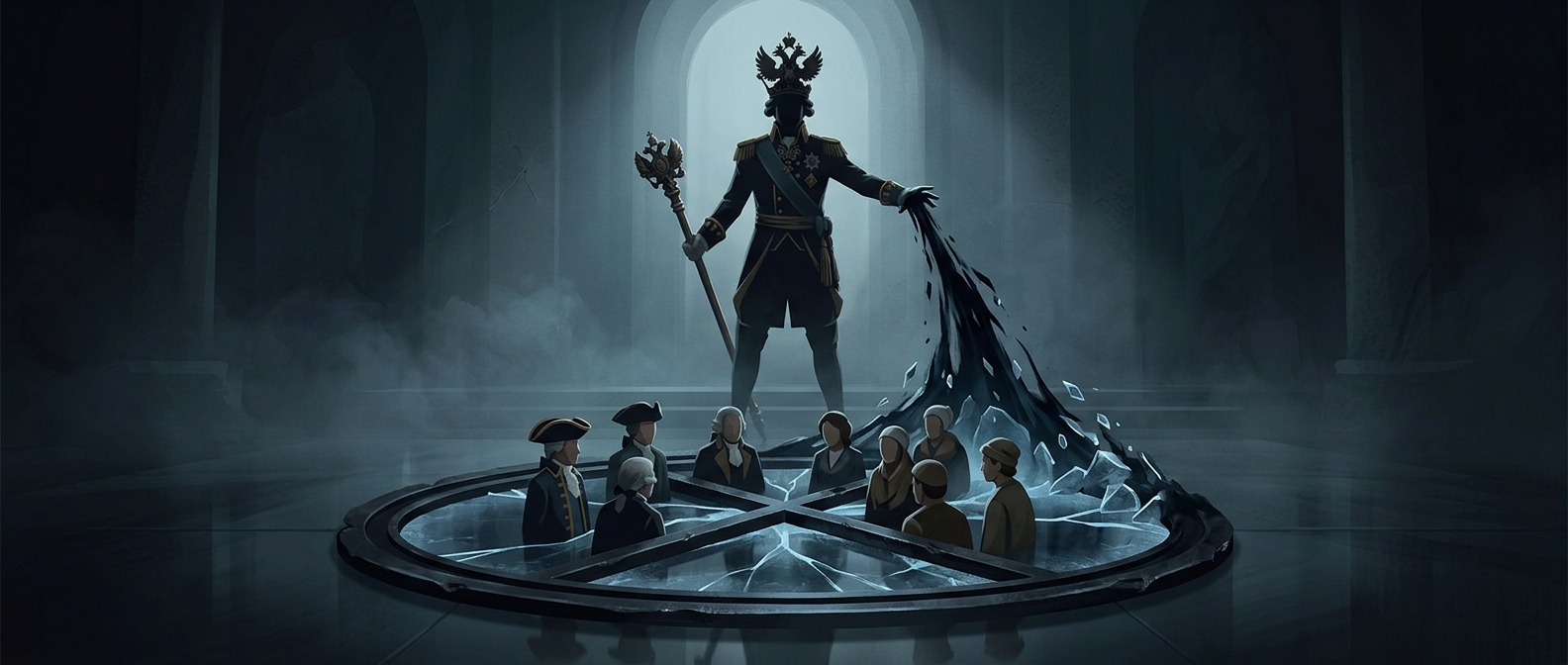
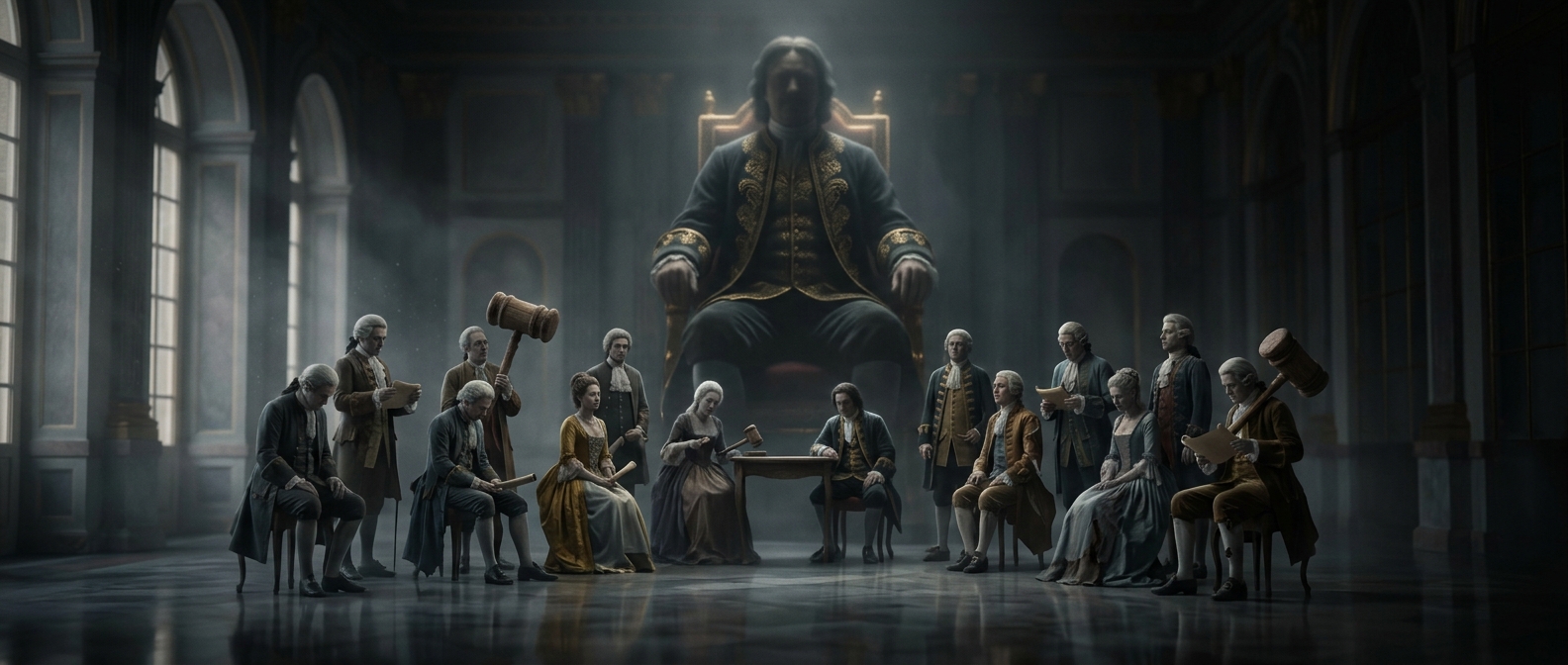
Peter the Great’s circle of court entertainments included the All-Joking, All-Drunken, and All-Senseless Synod, a deliberately absurd parody of a religious hierarchy. It had mock titles and ceremonies, and its members included men from the Russian elite. In this setting, nobles could be expected to take part in comic rituals alongside jesters and drinking companions.
The point was not simply to watch performers make fun of the powerful. The powerful had to perform the foolishness themselves. A grand title or noble birth offered little protection when the tsar assigned the role.
How humiliation reinforced authority
Court life usually made rank visible through precedence, formal dress, and controlled ceremony. Peter’s mock ceremonies turned that familiar language upside down: they borrowed the shape of solemn institutions but filled it with drinking, parody, and absurd behavior. The contrast made the spectacle funny—and made the nobles’ participation unmistakable.
That reversal could serve as a test of obedience. A courtier who joined in showed that, at least in this setting, the tsar’s command outranked the dignity attached to his own status. It also gave Peter a way to reshape elite behavior through personal pressure and ridicule rather than through a formal rule.
The lasting sting was the lack of an escape reserved for the highborn: the joke worked because even the elite could be made to play the fool.