Making Awareness Smaller Than a Speck
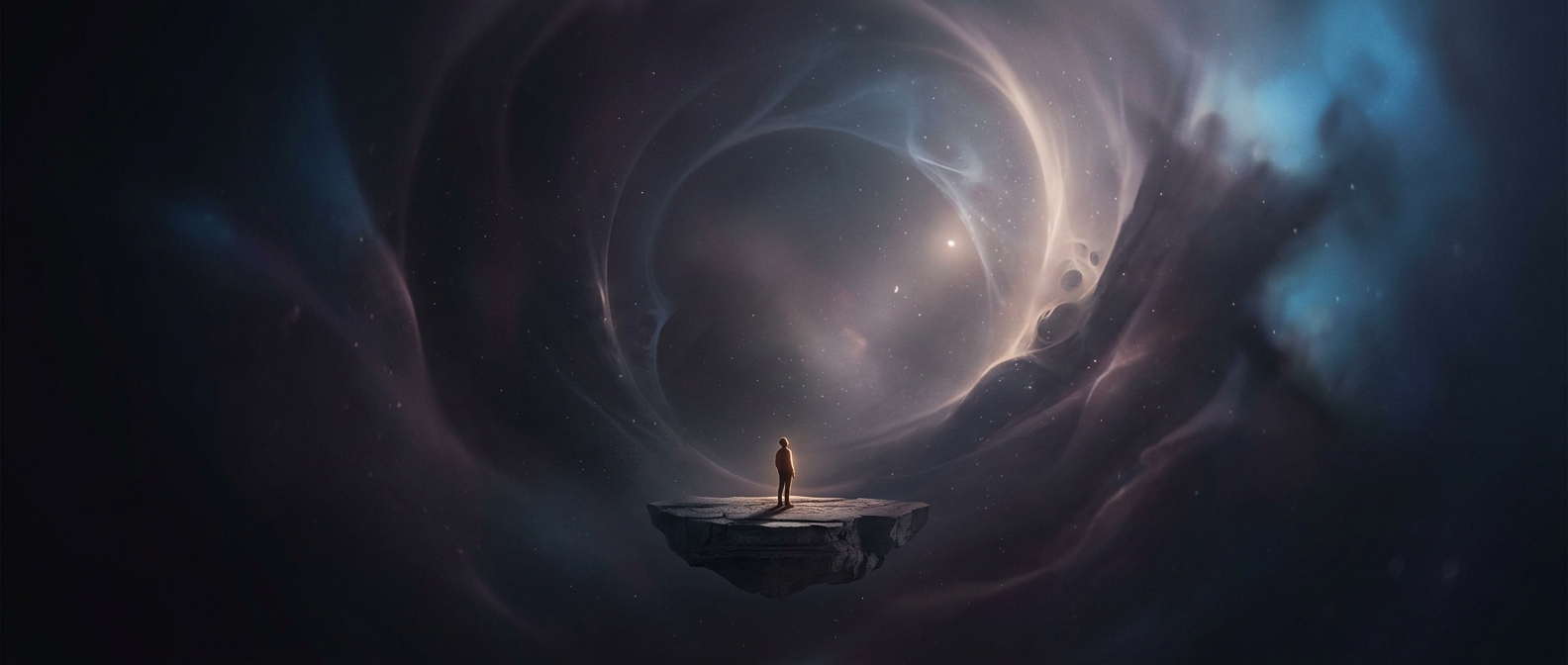
The image asks meditators to picture awareness—not the physical brain or body—shrinking until it seems smaller than a speck of dust. From that imagined vantage point, attention turns toward the minute constituents of the world: the tiny parts that make up what ordinarily looks solid and continuous.
The exercise works through a change in perspective. A familiar object can seem self-contained when viewed at everyday scale; imagining an observer far smaller than dust makes that view feel less final. The point is not to claim that consciousness literally changes size, but to use scale as a tool for directing attention.
From Familiar Objects to Smaller Parts
That shift can also loosen the habit of treating everyday appearances as the whole story. A table, for instance, looks like one stable thing, even though it consists of many smaller components. The visualization invites the meditator to dwell on that difference between what perception presents at a glance and what careful inquiry can reveal.
Its smallest “building blocks” are therefore part of the contemplation’s focus, not a promise that meditation itself can identify the ultimate structure of matter. The imagined tiny viewpoint makes ordinary solidity feel less absolute—a vivid way to explore how perspective shapes what seems real. The speck is not a scientific instrument; it is the doorway into the thought that even the most familiar object can be considered at another scale.