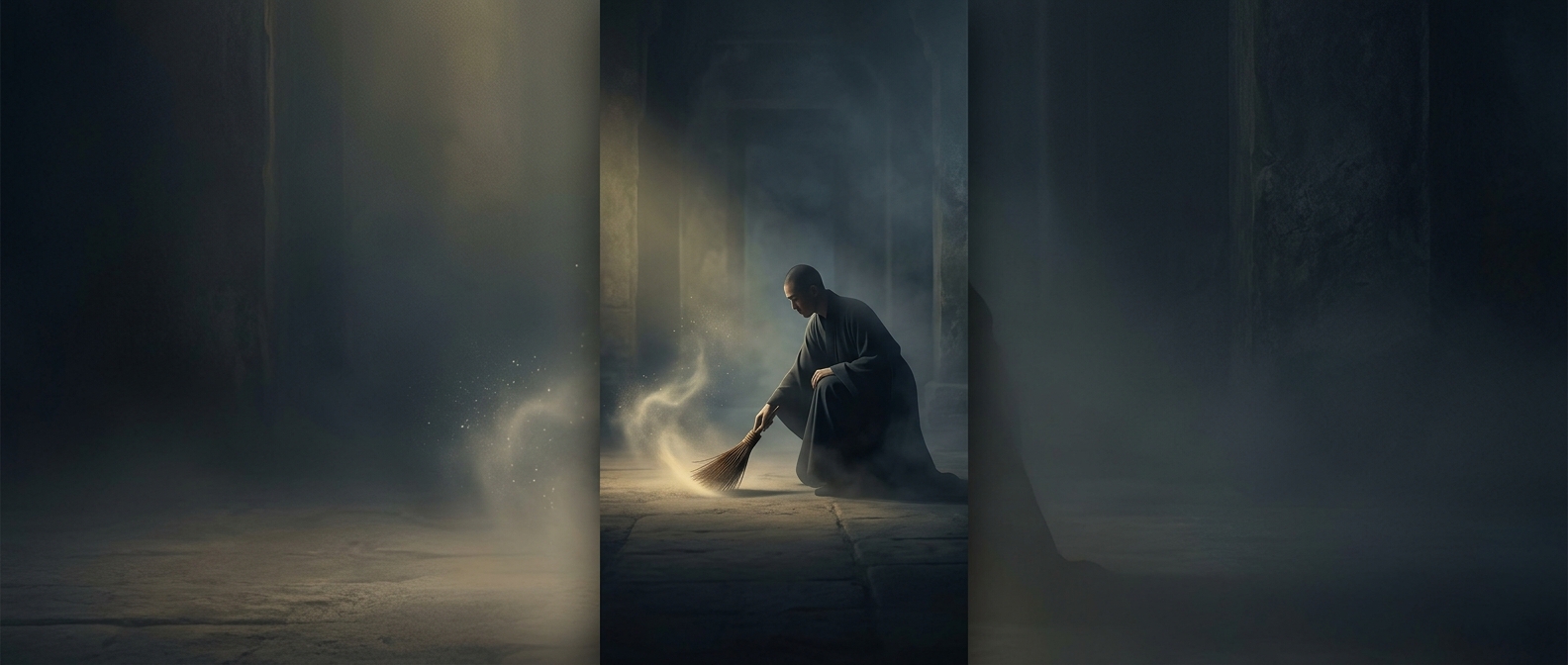
Why a Retreat May Ask People Not to Meet Each Other’s Eyes
At an ordinary gathering, a glance can start a whole exchange: someone looks back, a smile follows, and both people begin reading the other’s expression. Even without words, eye contact can invite acknowledgment and response. A retreat that discourages it is reducing one small but persistent channel of social interaction—not just asking participants to stay quiet.
How Gaze Can Pull Attention Outward
People naturally use faces to judge whether they are being noticed, welcomed, or evaluated. That can redirect attention toward other participants and toward the question of how one appears to them. Avoiding eye contact removes some of those cues, making it easier to let attention return to the breath, bodily sensations, or the meditation instruction.
It can also reduce the pressure to respond. If two people lock eyes in a hallway, one may feel expected to smile or acknowledge the other. Looking away helps keep such encounters from turning into tiny social obligations.
A Practical Boundary, Not a Universal Rule
Retreat guidelines vary. Some ask participants to avoid eye contact as part of a broader effort to limit conversation and social signaling; others may be less strict. The practice does not mean that looking at someone is inherently harmful. It creates a quieter social environment by limiting cues that ordinarily draw people into interaction.
The effect is concrete: even in a room full of people, participants can be given fewer reasons to monitor one another—and more space to attend to their own experience.