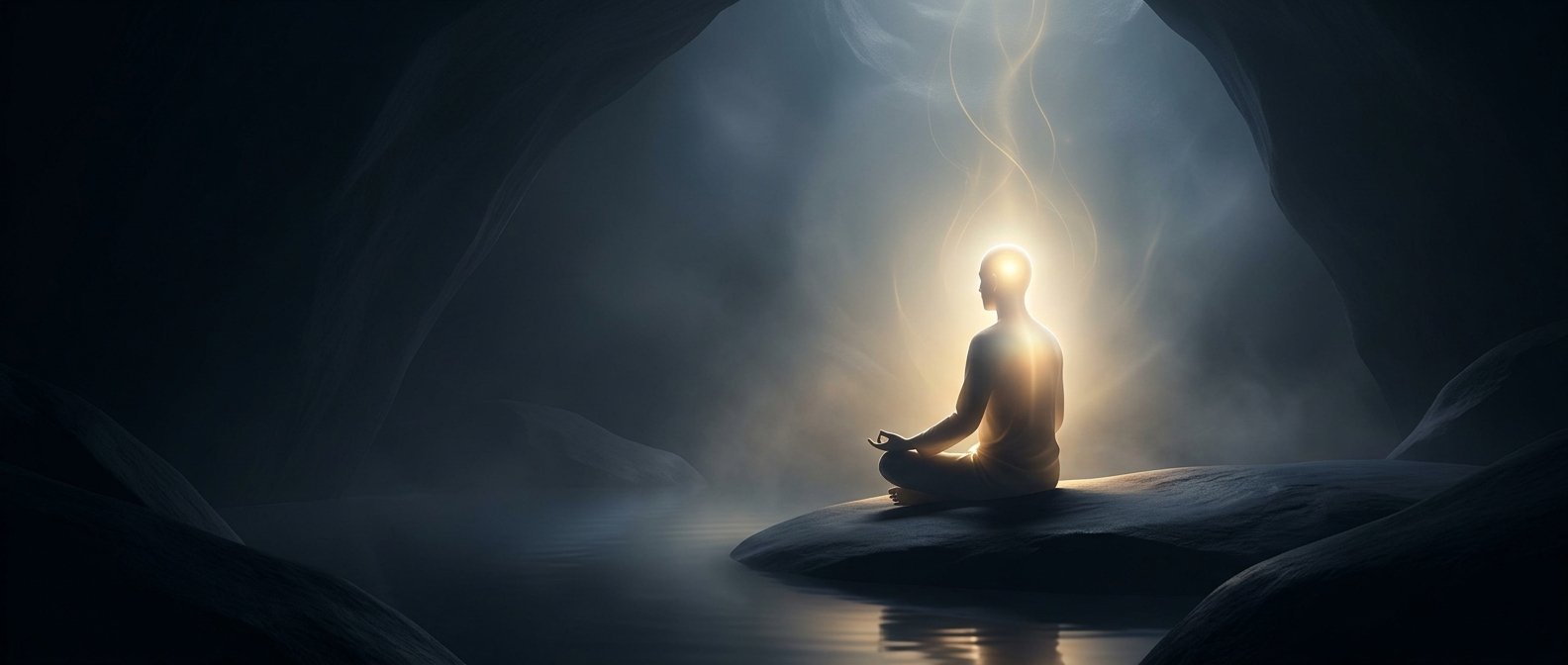
What Retreat Removes—and What It Leaves Behind
A retreat changes the conditions of attention. With conversation, chores, and other people’s demands temporarily reduced, a person has fewer cues pulling thought outward. Memories, worries, images, and questions that were easy to overlook can become more noticeable. Solitude does not supply a revelation by itself; it gives inner experience more room to occupy awareness.
For mystics, that inward attention may be part of a deliberate spiritual practice rather than simply time alone. Prayer, meditation, silence, or contemplation can provide a focus for the mind as external activity falls away. The practice gives practitioners a way to attend to what arises—and, in some traditions, to understand it in relation to the sacred.
Why the Experience Can Feel Significant
When familiar distractions recede, a thought may feel unusually vivid or consequential. Mystical traditions often treat such moments as invitations to reflection, not merely as private feelings to collect: practitioners may test an insight against their beliefs, ethical commitments, or guidance from a community. The meaning of an experience therefore depends partly on the framework used to interpret it.
Solitude can make an inner question harder to ignore, but it cannot guarantee what answer will appear. Its distinctive effect is simpler: it creates space in which a thought, fear, or sense of purpose can be examined without being immediately displaced by the next demand.