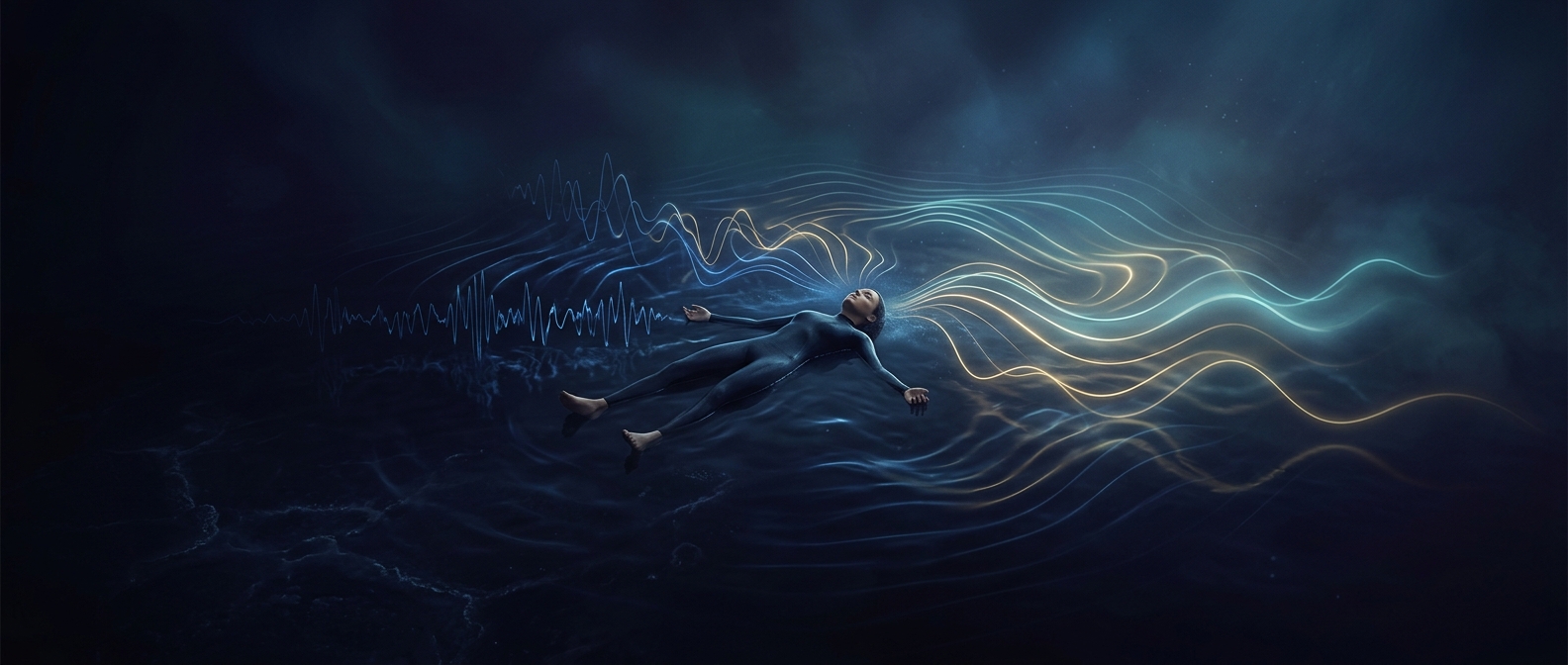
Why floating can change brain activity
A float tank makes the body unusually easy to ignore. Dense salt water supports a person with little effort, while darkness, quiet, and warm water reduce the stream of sights, sounds, and pressure sensations the brain normally uses to track its surroundings. The brain does not switch off; it has less incoming information to process and may shift how it distributes attention.
Researchers studying this kind of restricted-sensation environment have observed changes in brain-wave patterns, including rhythms associated with relaxed wakefulness. These are electrical patterns measured at the scalp, not direct readings of a person’s thoughts or spiritual state. The response varies: some people feel calm or absorbed, while others remain alert or find the unfamiliar quiet uncomfortable.
The experience is real; its interpretation is personal
With fewer outside cues, sensations that usually fade into the background—such as breathing, a heartbeat, or the feeling of time passing—can become more noticeable. A person may also feel unusually light or detached because the water supports the body and the usual visual references are absent. Those sensations can feel profound without requiring a supernatural explanation.
Calling the experience an “ascension” can express what it means to someone, but brain-wave changes do not establish that consciousness has moved to another plane. They show that the brain is responding to a distinctive environment. The striking part is how much a shift in ordinary sensory input can alter the texture of an experience while the person remains awake and in the same tank.