Why the Bread Matters in Mary of Egypt’s Story
The account of Mary of Egypt is a hagiography—a religious life written to present a holy person as an example. Its desert setting and sparse food are part of that purpose. Bread is not just a survival detail: it marks the point at which ordinary human support runs out, leaving Mary’s life in the wilderness as a story of radical withdrawal and religious devotion.
The narrative does not explain her years there as a practical method for living in the desert. It presents them as an extraordinary spiritual transformation. Readers are meant to understand the deprivation as evidence of how completely her life has changed, not as advice about what a person could safely endure.
An Account of Repentance, Not a Survival Record
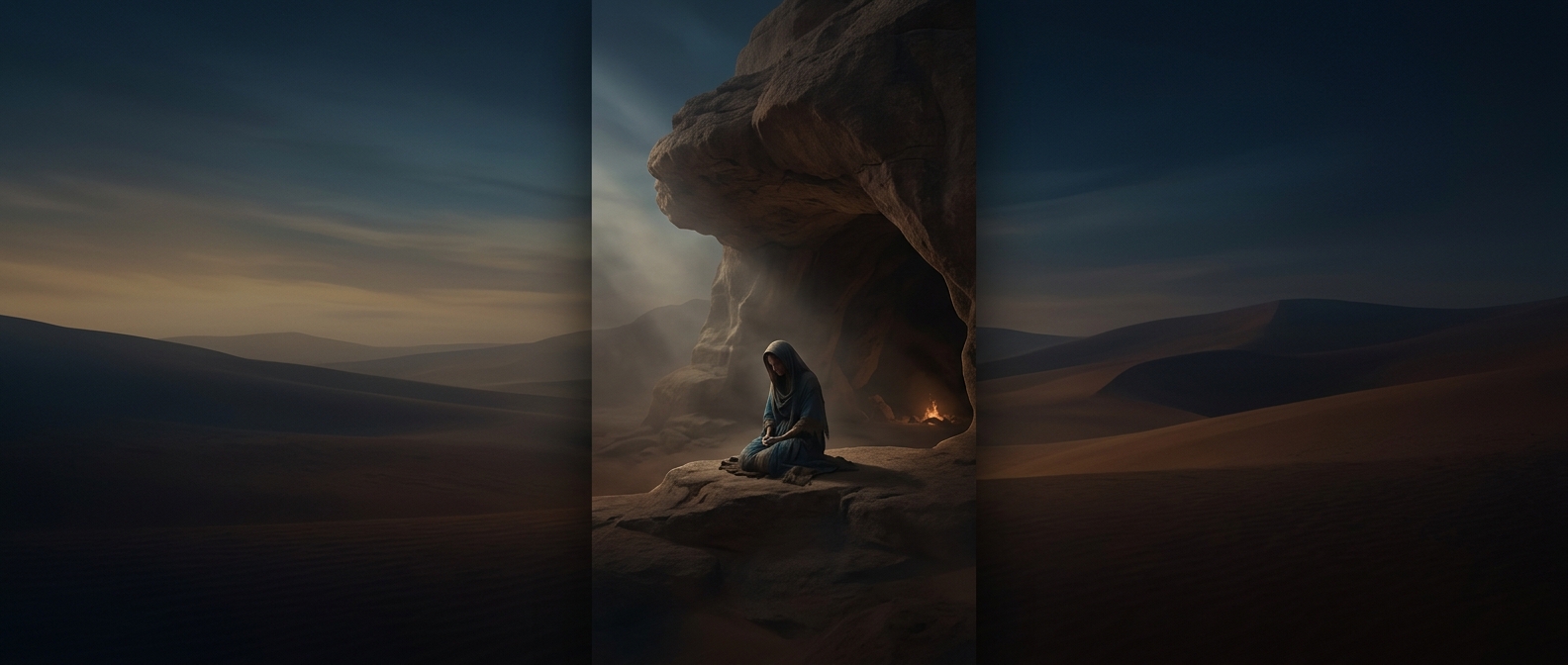
In Christian tradition, the wilderness often serves as a place apart from the distractions and comforts of settled life. Mary’s isolation makes that idea stark: with little food and her clothing wearing away, the story strips her existence down to its most basic needs. The hardship gives physical form to repentance—a turning away from an earlier life and toward God.
That distinction matters. The account conveys what believers found meaningful in Mary’s example; it does not provide the kind of evidence or detail needed to reconstruct her diet or verify the mechanics of survival. Its memorable image is the contrast between a tiny store of bread and decades in the desert: a material limit made into a spiritual measure of renunciation.