How a Lavra Joined Solitude to Community
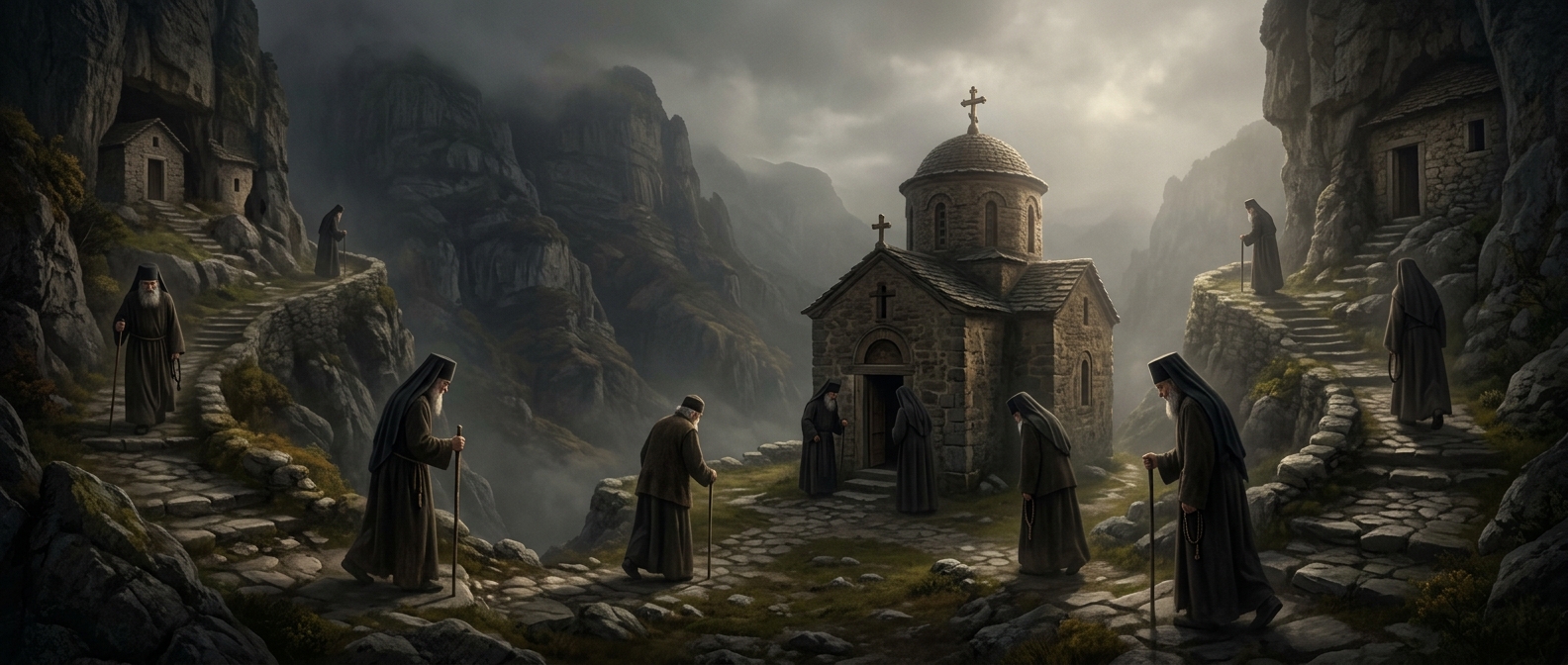
A lavra was a form of Eastern Christian monastic life in which monks lived separately in cells—sometimes caves—rather than sharing one tightly organized dormitory. Their homes were scattered around a central church, close enough for them to come together for worship. The arrangement made solitude part of daily discipline without requiring each monk to live entirely beyond the reach of a community.
Why Sunday Mattered
For most of the week, a monk could pray and work alone. On Sunday, the others gathered for the central service of Christian worship, then returned to their separate dwellings. The weekly meeting kept solitary life connected to shared religious practice: monks could worship together and remain members of one community even while spending their days apart.
That rhythm depended on a practical balance. The central church provided a common destination, while the scattered cells preserved quiet and separation. The result was neither a conventional communal monastery nor a collection of unrelated hermits, but a community whose members repeatedly moved between solitude and fellowship.