A household spirit with a place in the home
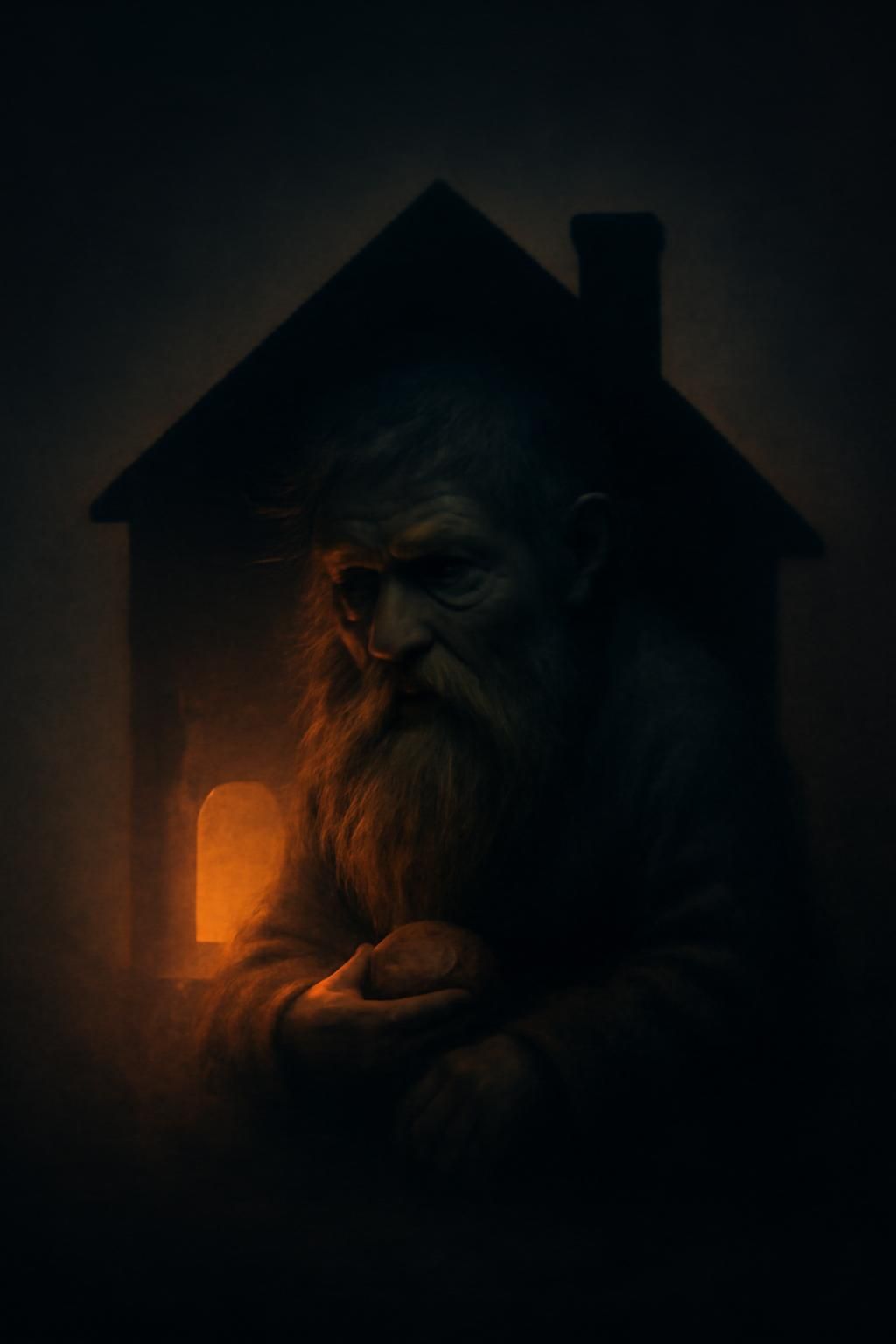
The domovoi belonged to the folklore of domestic life: a spirit imagined not in some distant wilderness, but inside the home, close to the routines that kept a family fed and sheltered. Stories placed him near the stove or threshold, two features that helped organize everyday life—the stove as a center of warmth and cooking, and the threshold as the boundary between household and outside world.
Accounts differed from place to place and family to family. The domovoi might be understood as a protector when treated respectfully, or as a nuisance when neglected. That changeable character made him a way to give familiar household disturbances a personality and a possible meaning.
Small offerings, practical expectations
Leaving food overnight was more than an attempt to appease a troublesome presence. In the logic of the tradition, it expressed a relationship: the household acknowledged its unseen resident, and the resident was expected to look after the home. The offering made that bargain tangible, turning care for the household into a small, repeated ritual.
This way of thinking also gave ordinary events a social explanation. A misplaced object or an unexpected noise could prompt questions about whether the house—and the relationships within it—was being properly cared for. The folklore did not have to explain every creak to serve that purpose; it offered a shared story for living with uncertainty at home.
What the stories kept in view
The domovoi was not simply a monster to fear or a god to worship. He represented the sense that a home had its own character and required attention. A plate set aside at night made that idea visible: keeping a household in good order was imagined as a relationship, not just a list of chores.