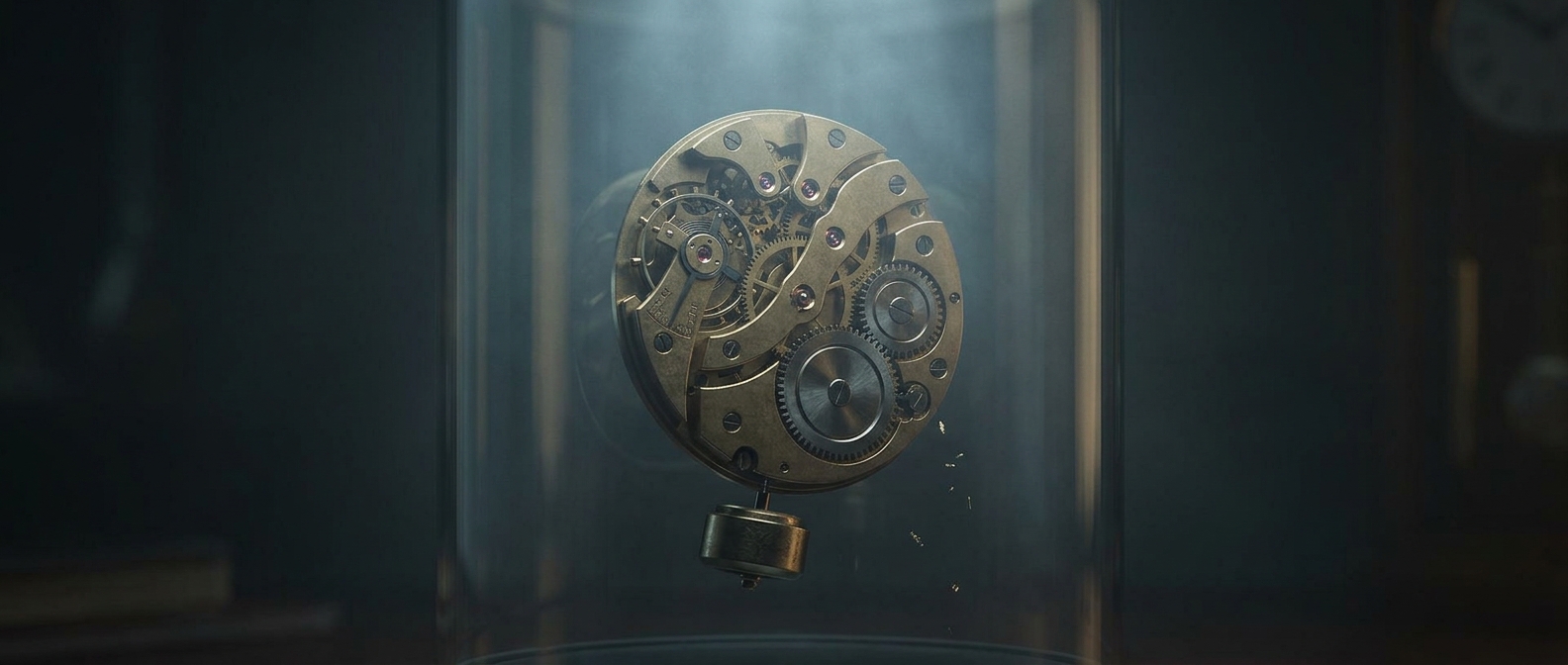
The tiny cage that keeps time moving
Inside a mechanical watch, the escapement meters out stored energy in small, regular steps. Its spring-and-wheel parts also help regulate the watch’s pace. Because those parts are affected by gravity, a watch can run slightly differently when held in one position than another.
A tourbillon places the escapement and its regulating parts inside a small rotating cage. The cage slowly turns, carrying those components through different orientations instead of leaving them fixed in one position.
Why rotation can help
If gravity makes the watch run a little fast in one orientation and a little slow in another, turning the mechanism can spread those positional effects over time. Rather than allowing one orientation’s error to dominate, the watch repeatedly presents the regulating parts at changing angles. The goal is to improve timekeeping by reducing the effect of positional variation—not to eliminate every source of error.
The design makes most sense in a watch that spends long periods in a relatively fixed position, such as a pocket watch. A wristwatch changes orientation as its wearer moves, so the practical benefit can be less decisive: the wearer’s motion already exposes the mechanism to different positions.
Precision made visible
A rotating cage adds moving parts and demands careful construction, so it is a complicated way to pursue a narrow timing advantage. In a luxury watch, its appeal is also visual: an opening in the dial can reveal the cage turning as the watch runs. The mechanism is both a regulating device and an exposed demonstration of how much motion can fit inside a small timepiece.