A moving weight turns motion into stored energy
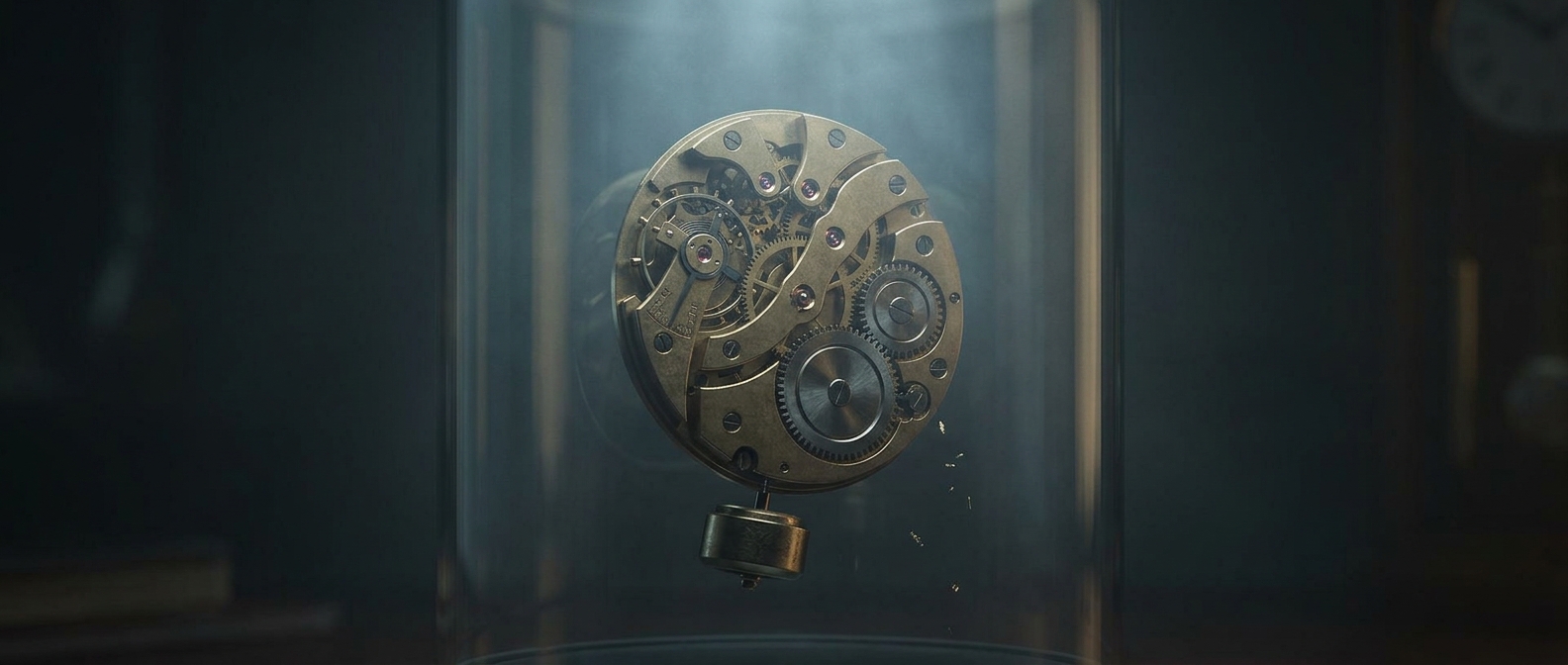
Inside an automatic watch, a semicircular metal weight called a rotor pivots on an axis. When the wearer’s arm changes direction, the rotor swings under gravity and inertia. Its motion drives a train of small gears, which transfers torque—the turning force—to the mainspring, the tightly coiled spring that powers the watch.
The rotor can turn through many small movements rather than needing one deliberate winding. Depending on the watch’s design, gears may wind the spring as the rotor turns in either direction or only one way. In both cases, the mechanism converts ordinary wrist movement into stored mechanical energy.
The spring releases that energy gradually
As the mainspring tightens, it stores energy. It then unwinds slowly, turning the watch’s gear train and, in a mechanical watch, driving the timekeeping mechanism. The escapement—a component that releases energy in measured steps—keeps the gears from simply spinning freely.
Automatic watches are not powered by motion indefinitely. If they sit unworn, the spring eventually runs down and the watch stops. Many designs also use a slipping connection at the mainspring’s outer end, allowing it to slide when fully wound rather than continuing to tighten without limit.
The practical tradeoff is simple: wearing the watch supplies energy, but only while the rotor keeps moving. A watch left on a dresser is still a mechanical machine; it just has no arm to keep its little weight swinging.