Why the Queen of Spades Changes Every Trick
Hearts is a trick-taking card game: each player contributes one card to a small round called a trick, and the highest card in the suit that was led wins it. The winner takes those cards. That makes a card dangerous not because it is high on its own, but because it can end up in a trick someone wins.
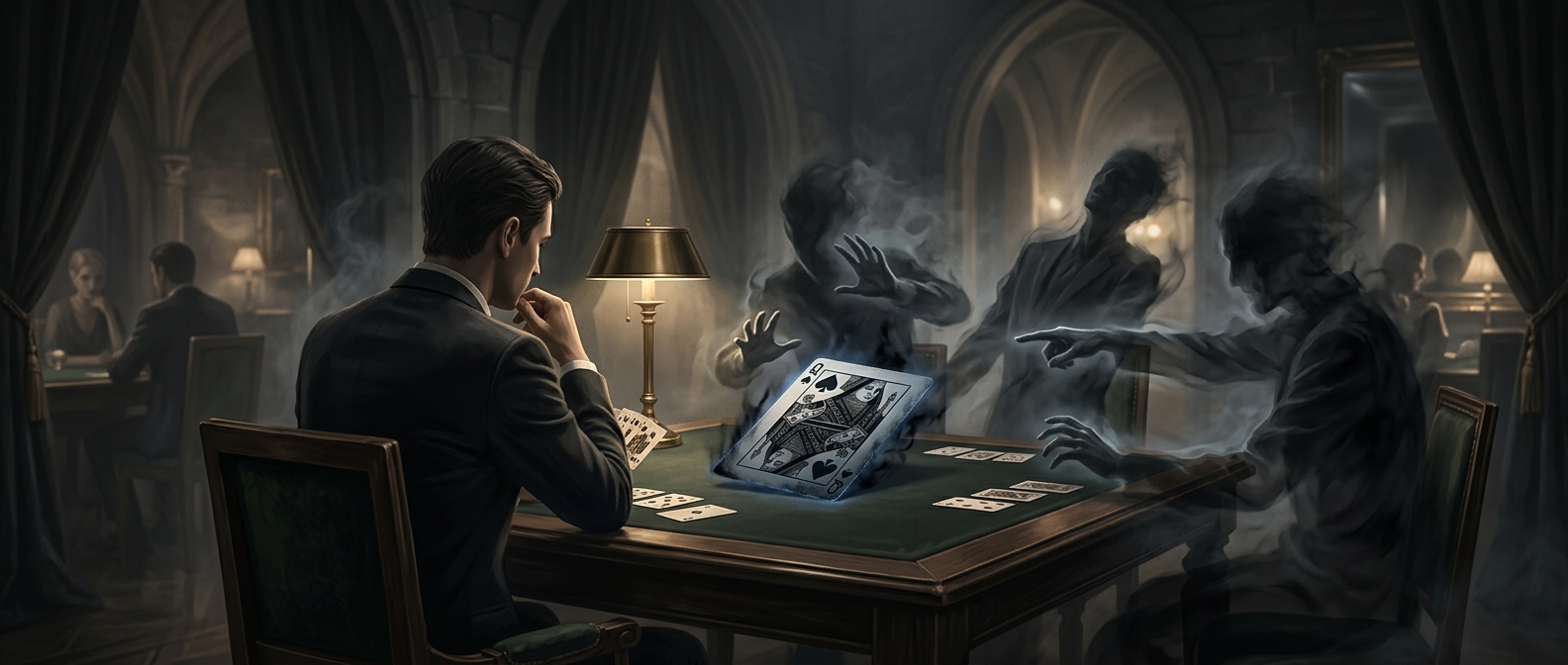
In the common scoring system, each heart taken costs one point, while the Queen of Spades costs 13. Avoiding that queen can matter more than avoiding several hearts, so players watch not only their own cards but also which suits opponents may be forced to play.
How Players Try to Pass the Risk
At the start of a hand, players commonly pass a few cards to an opponent. A high spade can be especially awkward: if it survives until the Queen appears, its owner may be unable to avoid winning the trick. Passing it away can shift that danger—but the recipient may notice the threat and play accordingly.
During play, a player who cannot follow the suit led may often discard a card from another suit. That can be a chance to shed a heart or the queen onto a trick someone else is likely to take. The catch is that opponents can change who wins: a player who leads a low card may be setting a trap, not offering a safe place to discard.
The Exception That Reverses the Goal
In a common version, a player who captures every heart and the Queen of Spades has “shot the moon.” Instead of being punished for taking the penalty cards, that player makes the others take the penalty, though the precise scoring can vary by version. This possibility turns the usual aim inside out: sometimes the safest-looking move is to let an opponent collect points, and sometimes a player must decide whether to risk gathering them all.
That reversal is what gives the queen her force. It is a major hazard—but, in the right hand, it can become the center of an all-or-nothing plan.