Why taking every penalty card can turn Hearts upside down
In Hearts, players try to avoid winning tricks that contain penalty cards. Each heart is worth one point, and the Queen of Spades is worth 13, so collecting all the hearts and the queen normally means taking the full 26-point penalty.
But the game has a reversal: a player who captures every penalty card has “shot the moon.” Instead of keeping those points, that player makes each opponent take them. In a common scoring system, the moon-shooter scores zero for the hand while the other three players each receive 26 points.
The hard part is controlling the whole hand
Shooting the moon is not simply a matter of grabbing high cards. Hearts is a trick-taking game: players play one card each, and the highest card of the suit led usually wins the trick and takes its cards. To claim every penalty card, a player must steer who wins many different tricks—and ensure no heart or the Queen of Spades slips to someone else.
That demands a strong hand and careful timing. High cards can help take control, but they can also force the player to win tricks before the penalty cards appear. Meanwhile, opponents may deliberately hold back hearts or the queen, or use them to break up the attempt. A failed moon-shot can be costly because the would-be shooter may end up with a large share of the penalty cards.
A threat that changes everyone’s decisions
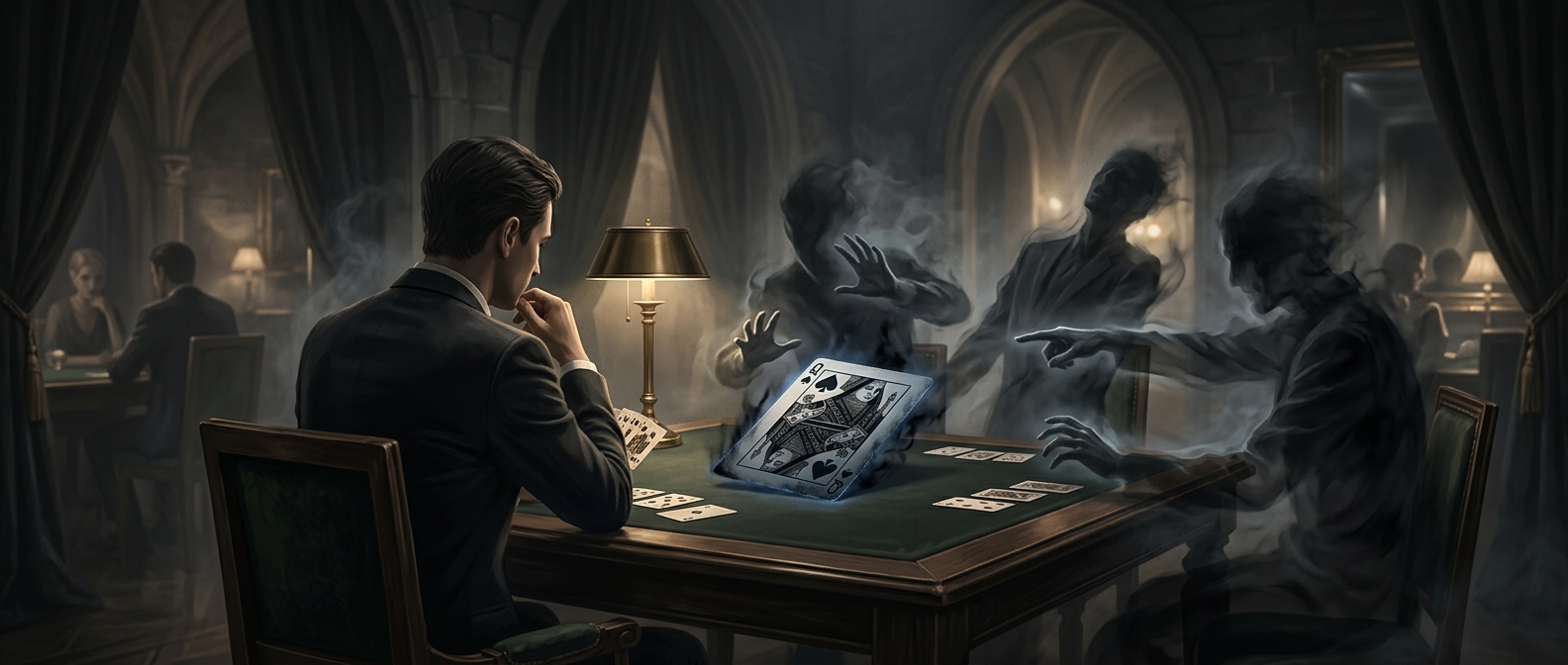
Once a player appears to be collecting every point card, the others have a reason to cooperate temporarily: they may try to pass a penalty card to that player or take a trick that disrupts the sweep. The attempt therefore affects the whole table before it succeeds.
The reversal makes Hearts more than a contest to avoid points. A hand that looks disastrous can become a weapon—but only if the player can capture the final penalty card as well as all the others.