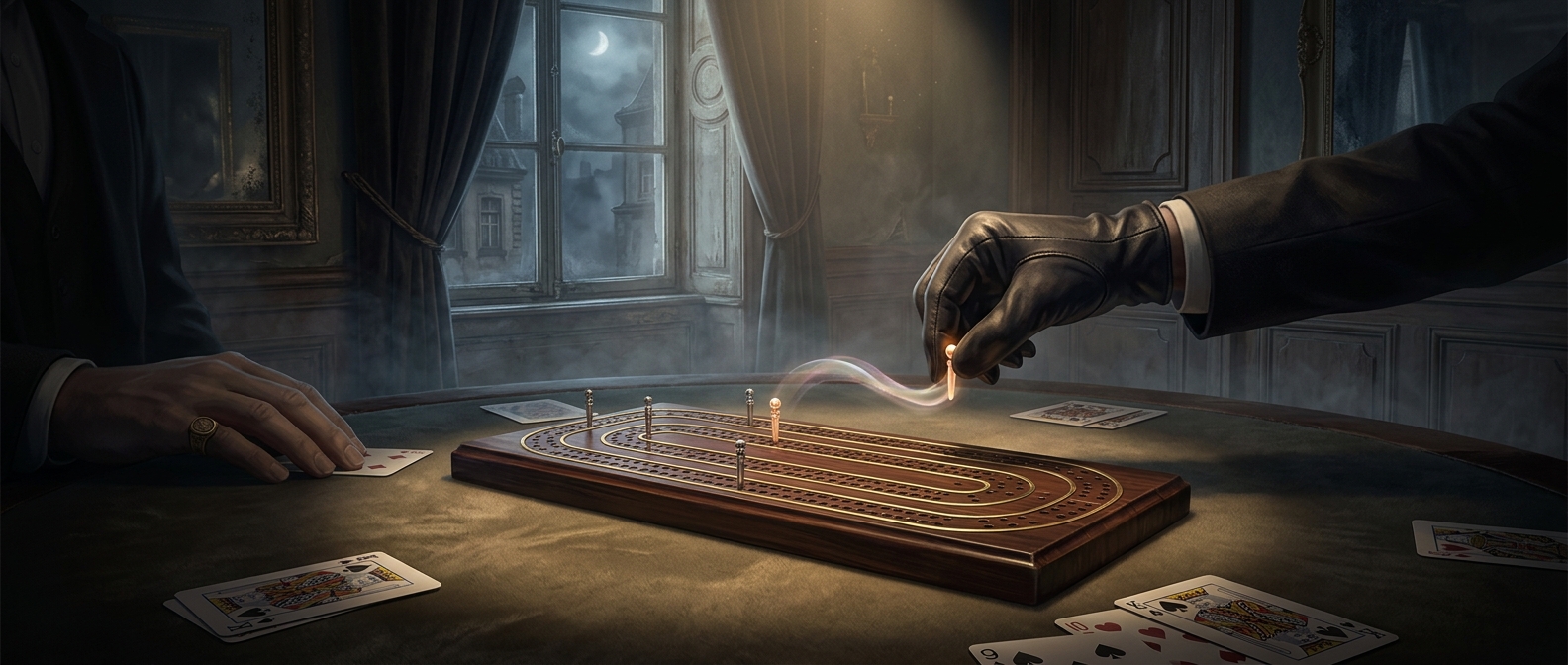
How an overlooked score changes hands
Cribbage hands can score in several overlapping ways: a pair, a run, a flush, or a combination of cards adding to 15 may each earn points. Because one card can help create more than one scoring combination, counting a hand aloud is part of the game—not just a formality.
Under the optional rule commonly called Muggins, a player who announces too low a score risks giving the missed points to the opponent. If the opponent spots the omission and claims it, those points go to the opponent instead of remaining unclaimed. The mistake therefore has an immediate cost, rather than merely leaving the scorer with fewer points than they deserved.
Why players choose the rule
Muggins rewards attentive listening as well as accurate counting. While one player totals a hand, the other has a reason to follow each scoring combination and check the announced result. A quick tally can become a small contest of its own: miss a combination, and your opponent may be ready to take it.
Since Muggins is optional, players can agree beforehand whether to use it. With the rule in play, even a hand that looks familiar deserves a careful count—because the points you overlook may help your opponent reach the finish first.