Why the Dealer Removes a Card
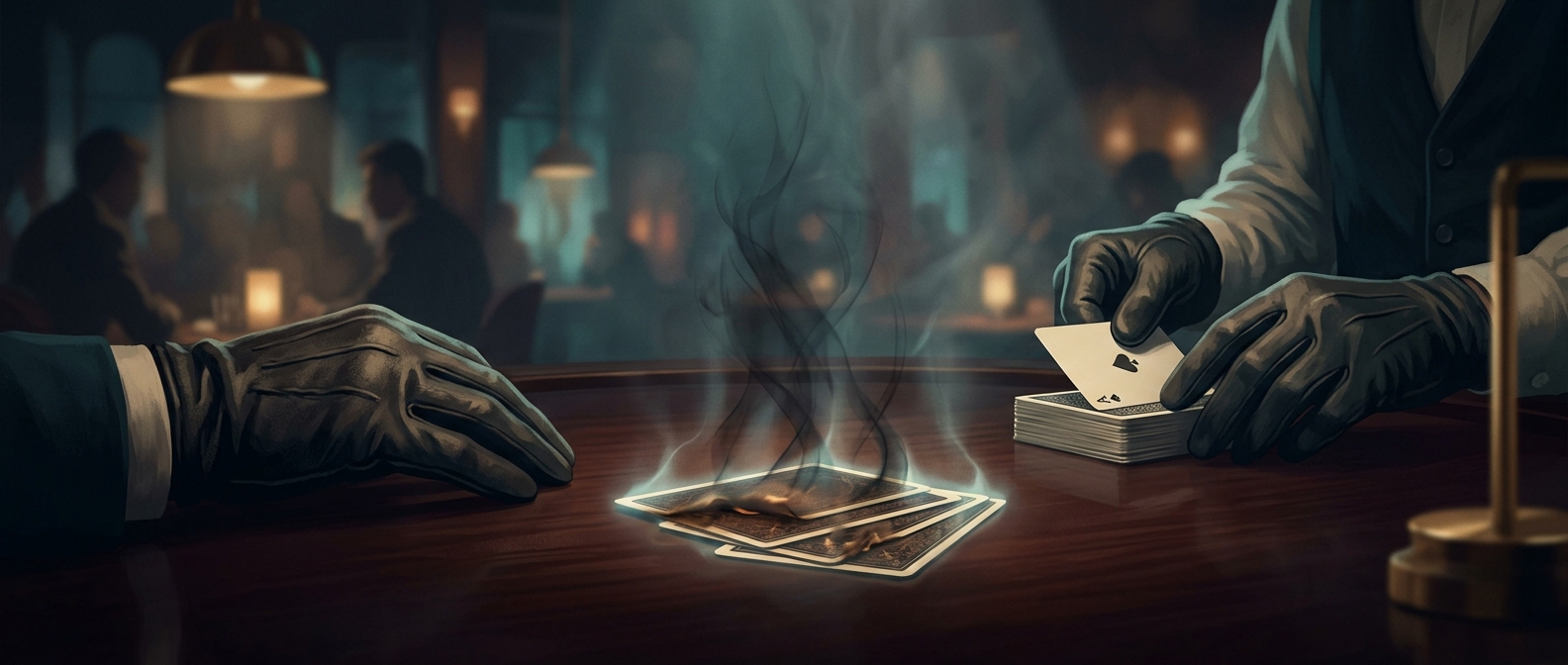
A burn card is a card taken from the top of the deck and set aside before the next deal. In many poker games, the dealer does this before dealing players their hands and again before revealing each new group of community cards. The card is usually placed face down in the discard pile, out of play.
The point is to break the link between the deck’s top card and the next card players actually receive. If someone can recognize a mark on that top card—a scratch, bend, or other tell—they might know what the card is and exploit the information. Removing it means that card cannot become part of a player’s hand or the visible board.
A Small Procedure With a Limited Job
Burning does not make a marked deck safe: a person who can identify other cards may still gain information. Nor does it prevent someone from seeing the top card before it is removed. It is one layer of protection, built into the dealing sequence, rather than a complete defense against cheating.
The procedure also makes the deal harder to manipulate quietly. Because the dealer removes a card at set points in the hand, players can notice if that step is skipped or altered. A single face-down card disappears into the muck, but its removal helps keep the next card unpredictable—and the dealing process consistent.