A living room becomes a ready-made game board
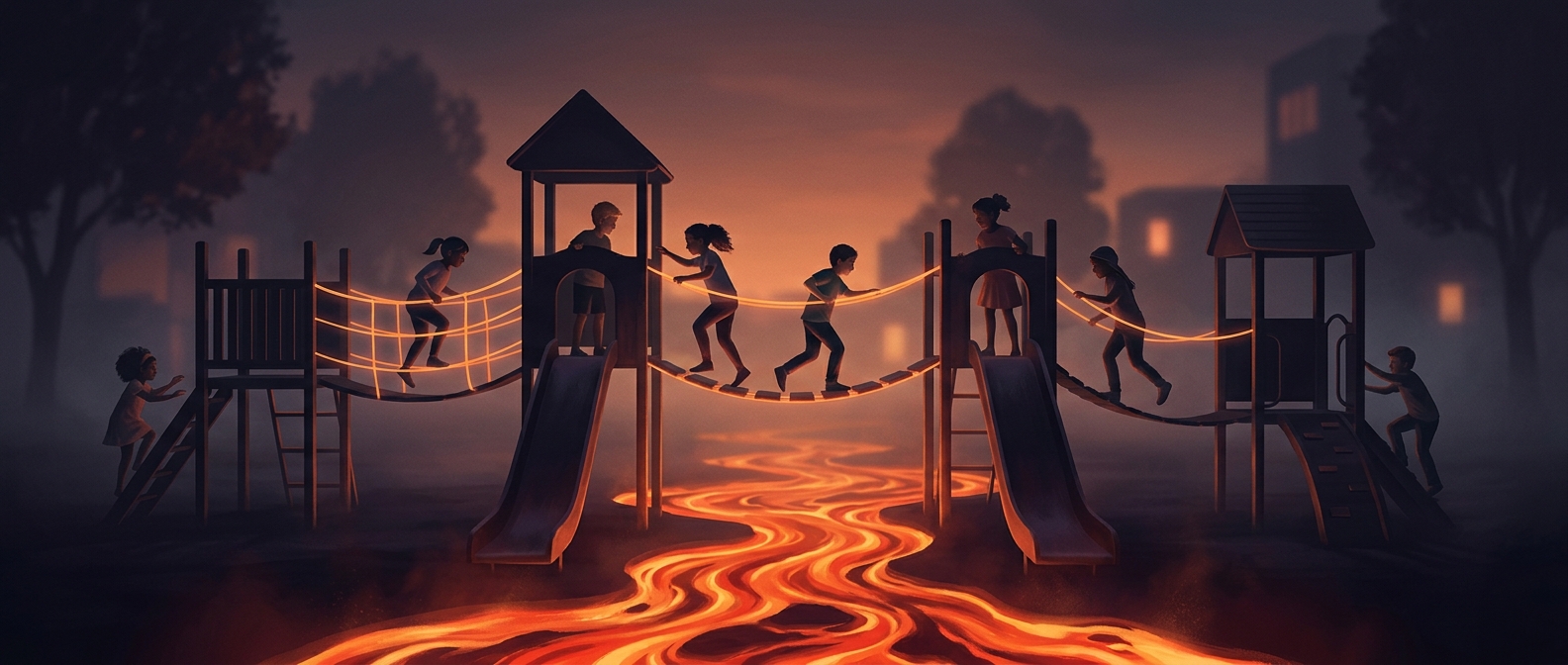
The game needs no equipment or elaborate rules. A child can declare the floor dangerous, then use chairs, cushions, or a sofa as safe territory. Ordinary furniture supplies the obstacles, while an imagined threat gives them a reason to matter. The room is already arranged like a course: gaps to cross, surfaces of different heights, and routes that require a choice.
That simplicity helps explain why the idea can arise in different places without a shared script. The basic ingredients—children who can climb, familiar household objects, and the pleasure of pretending—are common. The precise rules can change from one play session to another, but the central challenge is instantly understandable: get somewhere without touching the forbidden surface.
The make-believe danger creates real decisions
Although the lava is imaginary, the balancing and planning are not. Players test whether a cushion will stay put, judge whether a jump is manageable, and adjust when a route is blocked. They can make the game harder by moving the “safe” spots or easier by allowing a rescue. A simple premise gives children room to negotiate rules, take turns, and invent new obstacles.
The floor is especially effective as the danger because it is both unavoidable in everyday life and easy to redefine for a few minutes. The game turns a familiar room into a challenge using imagination alone—and when play ends, the furniture returns to being furniture.