Why a Tiny Screen Pet Could Feel Like Someone
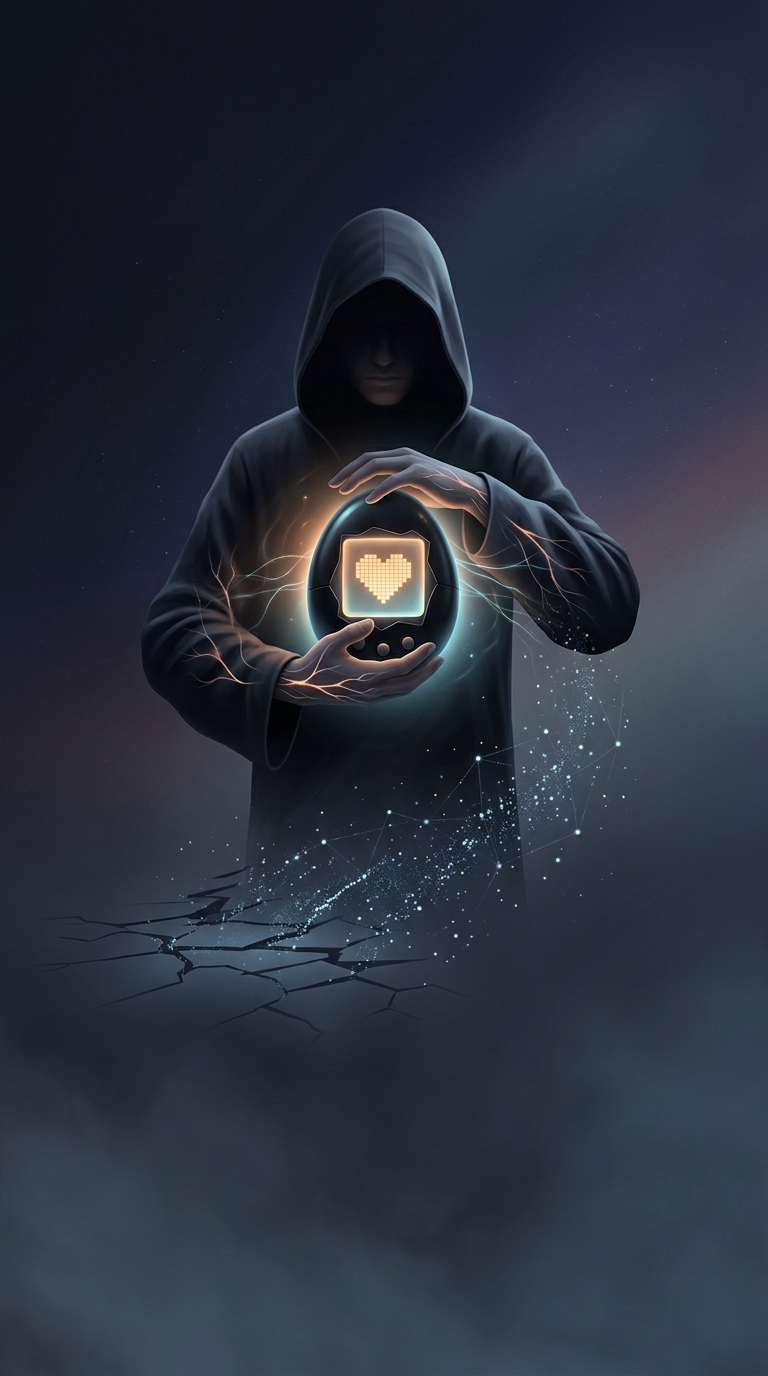
A Tamagotchi offered only a few simple signals: it could ask for food or attention, react to care, and appear to suffer when neglected. But those signals arrived in response to what a person did. That back-and-forth made the device feel less like a toy being operated and more like a dependent being being cared for.
The psychological pattern often called the Tamagotchi effect is the tendency to treat a responsive machine as if it had feelings or needs. It does not mean users necessarily believed the digital pet was alive. Rather, familiar social habits—answering a call for help, noticing distress, feeling responsible—can switch on when something behaves as though it depends on us.
Responsibility Makes the Attachment Stick
The key was not realistic graphics. A small, abstract creature could prompt concern because it kept returning to the user with a need. Feeding it or cleaning up after it produced an immediate result; ignoring it could lead to visible deterioration or its virtual death. The owner’s actions seemed to matter, and that sense of responsibility gave routine button presses emotional weight.
That mechanism helps explain why people could feel genuine sadness when a digital pet died, even while knowing it was software. The feeling came from a real investment of attention and care, not from mistaking pixels for a living animal. The memorable twist is that a creature with no body and only a handful of programmed responses could still make its owner feel accountable for another life.