A heart turns a puzzle object into a companion
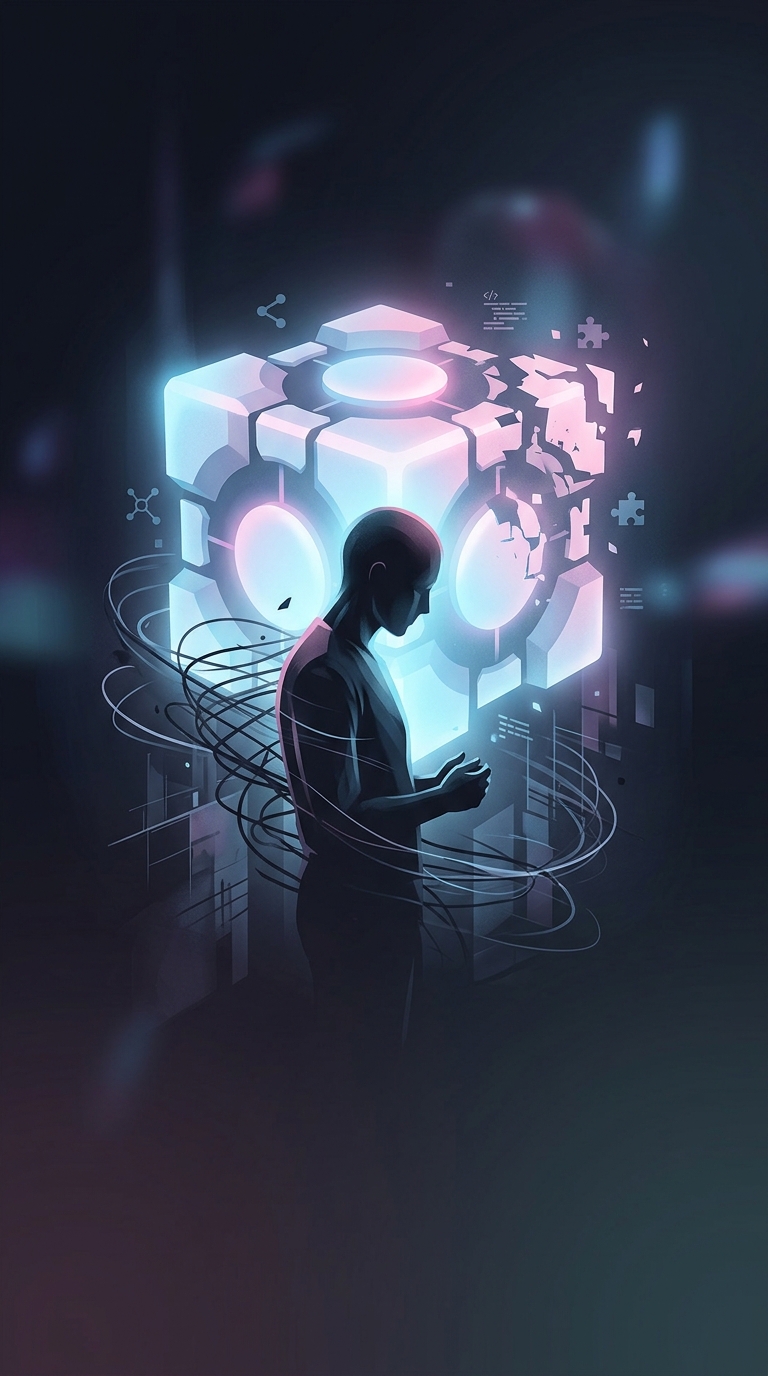
In Portal, the Companion Cube is mechanically just another Weighted Storage Cube: a block the player can pick up and use to hold down floor switches. The pink heart painted on its sides changes how that plain tool reads. Hearts are an immediate visual cue for affection, so the cube feels less like interchangeable equipment and more like something the player might care about.
That contrast is the point. The cube cannot speak, move on its own, or help the player beyond its practical use. Its “personality” comes from the design around it—and from the player’s own impulse to read meaning into the heart.
The puzzle makes the attachment matter
Portal eventually asks the player to send the Companion Cube into an incinerator to proceed. The game has already made the cube visually distinctive, then puts the player in a situation where discarding it is necessary. The action still serves a puzzle, but the heart gives it an extra emotional charge: the player is not merely clearing away a block but letting go of an object the game has framed as a companion.
That is efficient storytelling through gameplay. Rather than stopping to explain what the cube means, the game uses a small visual detail and a consequential choice. The heart matters because the player has to act on the attachment the design invites.