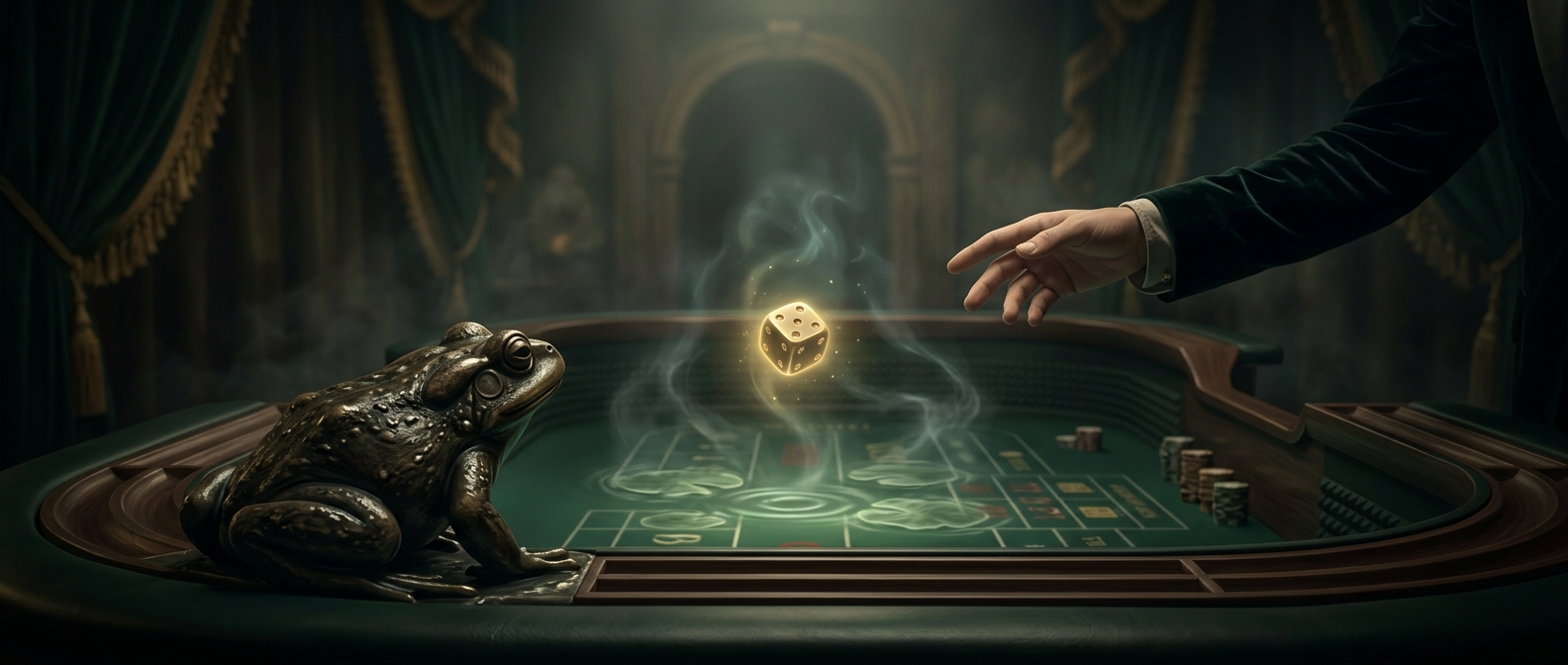
A call turns a roll into a table-wide signal
At a craps table, the stickman does more than retrieve the dice with a long hooked stick. The stickman watches each throw, announces its total, and helps keep the game’s sequence legible to a crew of dealers and players gathered around a crowded layout. A roll can affect several bets at once, so the call is a quick public signal: everyone can hear the result without leaning in to inspect the dice.
The language is compressed and rhythmic. Some totals have familiar casino nicknames—“yo” for 11, for example—rather than being announced only as numbers. Regulars recognize the shorthand instantly; a first-time player may still be working out what was rolled while the table has already moved on.
The rhythm keeps bets and rolls in sequence
Craps has distinct phases. On the come-out roll, the shooter establishes a point if the dice show certain totals; later rolls can win or lose depending on whether that point appears again. Between throws, players may add or change eligible bets. The stickman’s calls help mark those transitions, while the dealers handle the wagers in their sections of the table.
That division of labor matters. A clear, prompt result lets the crew settle affected bets and prepare for the next throw without stopping to explain every step. The brisk cadence is useful in a game where multiple players can have different bets riding on the same pair of dice.
Why beginners can lose the thread
The call is designed for a group already familiar with the vocabulary and sequence, not as a private lesson for each newcomer. A beginner may be trying to decode the nickname, understand whether the roll changes the game’s phase, and decide what to bet—all while the table is moving. The chant is therefore both an efficient announcement system and a reminder that craps rewards learning the layout before joining in: knowing the call makes it easier to know when the next decision is yours.