Hazard’s two-stage wager
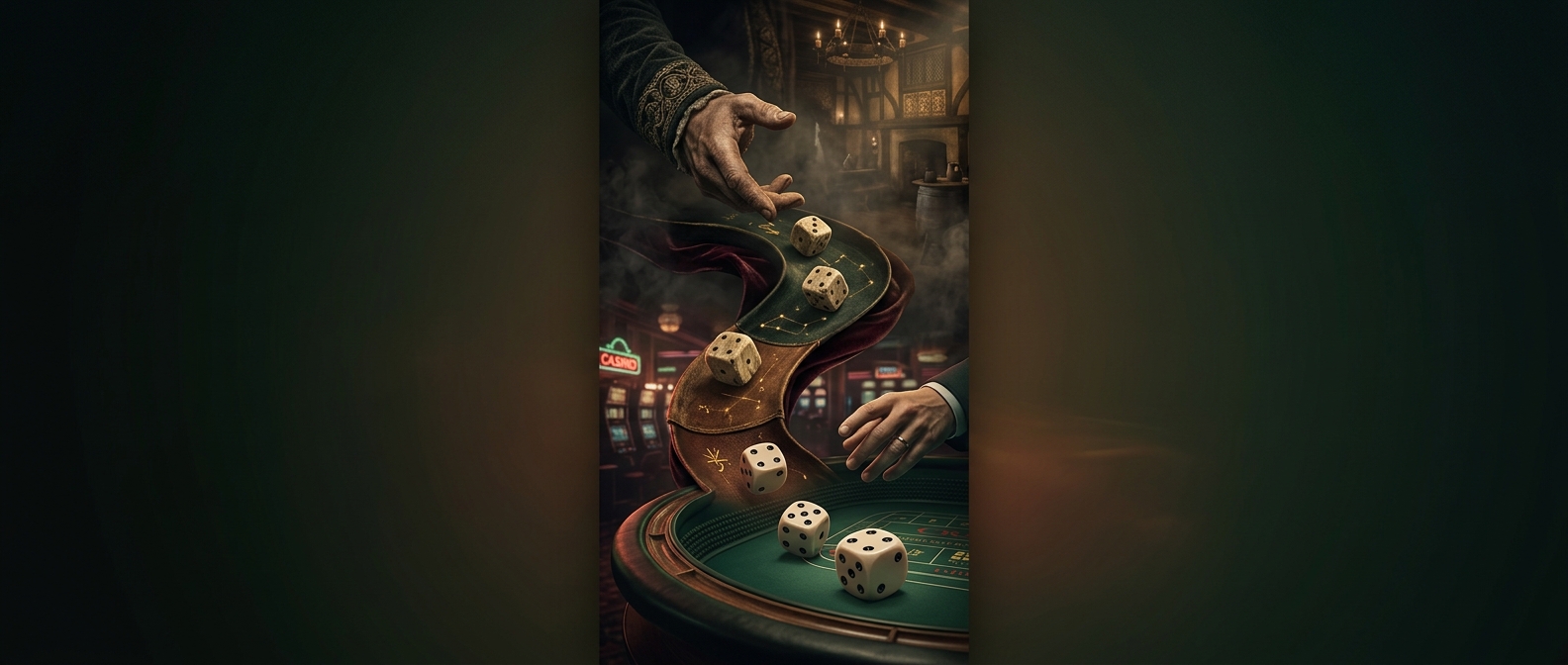
Hazard was not simply a matter of rolling the highest number. Its central idea was to make a target number part of the game. A player, called the caster, chose a number—often called the main—and rolled two dice. The opening roll could settle the wager immediately; otherwise, the caster kept rolling, with the result depending on whether the main or a losing number appeared first. The rules included several possible targets and outcomes, which made the game more demanding to follow than its descendant.
How the rules became easier to follow
Craps preserves the suspense of “which number comes first?” but organizes it around a more standardized sequence. In modern craps, the first roll of a turn is the come-out roll. A 7 or 11 wins for one common wager, while 2, 3, or 12 loses; other totals establish a point. The shooter then rolls again, trying to repeat that point before rolling a 7.
That structure gives players a clear event to watch: once a point is set, the question is whether it or a 7 will arrive first. Hazard’s outcomes were tied more closely to the chosen main and the particular opening roll, so players had more rules to keep in mind.
A faster game, still built on suspense
The change was more than a shorter rulebook. A recognizable opening roll and a simple point-or-seven contest make it easier for a group to follow a turn together, while repeated rolls keep the outcome uncertain. Craps therefore retains Hazard’s central tension—the race between dice results—but puts it into a sequence that can be learned quickly and played at a lively table.