Why the egg sets the mitochondrial inheritance pattern
A fertilized egg receives far more than a sperm’s DNA. The egg contributes nearly all the embryo’s cytoplasm—the fluid and structures surrounding its nucleus—including the mitochondria that will be copied as cells divide. Sperm are streamlined for delivering nuclear DNA; their mitochondria are concentrated near the tail, where they help power movement.
That difference gives the egg’s mitochondria a substantial head start. After fertilization, sperm mitochondria are generally marked for breakdown and removed by the embryo’s cellular cleanup systems. As a result, the mitochondrial DNA (mtDNA) passed from one generation to the next usually comes from the egg, and therefore from the mother.
A separate, small genetic inheritance
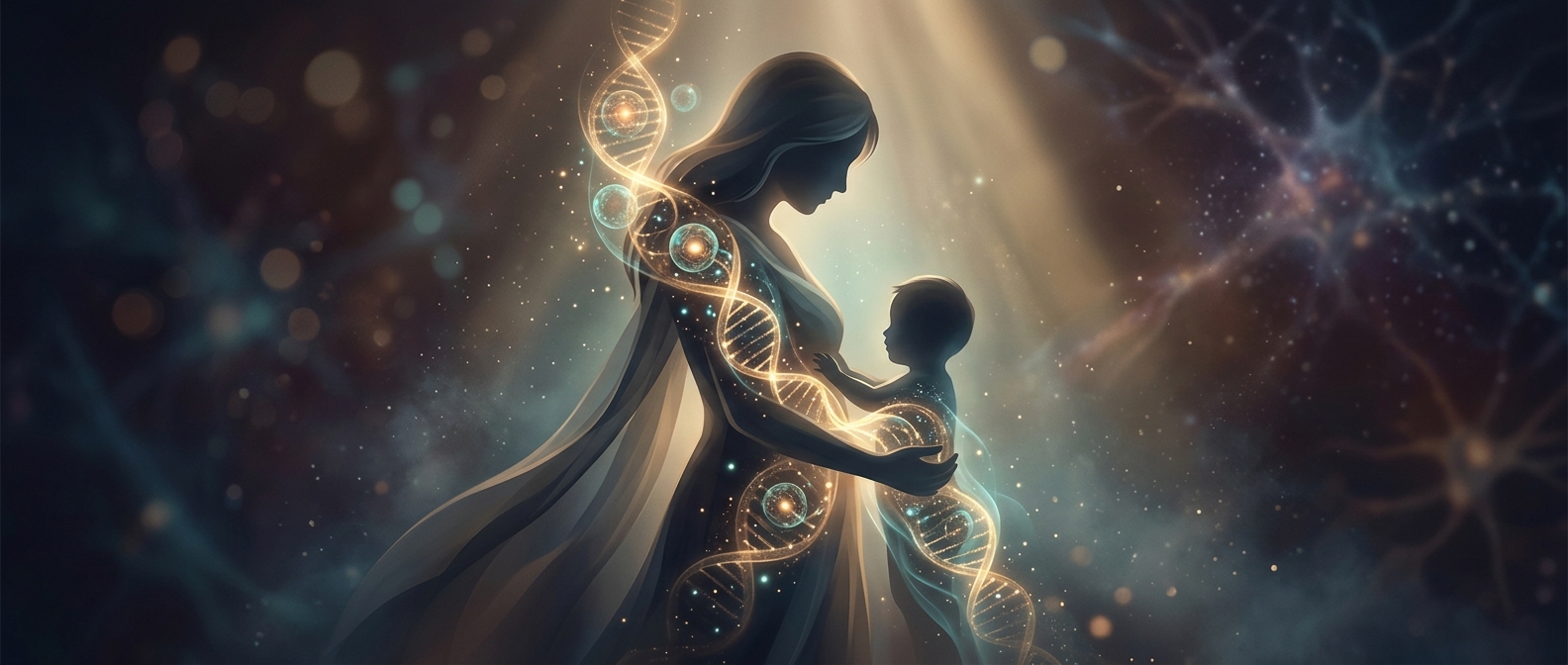
Mitochondria help cells convert food into usable energy. They carry their own small set of genes, separate from the much larger collection of genes in the cell nucleus. Because mtDNA is usually inherited maternally, it can trace a maternal line: a mother can pass her mtDNA to children of any sex, but typically only her daughters pass it on to the next generation.
This is distinct from inheritance of most traits, which depends on nuclear DNA received from both parents. The maternal pattern matters in medicine because changes in mtDNA can affect how well cells meet their energy needs. It also provides a useful clue in family history: following mtDNA means following the mother’s line, not the full ancestry of either parent.
The pattern is not an absolute biological rule—rare cases of paternal mtDNA transmission have been reported—but it is so strongly predominant that, in ordinary inheritance, a child’s mitochondrial lineage points back through the egg.