A telephone call had to become a physical recording
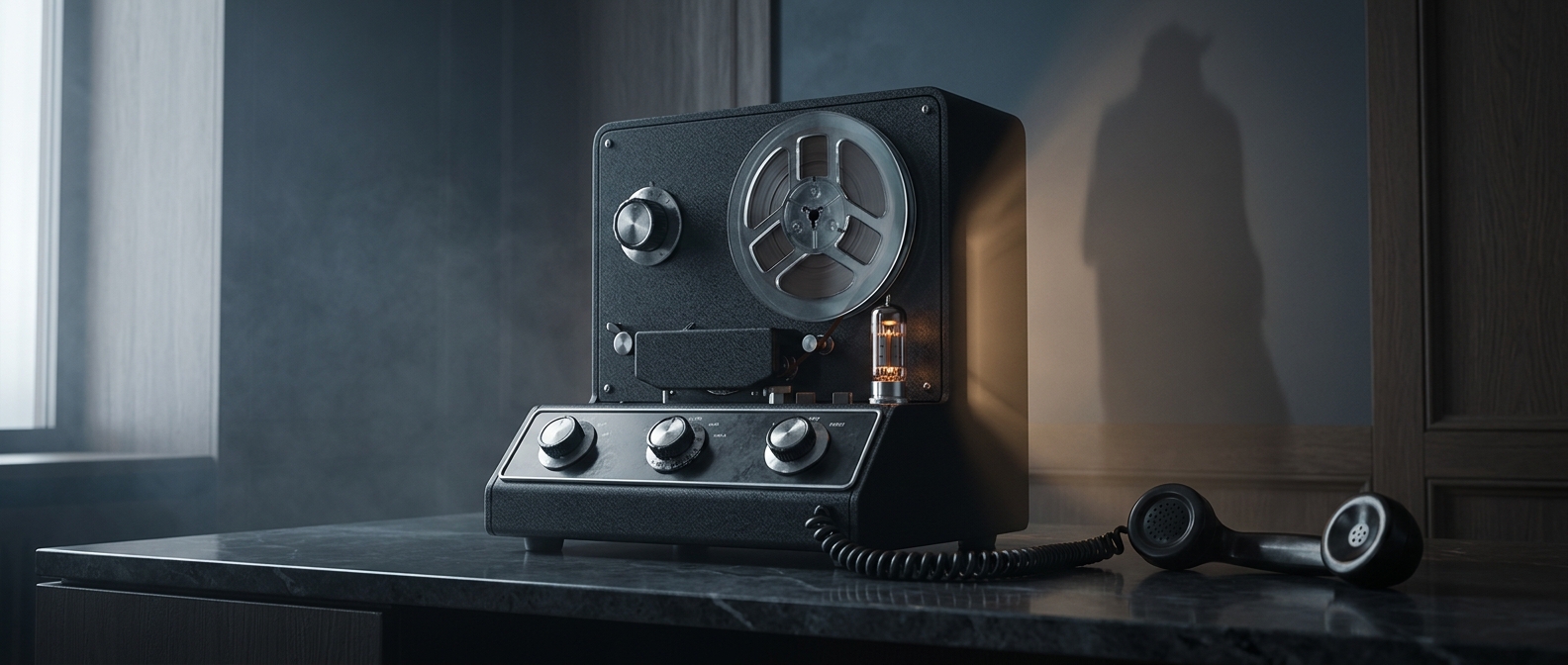
An answering machine did more than detect that nobody had picked up. It had to play a greeting, capture a caller’s voice, and preserve that sound so it could be heard later. In the 1950s, the “Electronic Secretary” did this with recording media that moved through a mechanical system: vinyl records or spools of wire.
The two media stored sound in different ways. A record represented sound as tiny variations in a groove; a wire spool stored it as changing magnetic patterns. Either way, recording and playback depended on moving parts to carry the medium past the equipment that converted sound into a signal—and back again. That made the machine a substantial piece of hardware, not simply an extra feature built into a telephone.
The tradeoff behind the bulk
A modern phone can store a message as digital data in a small chip. The Electronic Secretary had to handle the recording medium itself, along with the mechanisms and controls needed to record and replay it. Its 40-pound weight reflects that different engineering bargain: callers’ voices could be saved for later, but only by bringing a machine with a physical recording system into the home.
That also changed what “checking messages” meant. The message was not an invisible item waiting inside the phone line; it was sound fixed onto a record or wire and played back by the device. The first answering machines made a routine now handled by a tap feel more like operating a small household appliance.