A program had to become a physical deck
Before a computer could run a program, its instructions had to be translated into patterns of holes on cards. A card punch machine let a programmer or keypunch operator enter those patterns; a card reader then sensed the holes and converted them into information the computer could process. The cards were not simply a row of ones and zeros: common formats used combinations of holes to encode letters, numbers, and symbols.
A program therefore existed in two forms: as human-readable instructions and as a carefully ordered stack of cards. The computer read that stack in sequence, so even a correct instruction in the wrong position could change what the program did—or make it fail.
Small edits could mean handling the whole deck
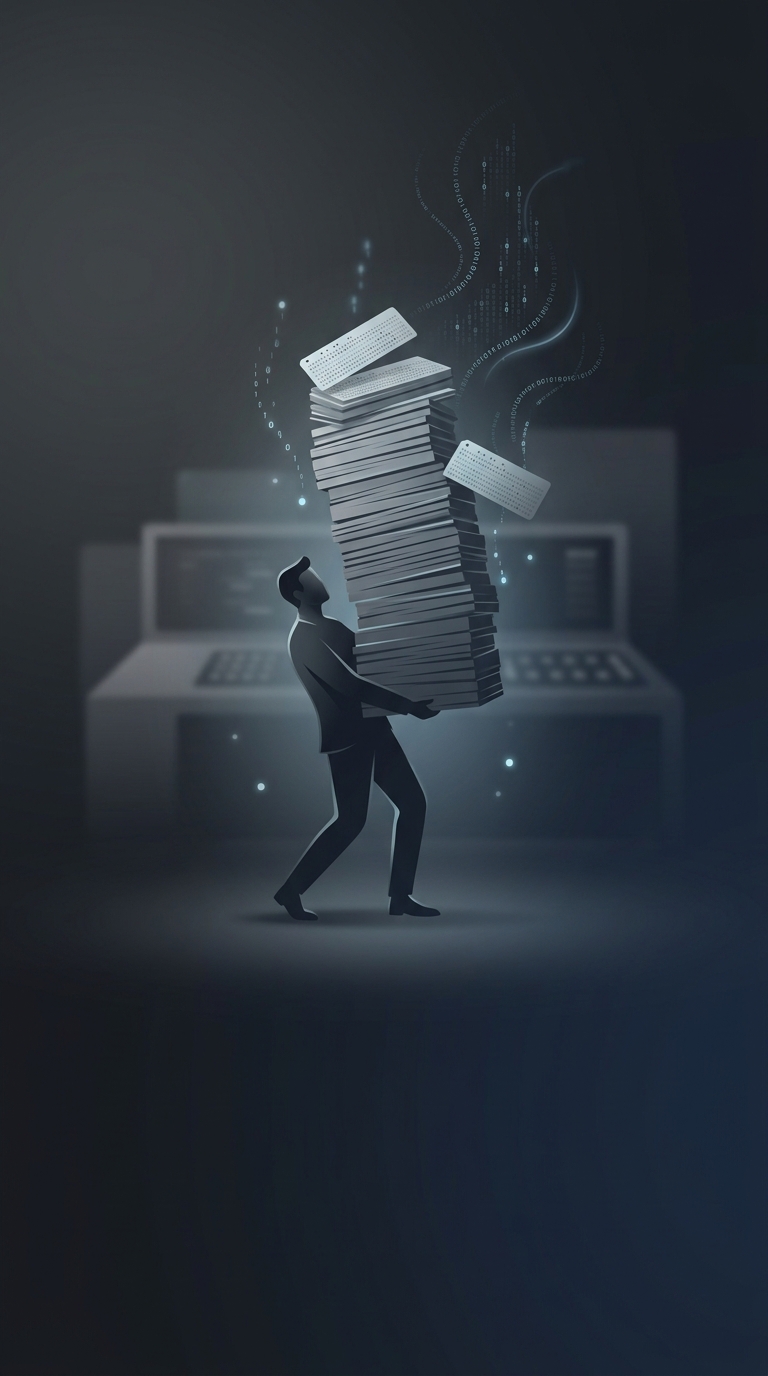
Cards made programs easy to feed into machines that processed work in batches, but they made revision physical. To change a line, someone usually had to punch a replacement card and put it in the right place. Numbering cards could help restore order after a mishap, but it did not eliminate the work of checking the sequence, especially when a deck was large or its markings were unclear.
That physical workflow shaped programming: people often prepared and checked decks away from the computer, then submitted them to be read as a job. A misplaced card could waste more than paper; it could mean waiting for the computer to process a faulty run before the error became apparent. In that era, debugging could begin with sorting the program back into order.