How a Muscle Turn Turns On—and Resets
A myosin head cannot grab actin whenever it wants. In a resting muscle, a protein strand called tropomyosin blocks many of the places where myosin could bind. A nerve signal prompts the muscle cell to release calcium, which shifts that strand and opens the binding sites.
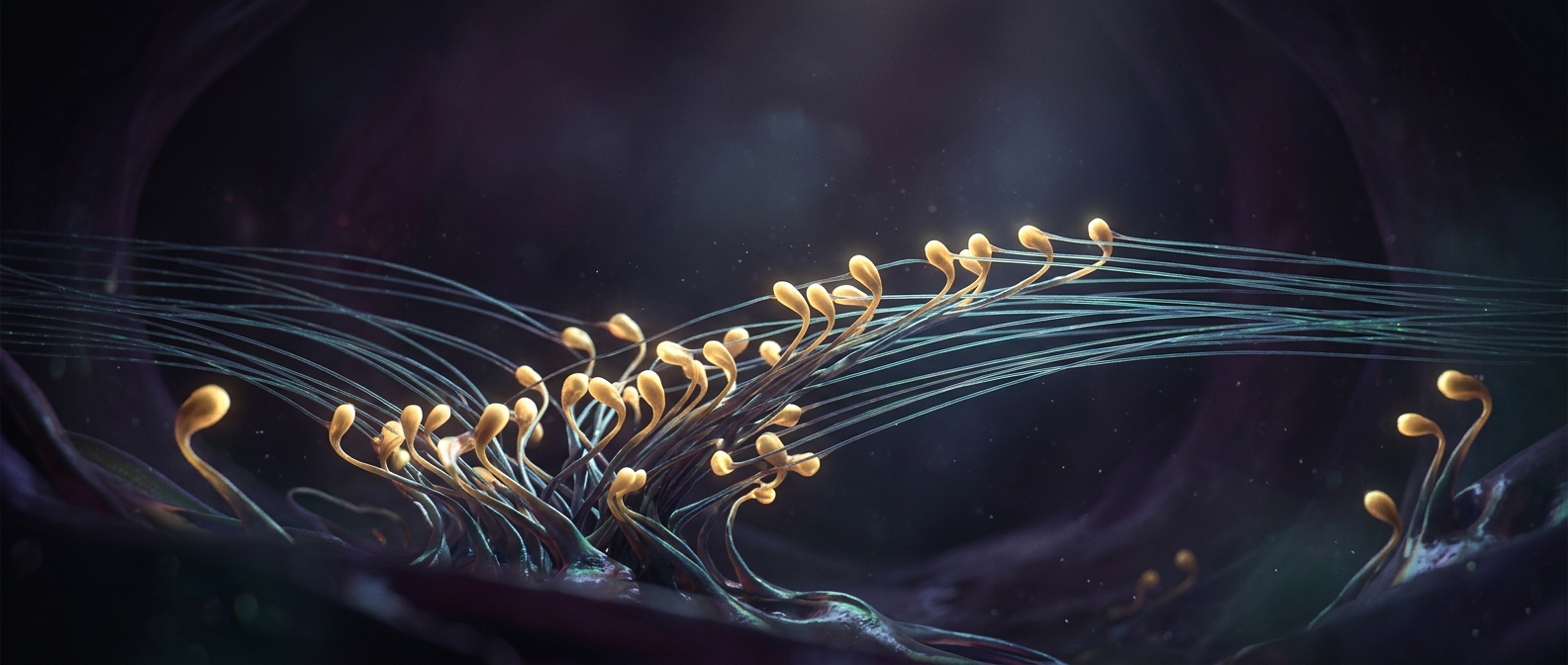
Once attached, a myosin head changes shape and draws actin inward. This force-producing change is called a power stroke. The thin and thick filaments slide past each other; they do not shrink. Repeated across the tiny, orderly units inside a muscle fiber, that sliding shortens the units and can pull on a tendon.
Why ATP Matters
After its stroke, myosin stays attached until it binds a molecule of ATP, the cell’s usable energy currency. ATP makes myosin let go. The myosin head then breaks down that ATP, which resets it into a position where it can bind actin and pull again.
As long as calcium keeps the binding sites accessible and ATP is available, many myosin heads cycle through attachment, pulling, release, and reset. They do not all pull at precisely the same instant, so the muscle’s force is sustained by overlapping cycles rather than one synchronized tug.
When the nerve signal stops, the cell uses energy to pump calcium back into storage. Tropomyosin again covers the binding sites, fewer myosin heads can attach, and the muscle relaxes. So ATP has a double job: it helps power the cycle, and it is also needed for myosin to release actin—one reason a muscle cannot simply relax by running out of energy.