Why the early 2000s feel gentler in hindsight
For many Millennials, the early 2000s are tied to years when adult responsibilities were still distant: school, friends, family routines, and the first tastes of independence. Remembering an era through that life stage can make it feel safer than it was. The past is not stored like a complete recording; memory rebuilds events, and ordinary happy moments can become easier to summon than daily frustrations.
A different pace of attention
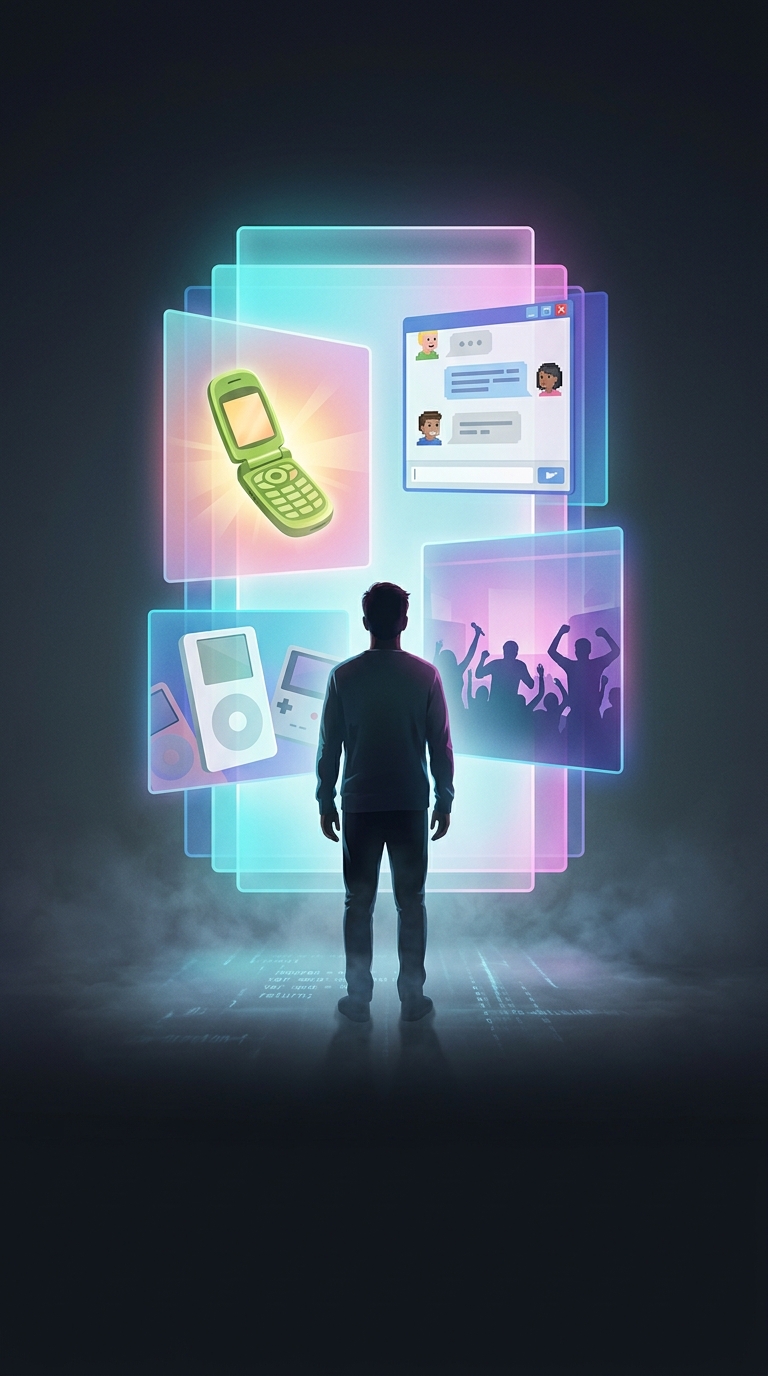
The technology of the time also offers a vivid contrast with life now. Phones and the internet were already part of everyday life, but many people were not yet reachable through a stream of social feeds, alerts, and messages at every moment. Music on a CD, a show watched at its scheduled time, or a plan made face-to-face could make leisure feel more bounded. That does not mean the period was free of stress; it means some kinds of digital pressure were less woven into daily routines.
Nostalgia edits—and connects
Nostalgia is a warm, selective way of revisiting the past. It can strengthen a sense of personal identity by linking a person to the music, games, fashions, and shared routines they remember from growing up. When the present feels crowded or uncertain, those familiar details become especially appealing. Pop culture reinforces the effect by repeatedly bringing back recognizable styles and sounds, turning private memories into a shared picture of the era.
The result is less a claim that the early 2000s were perfect than a feeling that life then had fewer demands. What people often miss is not the whole decade, but the version of themselves who experienced it.