Ricin attacks a ribosome’s working core
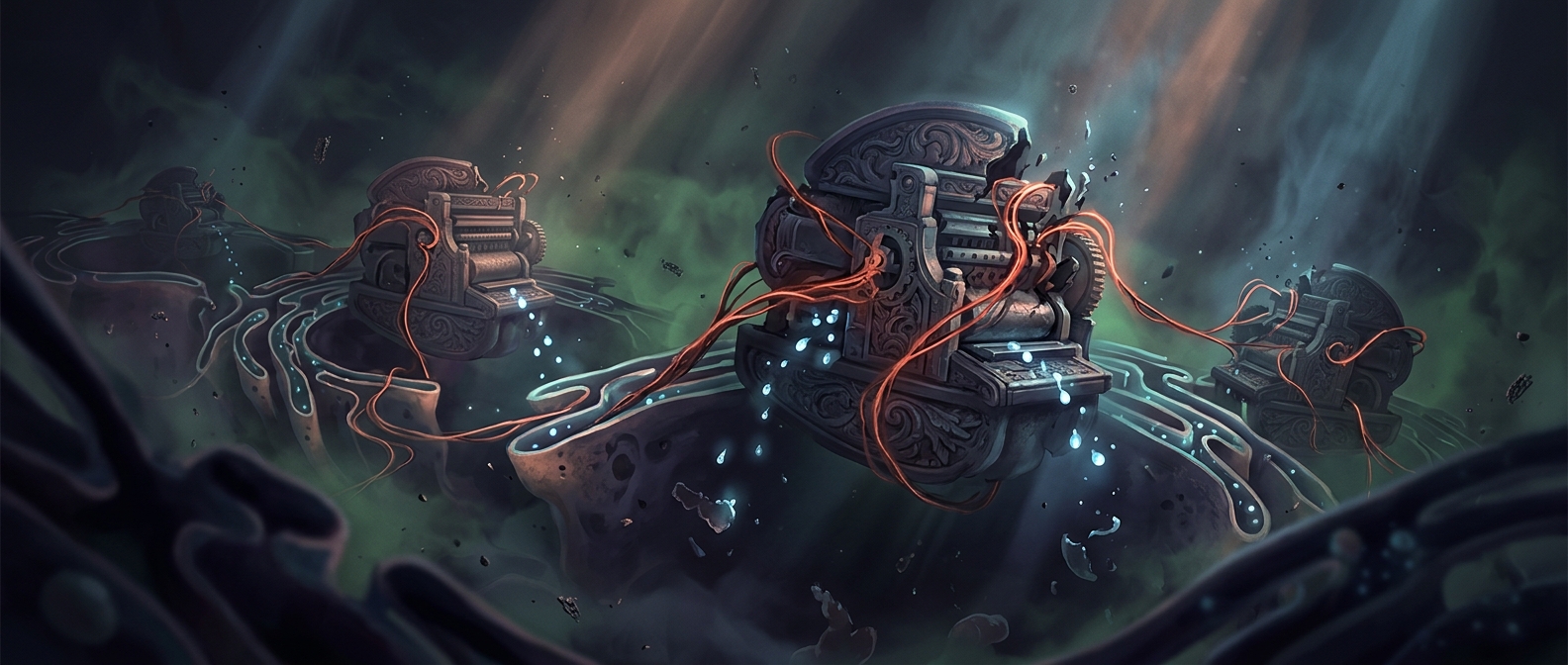
A ribosome builds proteins by reading a cell’s genetic instructions and joining amino acids in the right order. Ricin disrupts that process with a molecular split of labor: one part helps the toxin attach to and enter a cell, while another part damages the ribosome itself.
Inside the cell, ricin’s active component removes a single building block from ribosomal RNA, a structural part of the ribosome. That tiny change is enough to disable a key region of the machinery. The ribosome can no longer work properly with the molecules that move protein production forward, so the assembly line stalls.
Why one damaged component matters
A cell constantly makes proteins to maintain its structure, run chemical reactions, and respond to changing conditions. When protein production falters, existing proteins still function for a time, but they are not replaced as they wear out or are damaged. The cell’s systems progressively lose the parts they need to keep operating, and severe damage can lead to cell death.
Ricin’s effect is therefore not simply that it destroys a cell’s proteins directly. It disables the process that replenishes them—turning a microscopic alteration in ribosomal RNA into a breakdown across the cell’s essential functions.