Darkness changed the performance, not the sound
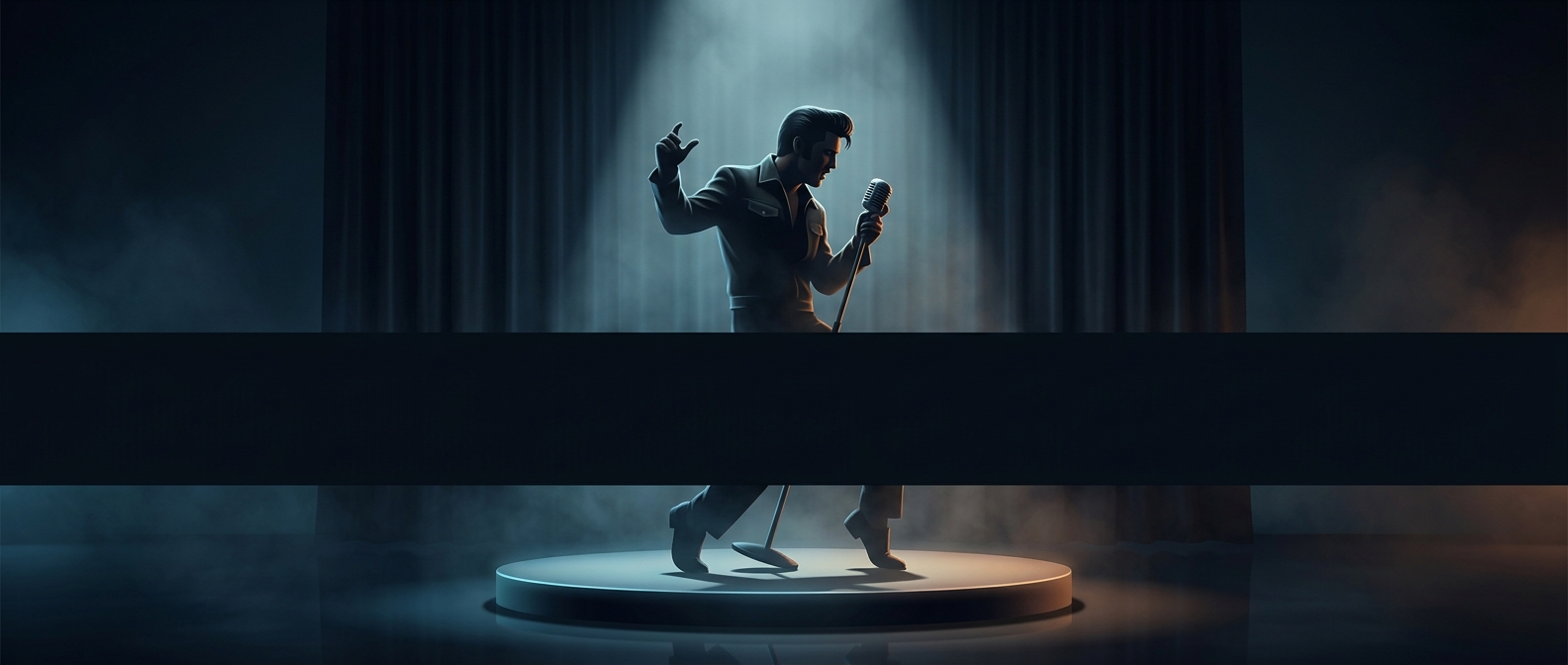
Turning off the studio lights could not alter how the microphone captured Elvis’s voice: light has no effect on the recorded sound. The change was in the room he had to perform in. With the visual surroundings gone, the song’s intimate mood came from the conditions of the performance rather than from an audio effect.
That choice carried a practical cost. A microphone stand is easy to avoid when you can see it; in pitch darkness, moving around it becomes guesswork. Elvis sometimes bumped into the stand, interrupting takes. A take is one complete attempt to record a performance, so even a small collision could mean stopping and trying again.
Mood came with a tradeoff
The setup put atmosphere and precision at odds. Darkness could help create the inward, private feeling the song called for, but it also made the equipment harder to navigate. The same room that encouraged an intimate performance could disrupt it with a physical mistake.
That tension is the memorable detail: the darkness was part of the performance, but it was not invisible to the recording process. It could shape the mood—and send a take off course with one misplaced step.