A radio pulse becomes a direction arrow
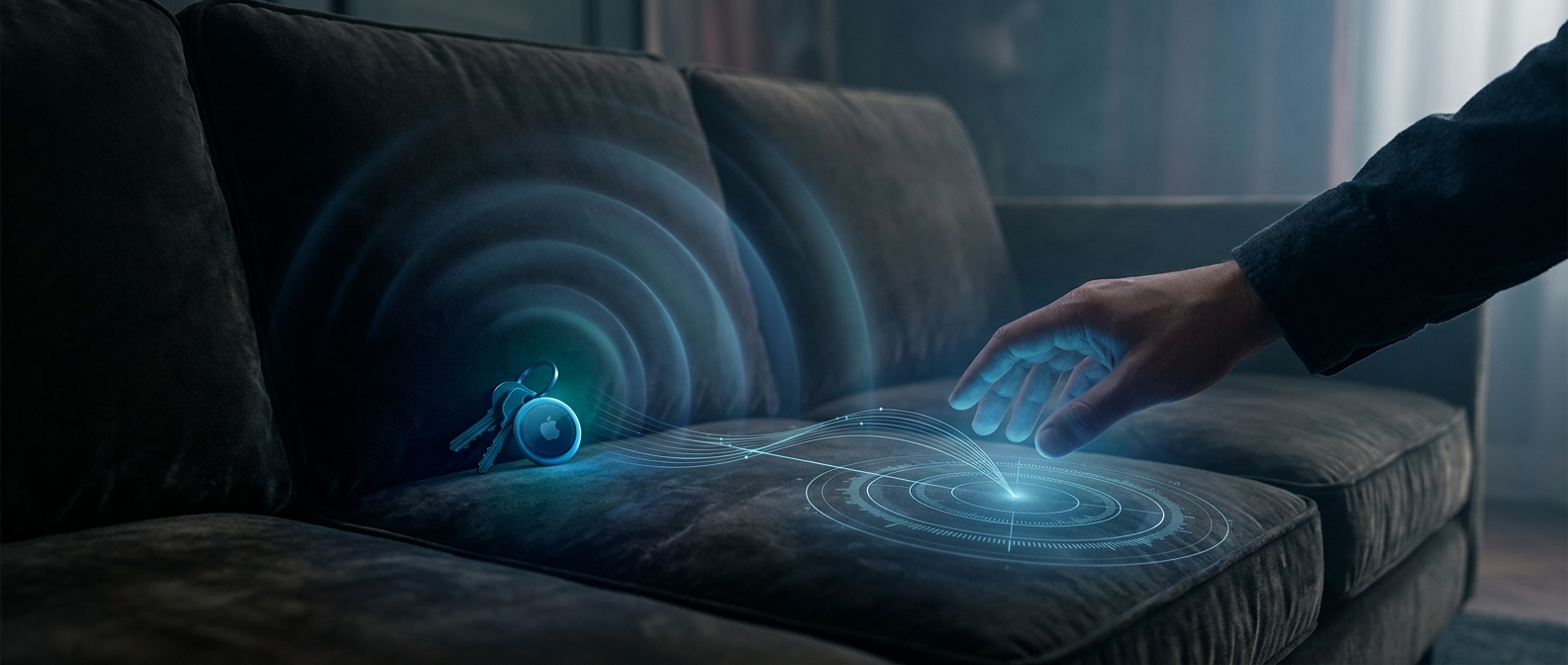
When an AirTag is nearby, a compatible iPhone can use Ultra-Wideband (UWB) to estimate the tag’s distance and direction. The key is timing: the devices exchange very short radio pulses, and the phone measures how long the signals take to make the round trip. Because radio waves travel at a known speed, that delay gives a distance estimate.
The phone combines that estimate with its own motion sensors and compass. As you turn or walk, it can update the on-screen direction and show whether you are getting closer. That turns the search from “somewhere in this room” into a guided approach toward a couch cushion, bag, or set of keys.
Why Bluetooth alone is less precise
Bluetooth is useful for detecting that a tag is nearby, but judging distance from signal strength is like estimating how far away someone is by how loud their voice sounds. Walls, furniture, the tag’s orientation, and interference can all weaken a signal, even when the object is close. UWB’s timing measurement is less dependent on those changes, so it can provide a more useful close-range location.
That precision has limits: the phone and tag need to be within UWB range, and obstacles or the surrounding environment can still affect the experience. If the item is farther away, the Find My network can help locate it through nearby Apple devices; that is a separate process from the phone’s close-range directional guidance.
The practical payoff is that the final few meters—the part where a map pin stops being enough—can become a sequence of small turns and steps instead of guesswork.