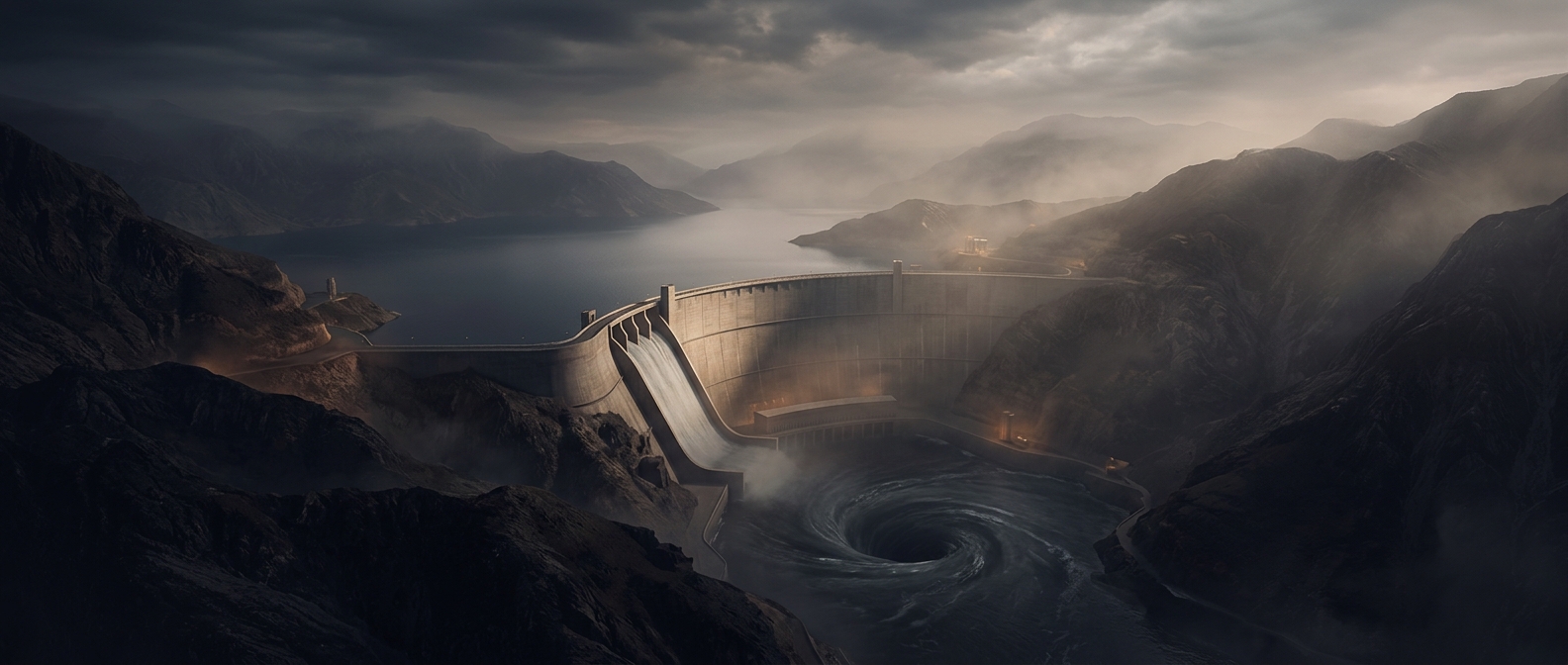
How stored water can slow Earth’s spin
A dam does not add weight to Earth; it changes where some of Earth’s weight is located. When the Three Gorges reservoir fills, water that would otherwise have flowed downstream is held in a large, elevated reservoir. That redistribution slightly changes how far the water’s mass lies from Earth’s rotation axis.
The relevant quantity is moment of inertia: a measure of how difficult it is to change a rotating object’s spin, which increases when more of its mass sits farther from its axis. If that measure rises while Earth’s rotational motion is conserved, the planet turns a little more slowly—much like a spinning skater slowing down when extending their arms.
A change too small to notice
Calculations put the dam’s effect at roughly 0.06 microseconds added to a day. A microsecond is one-millionth of a second, so this is far below anything a person could perceive. Earth’s rotation also varies naturally as its atmosphere, oceans, and interior shift mass around, and those changes are much larger in everyday measurements.
The striking point is not that a dam can noticeably alter a clock. It is that the length of a day depends on the distribution of mass across the whole planet: holding a vast volume of water in one place is enough, in principle, to make Earth’s spin fractionally slower.