What a Lightning Rod Actually Changes
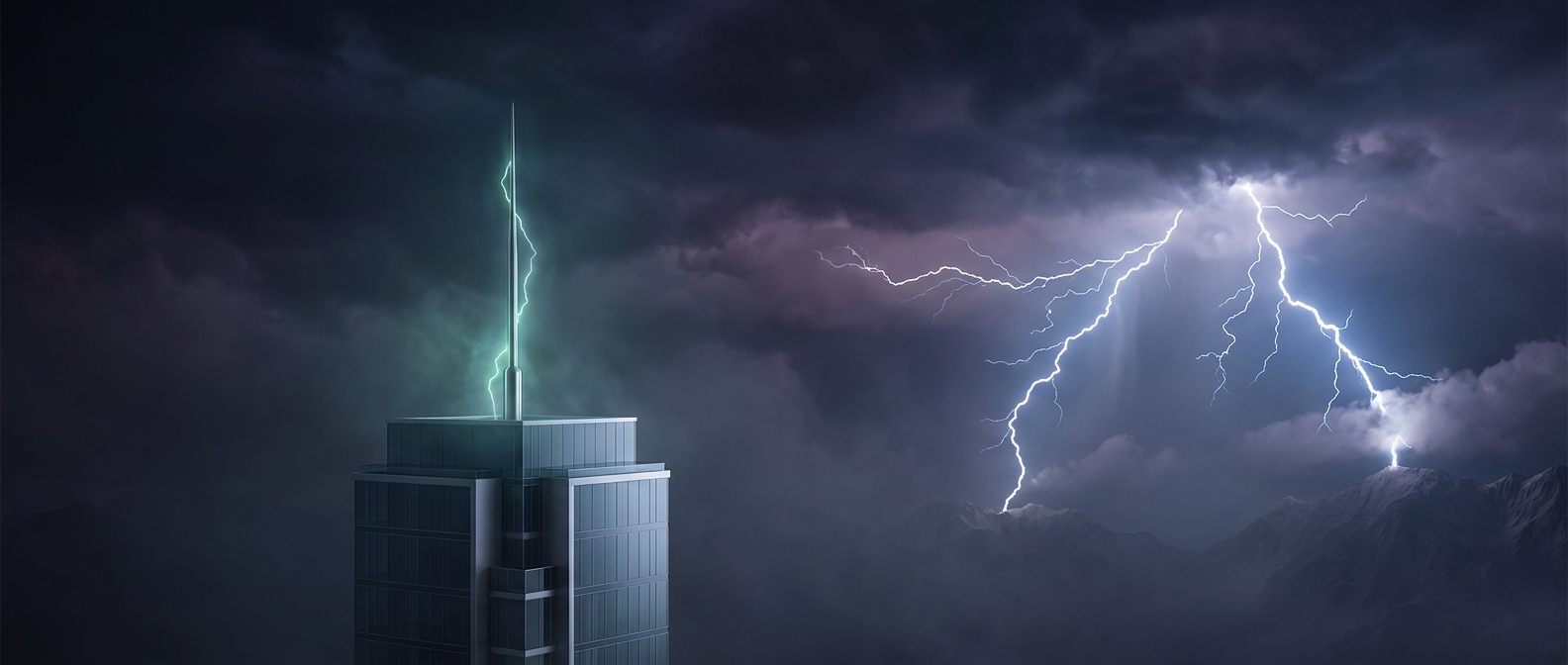
A lightning rod does not pull a storm’s electrical discharge toward a building. Instead, it gives a strike that reaches the building a deliberately engineered route through it. The rod is connected by thick metal conductors to grounding electrodes—metal components buried in the earth—so the enormous, brief current can pass around the structure rather than through its roof, walls, wiring, or plumbing.
That route matters because lightning is not simply “looking for the easiest path” in the everyday sense. A strike can carry enough energy to split wood, ignite materials, and damage electrical equipment. The rod and its connections are designed to conduct that current and spread it into the ground without letting it jump unpredictably through parts of the building.
Why the Whole System Matters
The rod is only the visible tip of a protection system. Conductors must connect it reliably to ground, and metal components in the building may need to be bonded—electrically connected—to reduce dangerous voltage differences. Without sound connections, current can arc sideways, or “flash over,” to another metal object or building component on its way down.
Protection also has limits: a rod does not guarantee that lightning will never hit nearby or that every electrical surge will be harmless. Its practical purpose is to manage the path of a strike that reaches the structure. The key detail is not the pointed metal above the roof, but the continuous, carefully connected route from that point into the earth.