What Happens After Rain Reaches the Waste
Rainwater and moisture already in garbage can seep through a landfill and pick up dissolved chemicals as they pass through. That contaminated liquid is called leachate. If it escaped into nearby soil, it could eventually threaten groundwater, so an engineered landfill is designed to collect it rather than let it spread.
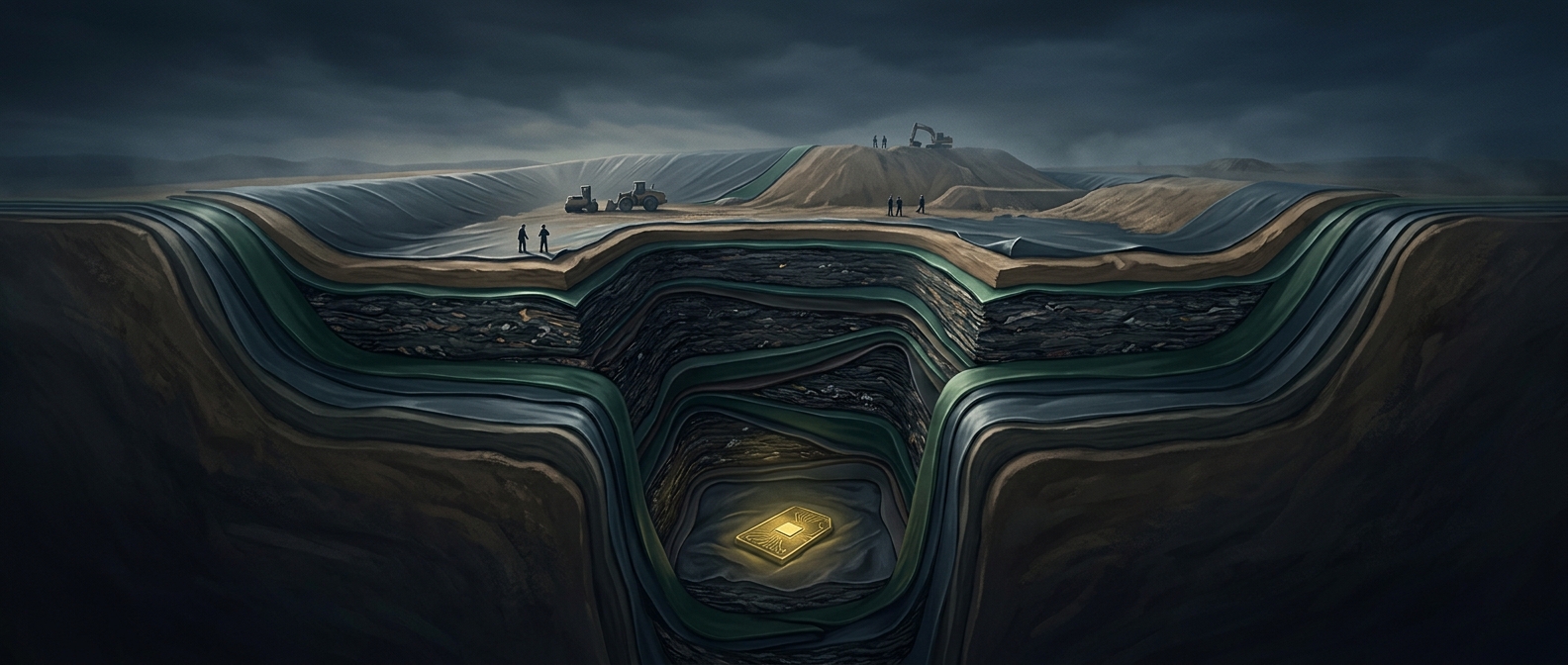
The clay and plastic liner work as barriers with different strengths: compacted clay slows water moving through it, while a thick plastic sheet resists seepage. The welded seams matter because a gap between sheets could become a route for liquid to pass through. Above the liner, drainage layers direct leachate toward collection points, where it can be removed for treatment or disposal.
Why Covering and Compacting Matter
Crushing waste into dense layers leaves less open space for air and water to move through it. A layer of soil placed over the waste each day helps limit windblown litter, odors, and access by insects and other scavengers. It also creates a more orderly working surface for the next day’s deliveries.
The liner is only one part of the containment system. Once a section is full, a final cover helps keep rain from entering, reducing the amount of leachate that must be managed. Drainage and monitoring systems help operators track liquid levels and check whether the site is affecting surrounding groundwater.
The practical goal is not to make buried waste disappear, but to control where water goes and keep contaminated liquid contained while the landfill is managed over time.